

Emerald Pages
◆
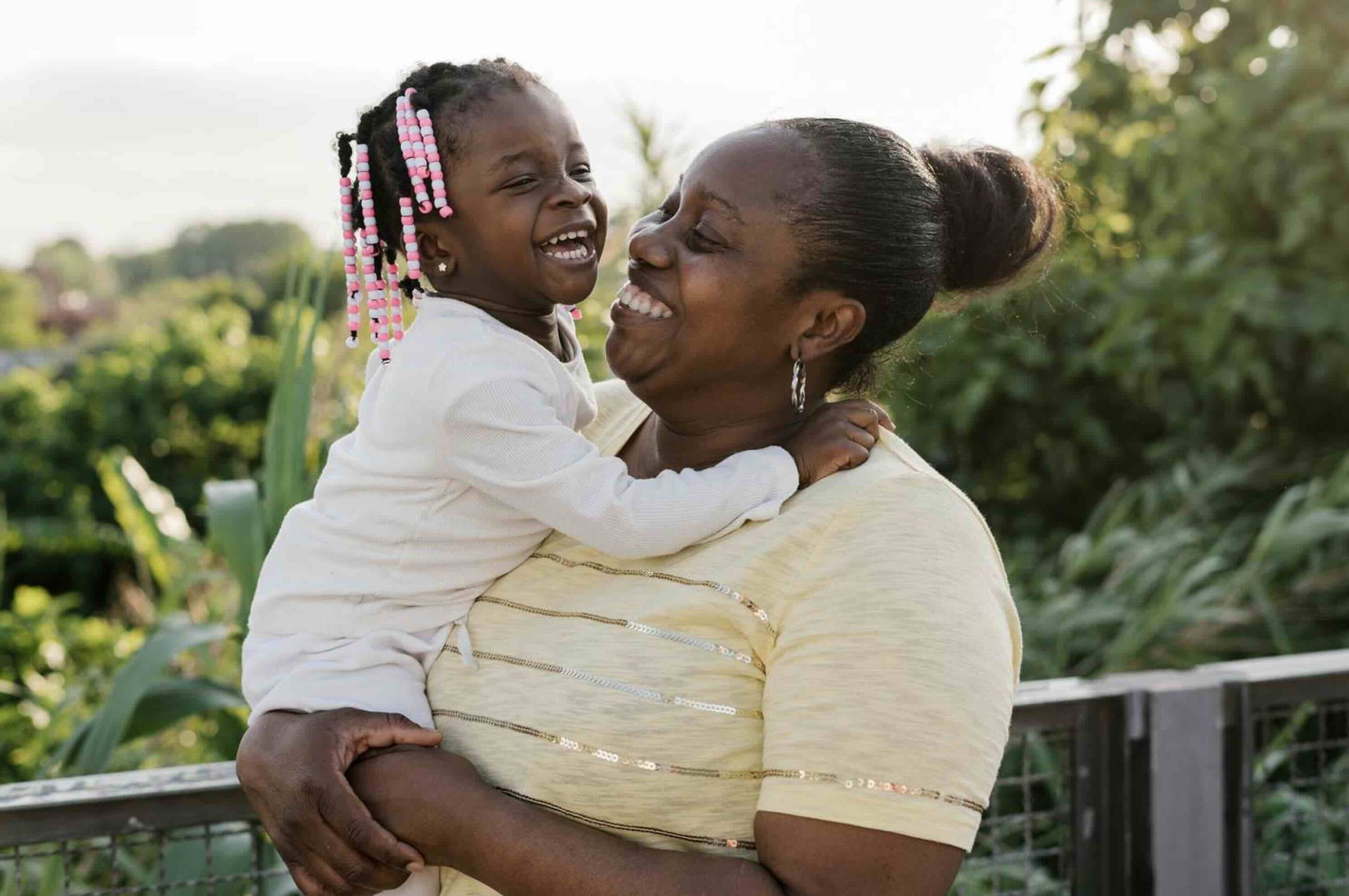
Photo: Ezequiel Giménez | Stocksy
The number has been repeated so often it has taken on the weight of fact: "68% of single mothers are Black." It appears in comment sections, political talking points, and casual conversations. It has shaped perceptions of Black families for decades. The only problem? It is entirely false.
According to demographic data from the Pew Research Center and the Center for American Progress, Black women make up approximately 28% of the total single-mother population in the United States. White women, however, account for approximately 42% of all single mothers nationwide. The 68% figure actually represents something different: the percentage of births to unmarried women within the Black community — a statistic that has hovered between 68% and 72% in recent decades.
The confusion happens because people frequently mix up two entirely different questions: "What percentage of single mothers are Black?" (the answer is roughly 28%) and "What percentage of Black mothers are single mothers?" (the answer is 47%). Both numbers are true at the same time. It is a matter of looking at a national total versus looking at an internal group rate.
The Numbers That Reflect Reality
To accurately capture the landscape of single motherhood in the United States, the data must be broken down by raw national totals, racial percentages within the whole, and internal rates within specific groups. The current figures from the U.S. Census Bureau and the Pew Research Center provide an accurate reflection.
- Raw Total: Approximately 9,061,000 families in the U.S. are headed by a woman with no spouse present and children under 18.
- Racial Makeup of All Single Mothers: White women make up the largest share at roughly 42%, while Black women account for roughly 28%, followed by Hispanic women at roughly 25%.
- Internal Rates: 47% of Black mothers are single parents (defined as unmarried), compared to 25% of Hispanic mothers and 14% of White mothers.
A more accurate percentage that reflects real-world household dynamics is 37%. When researchers filter out cohabiting couples and focus strictly on solo mothers — women living with children entirely on their own, with no partner in the household — the percentage of Black mothers in this situation drops from 47% to 37%.
The Hidden Realities Within the 47%
The 47% statistic — which states that 47% of Black mothers are single parents — is an official figure from the U.S. Census Bureau and the Pew Research Center. However, without context, this number is highly misleading because it relies entirely on legal marital status rather than household reality.
A massive portion of that 47% consists of women who are living with a committed partner or the child's biological father. According to Pew Research, roughly one-third of all unmarried mothers are actually cohabiting with a partner. Additionally, millions of Black fathers who do not live in the same house are deeply involved in active co-parenting, financial support, and split custody. A landmark CDC study on fatherhood found that Black fathers — both co-resident and non-co-resident — are more likely to handle daily caretaking duties like bathing, dressing, feeding, and helping with homework than fathers of other racial groups.
The Census Bureau also looks at households through a rigid lens that doesn't accurately capture the cultural strength of extended family networks. Many unmarried Black mothers live in multi-generational households with grandparents, aunts, uncles, or siblings — meaning the mother is far from a "solo" parent.
How This Narrative Harms Black Women
Misinterpreting these statistics does real, documented harm to Black women, children, and communities. Sociologists, public policy experts, and advocates point to several specific ways this statistical misunderstanding causes damage.
- It reinforces the "welfare queen" and "absent father" tropes: Using "unmarried" as a lazy shorthand for "completely alone" keeps decades-old stereotypes alive. It feeds a false narrative that Black families are uniquely dysfunctional or that Black fathers are inherently absent.
- It erases Black fathers and supportive co-parents: When the public assumes an unmarried birth means a mother is entirely on her own, it completely erases the millions of Black fathers who are actively cohabiting, in committed relationships, or co-parenting across different households.
- It shapes biased public policy and resource allocation: Instead of addressing structural root causes — such as systemic economic inequality, the racial wealth gap, lack of affordable childcare, or mass incarceration — public policy often focuses heavily on promoting marriage as a cure-all for poverty.
- It breeds medical and societal bias: When teachers, doctors, or social workers operate under the false assumption that nearly every Black child comes from a fractured household, it introduces implicit bias that can result in lower expectations and less compassionate care.
The Real Common Denominator: Economics
By centering the conversation on the actual data, it becomes obvious that single parenting is not a racial trait. Instead, it is heavily driven by economic opportunity and education. Across every single demographic — White, Black, Hispanic, and Asian — the rates of single motherhood drop precipitously for women who have access to higher education, stable career paths, and financial security.
When society recognizes that White women make up the largest share of single mothers — roughly 3.8 million households compared to 2.5 million Black single-mother households — it forces the conversation away from harmful racial stereotypes and toward the real, systemic issues that affect solo parents: childcare costs, wage gaps, and healthcare access.
The 68% myth persists because it serves an old, comfortable narrative. But the data is clear: single motherhood is mostly a White experience in America. The challenge is not a racial one, but a systemic one that affects millions of families across all demographics.
No Ads. By Us. For Us.
This article was made possible by readers like you. We hope it inspired you to support Emerald Book, so we can continue producing content like this.
We will never show you ads, sell your data, or require a subscription to consume our content. Your gift helps us keep the truth accessible.
Click the Support button to give a gift of any amount today.
Thank you for making this work possible.