

Emerald Pages
◆
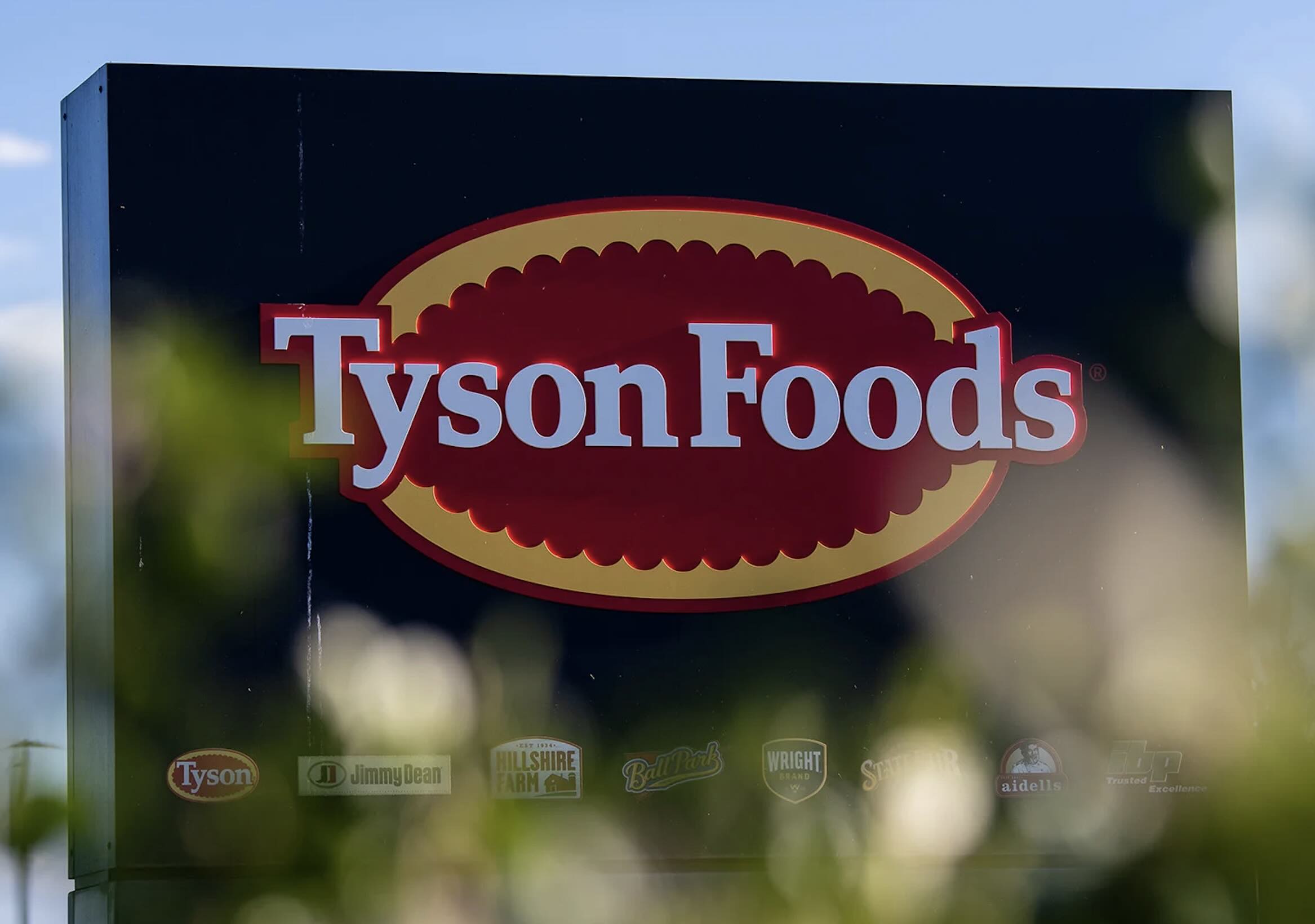
Photo: Getty Images
On its face, it makes no sense. Tyson Foods, one of the largest employers of immigrant and refugee labor in the United States, has poured millions of dollars into political action committees that support candidates who campaign on border walls, mass deportations, and immigration crackdowns. The same industry that actively recruits foreign workers to staff its meatpacking plants, construction sites, and agricultural fields is funding the very political movement that promises to deport them.
This is not hypocrisy. This is a cold, calculated corporate strategy. The contradiction lies at the heart of the American immigration paradox: the economy runs on migrant labor, but the political system wins votes by promising to banish it. And the corporations that perpetuate this system have mastered the art of playing both sides.
The Industrial Engine: How Tyson and Others Perpetuate Migration
To understand why these corporations donate to anti-immigrant politicians, you first have to understand how deeply migration is embedded in their business models. Meatpacking giants like Tyson Foods, JBS USA, and Smithfield Foods have structured their entire operations around a steady, low-wage, high-turnover immigrant workforce.
These companies locate their massive processing plants in remote rural areas where local populations are too small to supply the brutal, physically demanding work. So they manufacture their own labor pools. They advertise in foreign-language media, work with third-party labor brokers, and offer referral bonuses to current employees who recruit friends and family from their home countries.
The result is a self-sustaining cycle. Immigrants make up roughly 35% of Tyson's total workforce. In the broader meatpacking industry, foreign-born workers account for nearly 40% of all employees. These workers are not incidental — they are structural. Without them, the industry's business model collapses.
- Structural Dependence: Meatpacking plants require constant, high-turnover staffing that local rural populations cannot supply.
- Recruitment Networks: Companies build permanent legal and informal recruitment channels abroad.
- Referral Hiring: Current immigrant employees naturally recruit friends and family from home, creating self-sustaining pipelines.
- Legal Loopholes: Corporations rely on H-2B visas, asylum work authorizations, and subcontracting to maintain plausible deniability.
The Political Hedging: Why They Donate to Trump
So why do these same companies donate to politicians who promise to deport their workforce? The answer lies in the distinction between public rhetoric and private lobbying. Corporate Political Action Committees (PACs) rarely invest in ideological crusades. Instead, they buy access to whoever happens to be in power.
Federal disclosure data shows that companies like Tyson, JBS, and Smithfield routinely split their millions in donations between both the Democratic and Republican parties. They donate to ensure that no matter who wins the election, corporate leadership can secure a phone call with the White House when critical legislation is being written.
But the strategy runs deeper than simple hedging. A company may tolerate hardline immigration rhetoric from a candidate if that same candidate promises other policy rollbacks that save the company hundreds of millions of dollars. For meatpacking and agribusiness giants, a friendly administration offers massive corporate wins like looser environmental rules, fewer safety inspections, corporate tax cuts, or multi-billion-dollar federal industry bailouts.
During his first term, Donald Trump signed an executive order protecting meatpacking executives from liability lawsuits when plants stayed open during the COVID-19 crisis — a move heavily lobbied for by Tyson's executive leadership. For these corporations, that level of legal protection outweighs any discomfort over border rhetoric.
The Silent Counter-Offensive
While these companies stay completely silent publicly during highly charged election cycles to avoid consumer boycotts, they launch aggressive legal and lobbying counter-offensives behind closed doors.
Tyson Foods quietly fought a major shareholder attempt to force the company to publicly disclose the catastrophic financial risks that a mass deportation agenda would pose to its operations. Shareholders pointed out that immigrants make up roughly 35% of Tyson's total workforce. While the company's PACs fund conservative candidates, its corporate lawyers simultaneously battle the Securities and Exchange Commission (SEC) to keep the existential threat of deportations off the official proxy ballots.
When political backlash from hardline groups intensifies, corporations protect themselves by pointing to the exact legal loopholes they lobbied to create. Under public pressure, Tyson consistently reiterates that they strictly adhere to federal law by only employing migrants, refugees, and asylum seekers who possess official, government-issued work authorizations. This allows companies to look law-abiding to conservative voters while continuing to run vast, low-wage migrant labor pipelines that depress corporate operating costs.
Why a 4% Minority Fuels a National Panic
The final piece of this paradox is the public itself. Undocumented immigrants make up roughly 4% of the American population. They are a mathematically small group. Yet they dominate the national psyche during every election cycle. Why?
The answer lies in the intersection of economics, psychology, and media. While immigrants are concentrated in a few states and essential industries, their visible presence in blue-collar settings makes them seem like a much larger demographic group than they mathematically are. And because they lack voting power, they are the ultimate political scapegoat.
It is far easier for a campaign to focus public anger on a visible, marginalized group at the border than it is to solve complex, systemic issues like inflation, affordable housing shortages, or corporate automation. A single high-profile violent crime committed by an undocumented immigrant will receive weeks of continuous national media coverage, creating a powerful illusion of a "migrant crime wave" — even though statisticians consistently show that immigrants commit crimes at significantly lower rates than native-born citizens.
The Irony of the Enforcement Profit Loop
The contradiction deepens when you follow the money to its logical conclusion. Major private prison and logistics corporations — such as CoreCivic and The GEO Group — actively profit from the political backlash itself. They spend millions lobbying the federal government and donating to campaign PACs to secure lucrative Immigration and Customs Enforcement (ICE) contracts for detaining the very migrant workers that other industries imported.
This is the ultimate closed loop: industries recruit migrants, politicians exploit fear of migrants, private prisons profit from detaining migrants, and the cycle continues. Every link in the chain is profitable — except for the migrants themselves and the working-class Americans who are told to fear them.
The Human Cost of the Paradox
The corporate strategy of "dual giving" — donating to both parties while quietly lobbying for labor pipelines — has real human consequences. When politicians campaign on deportation, they win votes. When corporations fund those politicians, they secure deregulation. But when the rhetoric turns into enforcement, the workers who built the American economy are the ones who suffer.
Tyson Foods has faced extensive scrutiny and a $4 million federal settlement regarding systemic child labor violations involving migrant minors hired through third-party sanitation crews. The company has also been hit with massive product recalls — including 58 million pounds of corn dogs and pancake sandwiches contaminated with wood fragments — while simultaneously closing three major beef plants and laying off over 3,200 workers. The shock absorbers for these corporate failures are always the same: the blue-collar immigrant workers who were recruited to fill the jobs in the first place.
This is the dark irony of the entire system. The American economy cannot function without migrant labor. The American political system cannot win elections without promising to deport it. And the corporations that perpetuate this cycle have found a way to profit from both sides.
No Ads. By Us. For Us.
This article was made possible by readers like you. We hope it inspired you to support Emerald Book, so we can continue producing content like this.
We will never show you ads, sell your data, or require a subscription to consume our content. Your gift helps us keep the truth accessible.
Click the Support button to give a gift of any amount today.
Thank you for making this work possible.