

Emerald Pages
◆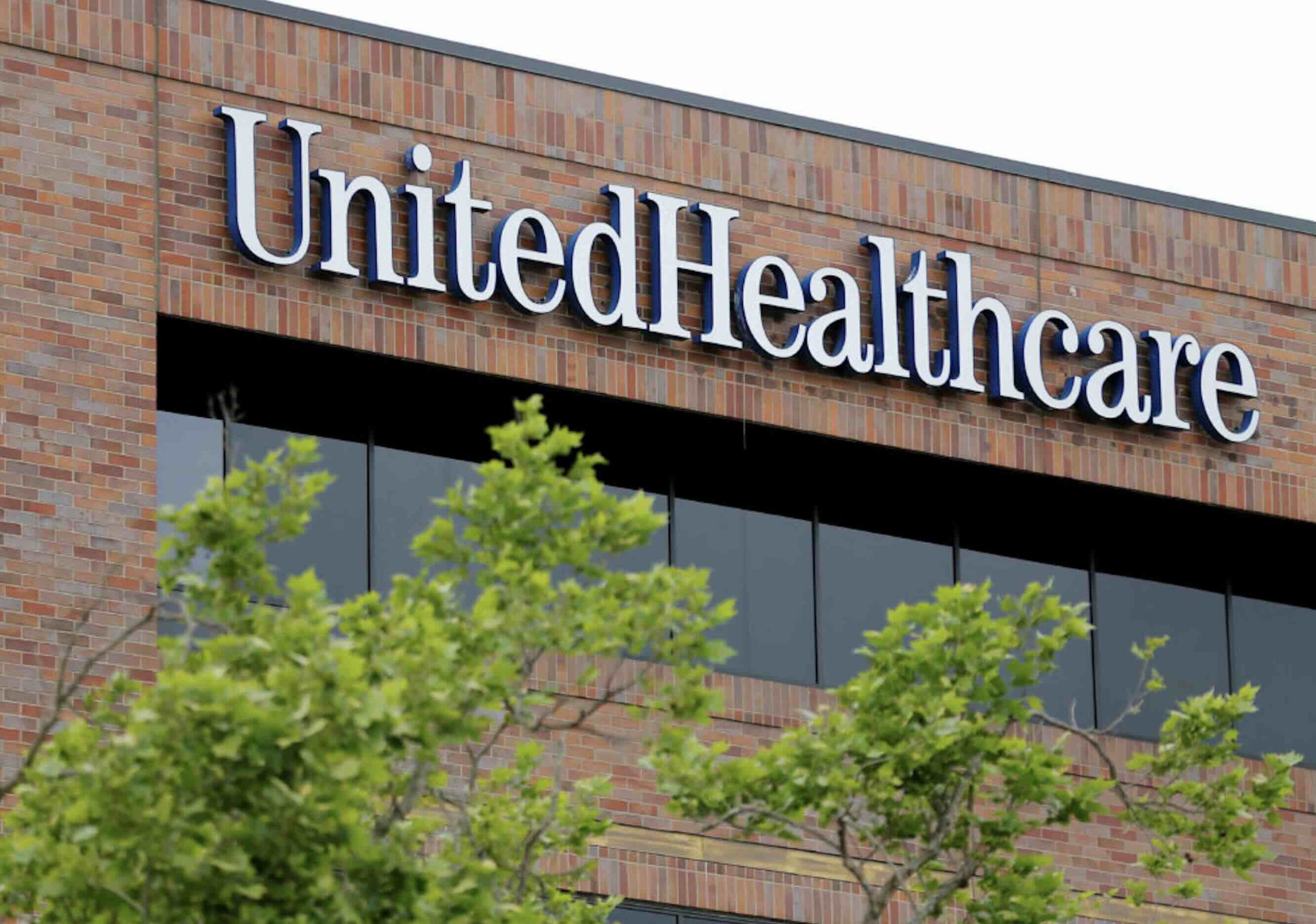
Photo: Mike Blake/Reuters
The United States spends roughly twice as much on healthcare per person compared to the average of comparably large, wealthy nations. In 2024, U.S. healthcare spending reached an estimated $14,885 per capita — nearly double the peer nation average of $7,371. When evaluated as a share of the national economy, the U.S. devotes 17.2% to 18% of its Gross Domestic Product (GDP) to healthcare, compared to an average of 11.2% among its high-income peers. Yet, despite this staggering investment, Americans live shorter lives, face higher rates of chronic disease, and are routinely driven into bankruptcy by the very system designed to heal them.
This is the logical result of a century of policy choices, historical path-dependency, and powerful interest groups that have systematically prioritized corporate profit over human well-being. Unlike every other wealthy nation, which built unified health systems from the top down after World War II, the United States built its system piece-by-piece, treating healthcare as a private commodity rather than a public utility. The consequences are devastating — and they fall hardest on the most vulnerable.
Spending More, Getting Less
The average American life expectancy is 79.0 years, which trails the comparable country average of 82.7 years by nearly four years. Japan leads at 84.1 years, Switzerland at 83.8 years, and even the United Kingdom — with its much-maligned National Health Service — outperforms the U.S. at 80.9 years.
The gap is driven not by Americans visiting the doctor more often. In fact, healthcare utilization — hospital stays and doctor visits — is actually lower in the U.S. than in peer countries. Instead, the discrepancy is driven by structural factors that have made American healthcare the most expensive and inefficient system in the developed world.
The unit prices for medical goods and services — surgical procedures, hospital stays, and clinical labor — are exponentially higher in the U.S. than anywhere else. Americans pay more for prescription drugs, with the average person spending over $400 annually out-of-pocket compared to less than $100 in France. Administrative waste, driven by the fragmented complexity of thousands of private insurers and public programs, adds over $1,000 per person to the cost — five times higher than the peer average.
Financial Toxicity
Medical researchers have a term for the crushing financial strain of paying for healthcare in America: "financial toxicity." It is a severe, documented side effect of treatment — one that actively diminishes a patient's quality of life, exacerbates physical illness, and drives up mortality rates.
- $220 billion — the total outstanding medical debt carried by Americans, affecting roughly 100 million adults.
- 58% — the share of all debt in commercial collections that comes from medical bills.
- 42% — the percentage of cancer patients who completely drain their life savings within two years of diagnosis.
- 59% — the share of Americans with medical debt who have skipped or delayed necessary care because of what they already owe.
Americans routinely stretch prescriptions by cutting pills in half, skipping chemotherapy sessions, or leaving inhalers unfulfilled at pharmacies to save money. This cost-driven non-adherence directly causes thousands of preventable deaths annually. More than 51% of adults facing medical debt say their outstanding bills have actively damaged their credit score — often stripping 50 to 100+ points off their record and locking them out of housing or auto loans.
The economics of American healthcare are uniquely punitive. In peer nations, medical bankruptcy is virtually nonexistent. In the U.S., medical bills are the leading cause of bankruptcy. The contrast could not be starker.
A System Tied to Employment
The United States is the only high-income nation in the world where a person's physical health is directly tied to their employment status. This structural flaw began as an unintended byproduct of World War II policy.
During the war, the U.S. government capped factory wages to prevent inflation. To compete for scarce labor, companies couldn't offer more money, so they began offering fringe benefits — specifically, health insurance. In 1943, the IRS ruled that employer-provided health insurance was tax-free, heavily incentivizing the private, employer-sponsored system that persists today. When Europe was rebuilding its infrastructure with universal, government-funded healthcare after the war, the U.S. locked in a system tied directly to a person's job.
This has created what economists call "job lock" — a phenomenon where millions of Americans feel forced to stay in toxic, low-paying, or unfulfilling jobs purely out of fear that quitting means losing their family's health insurance.
If you lose your job and have no income, the primary safety net is Medicaid — but your access depends entirely on where you live. In the 40 states that expanded Medicaid, you qualify for free or low-cost healthcare if your income drops below 138% of the federal poverty level. In the 10 states that refused expansion — including Texas, Florida, and Alabama — you are completely ineligible for Medicaid if you are an unemployed adult without minor children, no matter how poor you are. This leaves millions trapped in a literal "coverage gap" — too poor for government subsidies but making too little to qualify for Medicaid.
Meanwhile, COBRA — the federal law that allows you to keep your employer health insurance for up to 18 months after losing a job — requires you to pay 100% of the premium yourself, plus a 2% administrative fee. For a family plan, this can easily cost $2,200+ per month — completely unaffordable for someone who just lost their income.
The Racial Health Divide
The health crisis in the United States is disproportionately borne by Black Americans. While the national average life expectancy is 79.0 years, the life expectancy for Black Americans drops significantly to 74.0 years — a 5-year racial lifespan gap. Black Americans live shorter lives not just compared to white Americans (77.5 years), but nearly 9 years shorter than the average citizen in comparable wealthy nations like Switzerland or Japan.
Nowhere is this gap more devastating than in maternal health. The United States is already the most dangerous wealthy nation in the world to give birth. For Black women, it is a human rights crisis. Black women experience 50.3 maternal deaths per 100,000 live births — 3.5 times higher than the rate for white women (14.5) and roughly 10 times higher than maternal mortality rates in countries like the UK, Germany, or Japan. Public health data shows that over 80% of these deaths are completely preventable, driven by medical racism, a failure to take Black patients' pain seriously, and a lack of postpartum support.
The chronic disease burden is equally stark. An astronomical 57.1% of Black adults live with hypertension — a rate higher than any other demographic group in the U.S. and virtually unseen in peer nations. Black women have the highest breast cancer mortality rate of any racial group (26.8 deaths per 100,000) — even though Black women report the highest screening rates, pointing directly to lower-quality care. Black men are diagnosed with prostate cancer at a 70% higher rate and die from it at twice the rate of white men.
This disparity is not genetic; it is structural. Neighborhood life expectancy drops systematically as the percentage of Black residents increases. Black-majority neighborhoods often lack pharmacies, trauma centers, and grocery stores with healthy food. Only 5% of active U.S. physicians are Black, creating persistent cultural barriers and implicit bias in treatment rooms. The expensive, fractured nature of U.S. healthcare allows systemic inequalities to compound over a lifetime — manifesting as earlier deaths and preventable suffering for Black communities.
The Ambulance Trap
The financial shock of an American ambulance ride is a notorious and stressful reality of the U.S. medical system. For a ground ambulance ride, the average base cost sits between $1,000 and $2,500+ before mileage fees. If an air ambulance is required, the price tag astronomically leaps to a median of $36,000 to $40,000 per flight.
Unlike almost every other developed nation, the U.S. charges heavily for the actual distance driven, averaging about $19.49 per mile. When the federal government passed the No Surprises Act to protect consumers from unexpected out-of-network hospital bills, ground ambulances were entirely excluded from the legislation. Because 911 dispatchers route whichever ambulance is closest, patients have zero choice in who picks them up. As a result, nearly 80% of ground ambulance rides result in out-of-network bills.
- United Kingdom: Ground ambulance transport via the NHS is 100% free at the point of use.
- Japan: Transport via the public fire department ambulance system is 100% free.
- Canada: Ontario residents with a valid health card pay a flat fee of just $45 CAD.
- Australia: A call-out averages roughly $622 USD — less than half the U.S. baseline.
The fear of a massive bill changes how Americans behave in life-or-death situations. Studies show that many Americans actively hesitate or refuse to call 911 during acute medical emergencies like heart attacks or strokes out of fear of the invoice. Instead, many opt to drive themselves or ride-share to the hospital — delaying critical, lifesaving stabilization that only paramedics can provide en route.
The Human Cost of a Broken System
The American economic design prioritizes the complex revenue cycles of intermediate stakeholders over universal access. It remains an anomaly where a serious medical diagnosis can reliably destroy a household's generational wealth. The term "financial toxicity" exists in American medical literature because the financial strain of cancer treatment, for example, is so severe that it is studied alongside the physical side effects of chemotherapy.
The economics of American healthcare are inhumane by design — not because of any single villain, but because of a century of policy choices that treated healthcare as a commodity rather than a human right. The result is a system that spends more than any other nation on Earth, yet leaves millions uninsured, hundreds of thousands bankrupt, and tens of thousands dead from treatable conditions every year.
This is not sustainable. It is not moral. And it is not inevitable. Other countries have proven that healthcare can be organized differently — that it is possible to have better outcomes, lower costs, and a system that does not punish people for getting sick. The question is whether Americans will continue to accept a system that profits from their suffering, or whether they will demand the fundamental change that so many other nations have already achieved.
As long as healthcare in America remains a commodity rather than a right, the human toll will continue to grow. And that is a tragedy that cannot be measured in dollars alone.
No Ads. By Us. For Us.
This article was made possible by readers like you. We hope it inspired you to support Emerald Book, so we can continue producing content like this.
We will never show you ads, sell your data, or require a subscription to consume our content. Your gift helps us keep the truth accessible.
Click the Support button to give a gift of any amount today.
Thank you for making this work possible.