

Emerald Pages
◆
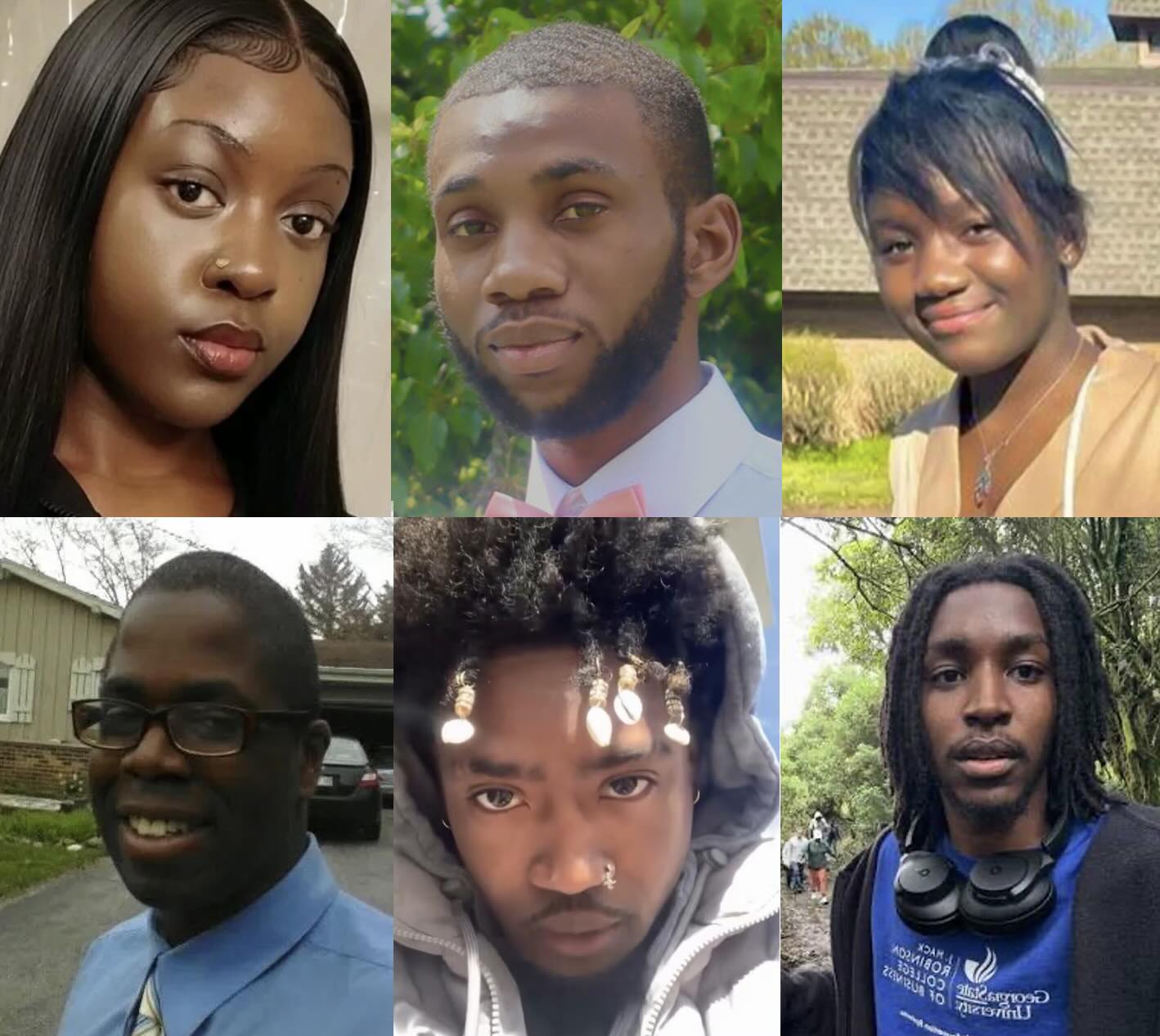
Photo: Emerald Book Image
Across the United States, a deeply unsettling pattern has emerged over the past decade, intensifying in recent years. A rising number of Black individuals are being found hanging from trees in public spaces, and in the vast majority of these cases, local authorities are swiftly ruling their deaths as suicides. However, this official narrative is increasingly at odds with statistical reality, historical context, and the desperate pleas of the victims' families, fueling a crisis of trust and demands for federal intervention.
Independent civil rights organizations and news media have meticulously documented this phenomenon. The comprehensive 2026 report, A Crimson Record, released by the civil rights organization JULIAN, documented over 70 suspected modern-day lynchings across seven Southern states between 2000 and 2025. The report highlights a recurring pattern of "systemic neglect" where local coroners prematurely close cases as suicides without comprehensive investigations. This data points to a clear and alarming trend, with Mississippi alone accounting for at least 20 of these documented cases over the 25-year period.
Independent tracking by groups like BLM Georgia recorded an alarming uptick between March 2025 and August 2026, finding at least 22 Black individuals dead under unusual or suspicious hanging circumstances across the country. During the peak of racial justice protests in the summer of 2020, at least six Black and Brown individuals were found publicly hanged in trees across California, Texas, Georgia, New York, and Oregon within a single month. High-profile cases have become a tragic refrain. In 2024, Dennoriss Richardson was found in Alabama. In 2025, the country witnessed the deaths of Javion Magee in North Carolina and freshman Demartravion "Trey" Reed on the campus of Delta State University in Mississippi. By August 2026, the list had grown to include Kyle Bassinga in Georgia, 16-year-old Juliana Nzita in North Carolina, Tonea Nicole Miller in Florida, and Tasia Fortune in Mississippi.
The Statistical Contradiction
The core of the outrage lies in a stark statistical contradiction. According to data from the Centers for Disease Control and Prevention (CDC) and the National Center for Health Statistics, Black Americans are the least likely demographic group to die by suicide using hanging or suffocation. The CDC's age-adjusted data shows that non-Hispanic White individuals die by suicide via suffocation/hanging at a rate of 4.6 per 100,000, more than double the rate for non-Hispanic Black individuals, which sits at 2.0 per 100,000. This data point is central to the argument made by families and civil rights attorneys: the method of death is statistically rare for the demographic most affected, making any public hanging inherently suspicious and demanding a rigorous investigation from the outset.
This statistical anomaly is compounded by the historical weight of racial terror in America. For generations, public hanging from a tree was the primary method of extrajudicial murder and intimidation used by white supremacists. For many in the Black community, the choice of a public tree as the location of a suicide is seen as deeply illogical and unnerving, given this horrific legacy. The expectation is that the system should treat such deaths with the utmost suspicion, not as an open-and-shut case of self-harm.
- Statistical Rarity: Black Americans are the least likely to die by suicide using hanging, making the frequency of these public cases a glaring anomaly.
- Historical Trauma: Public tree hangings carry a deeply traumatic and specific history of racial terror in the U.S., making suicide a less likely explanation for many.
- Geographic Concentration: The majority of these cases are occurring in the Deep South, mirroring the historical epicenter of lynchings.
The 72-Hour Rush to Judgment
Despite the statistical and historical red flags, the response from local authorities has been remarkably consistent. Law enforcement and medical examiners often rule these deaths as suicides within 24 to 72 hours of the body being found. This swift conclusion, which civil rights organizations describe as a "rush to judgment," is driven by a combination of bureaucratic inertia, resource constraints, and a desire to protect local reputations.
The process often begins with local coroners, who in many rural Southern counties are elected officials, not trained medical professionals. Their standard forensic approach looks for immediate physical evidence: an absence of defensive wounds, a lack of a struggle at the scene, and a rope. If these surface-level indicators are present, the file is often closed. This approach frequently leads to critical investigative steps being skipped. In the case of 16-year-old Juliana Nzita in North Carolina, the medical examiner ruled her death a suicide in three days, and police closed the case without performing a full autopsy, tracking down her missing cell phone, or even interviewing the person who discovered her body. In the case of Demartravion "Trey" Reed, an independent forensic investigation later uncovered blunt force trauma and extensive bruising across his body—evidence that was overlooked by the initial state medical examiner's report.
The local entities responsible for these rulings form a specific network of county-level elected officials, state medical examiners, and local police chiefs. Because the United States has no centralized federal system for investigating sudden deaths, these local entities hold absolute power over how a body is classified. Civil rights organizations like JULIAN point to three specific tiers of local authority driving these controversial rulings.
1. Small-Town and Rural County Coroners: In most Southern states, death investigations are handled by County Coroners. In many rural counties, coroners are elected political officials, not medical doctors or trained forensic scientists. They are frequently local funeral directors, tow-truck operators, or business owners who won an election. Because they lack advanced forensic training, they heavily rely on a "visual assumption"—if they see a body hanging from a rope, they routinely fill out the death certificate as a "suicide" right at the scene, which legally prevents a homicide team from treating the area like a secure crime scene.
2. Contested State Medical Examiners: If a body is sent past the local coroner for an actual autopsy, it goes to the State Medical Examiner's office. Dr. Staci Turner, Chief Medical Examiner of Mississippi, is currently at the epicenter of national civil rights protests. Her office ruled the campus hanging death of Demartravion "Trey" Reed a suicide, despite independent findings of blunt force trauma. Her office is facing similar intense scrutiny over the August 2026 hanging death of 29-year-old Tasia Fortune in Jackson.
3. Local Police Chiefs and County Sheriffs: Once the coroner hints at suicide, police chiefs use public press conferences to lock in the suicide narrative before testing is complete. In the case of Juliana Nzita, local police closed the investigation just days after the medical examiner's initial ruling, finalizing it as a suicide without executing basic steps like analyzing her cell phone or interviewing the individual who found her body. On university campuses, such as Delta State University, campus police chiefs often control the initial press updates, framing the public message around a "student mental health crisis" rather than leaving the door open for foul play.
This local loop—sheriff, coroner, state lab—is what civil rights attorneys call the "Good Old Boy" bureaucracy. Once this loop is complete, it requires a massive expenditure of money by the family to pay for independent pathology reports to prove the ruling was wrong.
Why the System Defaults to Suicide
From a bureaucratic standpoint, local coroners look for immediate physical indicators like a lack of defensive wounds or the presence of a note. If no glaring, immediate signs of a physical struggle are present on the body, the case is processed as self-inflicted to quickly close local precinct logs. Declaring a death a suicide protects a town's public image, shields it from intense media scrutiny, and prevents the massive expenditure of time and money that a hate-crime investigation would require. A confirmed hate-crime or public lynching instantly damages a city's public image, threatening local businesses, property values, and tourism. Local sheriffs, police chiefs, and politicians are highly incentivized to keep violent crime and hate-crime statistics low to project an image of safety and maintain their positions.
Civil rights attorneys highlight that local authorities often function as a closed loop. The local sheriff handles the scene, the elected coroner (who is often a political ally of the sheriff) signs the form, and the state lab rubber-stamps the file to clear the backlog. Investigating a public hanging as a potential racially motivated murder forces local departments to coordinate with federal entities, such as the FBI Civil Rights Division or the Department of Justice (DOJ). Federal intervention subjects the local police department to intense external audits, rigorous background checks, and an unprecedented level of national oversight, which local law enforcement actively resists.
This creates a devastating reality for the families of the victims. In almost every highly publicized case, the victims' families adamantly state that their loved ones showed zero signs of depression, were actively making plans for the future, or were dynamic individuals with no history of mental illness. The family of Javion Magee fiercely contested the state's suicide ruling, demanding transparency into the timeline of his death. For them, the loss of a loved one is compounded by a legal system that seems designed to close the case rather than pursue justice, leaving them to hire independent attorneys and fight for the most basic investigative steps to be taken. Unless civil rights attorneys like Ben Crump or intense public protests force the state Attorney General or the FBI's Civil Rights Division to intervene, these cases are rarely investigated as potential hate crimes or homicides.
No Ads. By Us. For Us.
This article was made possible by readers like you. We hope it inspired you to support Emerald Book, so we can continue producing content like this.
We will never show you ads, sell your data, or require a subscription to consume our content. Your gift helps us keep the truth accessible.
Click the Support button to give a gift of any amount today.
Thank you for making this work possible.