

Emerald Pages
◆
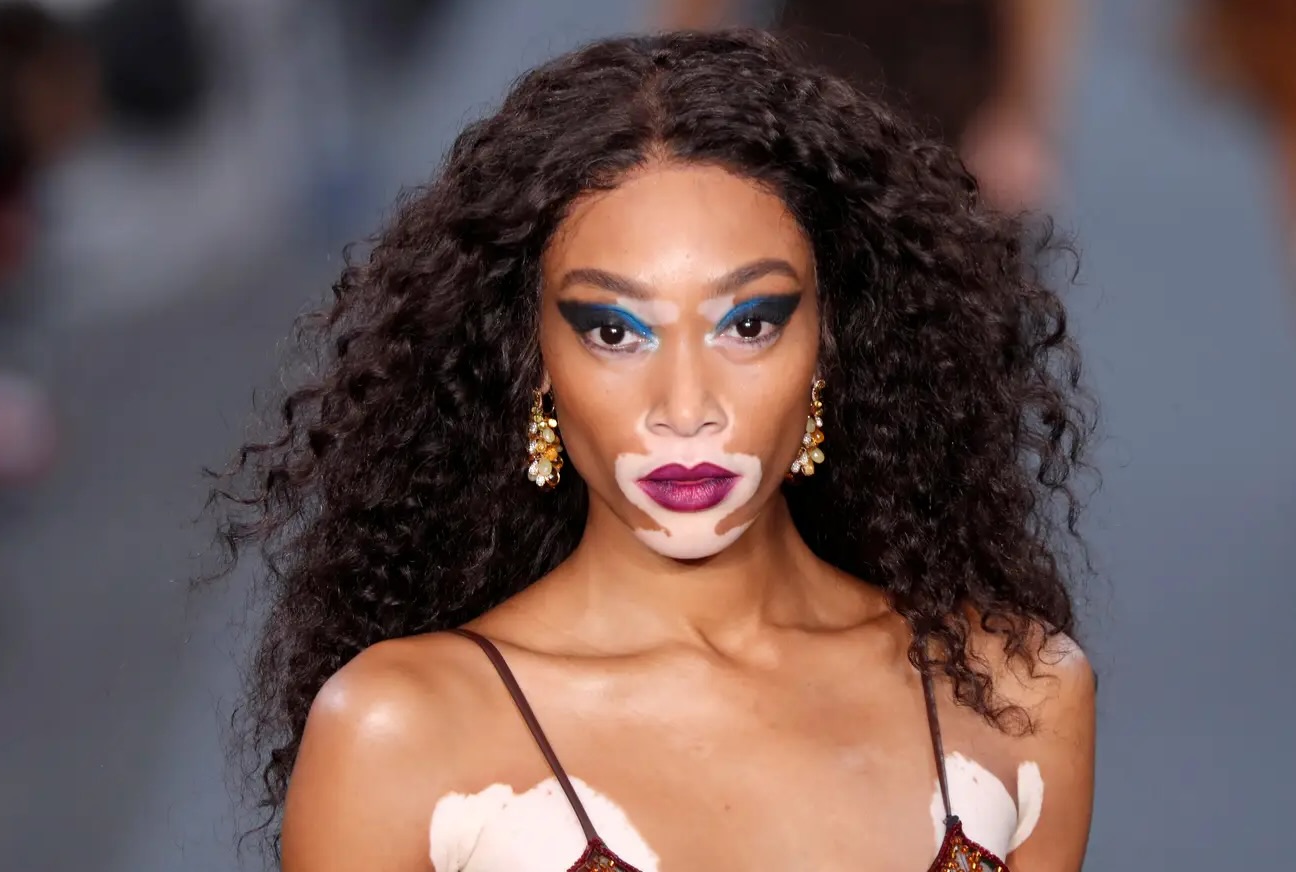
Photo: Winnie Harlow | Charles Platiau | Reuters
T he global modeling agency market is valued at approximately $7.46 billion and is projected to expand to $12.4 billion by 2035. It serves as a primary economic engine for the massive $1.7 trillion to $1.8 trillion global apparel and fashion industry, driving consumer goods marketing, advertising, and retail spending. Yet, beneath this staggering financial footprint lies an industry built on a business model of near-zero manufacturing costs, double-sided fee collection, and a system that many critics have likened to modern-day debt bondage. Understanding the economics of modeling requires peeling back the glossy veneer to reveal a structure that profits immensely from extreme power imbalances and the financial vulnerability of its workforce.
At its core, the modeling industry is a classic example of a "gatekeeper" economy. Agencies act as the exclusive brokers between talent and the massive corporate clients—the fashion houses, cosmetics brands, and retailers—that spend billions on advertising. This position of control is not incidental; it is structurally enforced. Major global brands like L'Oréal, Nike, and Louis Vuitton refuse to hire individual models directly due to severe liability and administrative risks. An agency provides a critical buffer: it carries multi-million dollar insurance policies, it vets and curates talent, and it can rush a replacement to a high-stakes, $100,000 shoot if a model falls ill. This system, however, gives the agency an immense and often unregulated power over the individual model.
The primary revenue engine for an agency is the "Double-Dip" commission structure. When an agency books a model for a $5,000 corporate campaign, they deduct a 20% commission from the model ($1,000). Simultaneously, they bill the corporate client an additional 20% service fee ($1,000). The agency collects a gross profit of $2,000, or 40%, from a single booking. This structure is lucrative in its simplicity. Unlike traditional corporations, agencies have no inventory costs, no manufacturing overhead, and no fixed salaries for their core "inventory"—the models themselves. The financial burden of maintaining these assets (gym memberships, travel, portfolio photography) is offloaded directly onto the models, who are classified as independent contractors. This classification is the linchpin of the industry's profitability, shielding agencies from the costs of healthcare, payroll taxes, and guaranteed minimum wages.
The Debt Bondage Engine
Perhaps the most insidious element of the industry's economic model is what has been termed "The Repayment Loop." This system, which critics have compared to debt bondage, is how agencies turn operational expenses into a highly profitable internal banking system. A promising new face scouted in a smaller market is often flown to a major fashion hub like New York, Paris, or Milan. The agency pays for the model's flights, visas, pocket money, and a bed in a shared, often overcrowded, apartment. These costs are logged as a debt on the model's account.
Because the model is an independent contractor, they do not receive a minimum wage to offset this debt. Any subsequent earnings go entirely toward paying down this balance. If the model fails to secure lucrative, high-paying work—which is the reality for the vast majority—the debt compounds, sometimes with added "interest" or inflated housing fees. The result is a system where a model can be trapped, legally and financially unable to leave the agency or return home. This is not a byproduct of the system; it is a fundemental part of the system. As the data reveals, agencies often charge models inflated daily rent deducted directly from their ledgers, turning housing into a highly profitable real estate line.
The Polarized Reality of Income
The labor and wage structure within the industry is highly fragmented and characterized by extreme polarization. The average fashion model in the United States earns an estimated $88,399 to $104,166 per year, but this figure is misleading. This "average" is heavily skewed by a tiny percentage of elite celebrity supermodels who capture millions of dollars in annual brand endorsements, with peak individual earnings ranging from $5.5 million to $22 million. Industry data shows that a top female model can command up to $50,000 for a single runway show, while an equivalent top male model averages closer to $12,000.
- The Elite Tier: Kendall Jenner, Chrissy Teigen, and Gisele Bündchen pull in $30-$60 million annually, transforming their personal brands into massive corporate advertising vehicles.
- The Working Professional: Commercial advertising models working in retail print, catalog, and digital e-commerce can secure steady, immediate daily rates ranging from $500 to $3,000. This is the financial backbone for most working models.
- The New Face: Beginners often earn $100-$500 per day, and sometimes receive "pocket money" or clothing in exchange for their work, with 100% of their earnings going back to the agency to pay off their startup debt.
- The Broader Reality: The U.S. Bureau of Labor Statistics cites a median wage of $22.80 per hour for rank-and-file models, reflecting the massive pool of part-time local models who face prolonged periods of unpaid downtime.
This extreme gap in earnings is not an accident. It is a direct reflection of the industry's operational model, which is designed to extract maximum value from a vast, disposable labor pool to subsidize the astronomical fees paid to a handful of supernovas who drive cultural desire.
The Inverted Gender Pay Gap
In a striking inversion of the traditional corporate world, fashion modeling is one of the few global industries where women consistently outearn men. Female models routinely earn a 25% to 75% premium over their male counterparts for the exact same type of bookings. The primary driver is consumer retail behavior: the women's global apparel, cosmetics, and luxury goods markets generate hundreds of billions of dollars more in annual revenue than the men's markets. Brands dedicate the vast majority of their multi-million dollar advertising campaigns to capturing female consumers. The top female models are treated as household pop-culture celebrities with immense influence, allowing them to sign massive multi-year global beauty contracts, while the highest-earning male models often remain anonymous, project-based faces for isolated catalog shoots.
The Human Cost of a Profitable Model
The economic model of the fashion industry is not just financially exploitative; it is an environment that has enabled widespread abuse. Investigative reporting and advocacy data show that the use of drugs and alcohol as tools for coercion, combined with widespread sexual assault, has been a systemic issue. The structural makeup of the industry creates perfect conditions for predators. The boundaries between professional networking and nightlife are routinely blurred, with photographers and clients hosting private parties where substances are introduced to alter consent. Models, often minors, are routinely flown to remote locations without any HR department or oversight, entirely dependent on the ethics of the production team. The "gatekeeper" power imbalance is absolute: a photographer, agent, or designer holds the power over a young model's career, housing, and legal visa status. Refusing an advance often results in being blacklisted or deported.
This system persisted with impunity for decades because models were classified as independent contractors, allowing agencies to dodge standard corporate accountability. However, landmark legislation like the New York Fashion Workers Act (Effective June 2025) is beginning to dismantle this culture. The Act requires management companies to register with the state, provide absolute contract transparency, establish clear anti-harassment policies, and pay steep civil penalties for non-compliance. It also legally entitles models to bring a chaperone or representative to shoots, and bars clients from retaliating against models who report abuse.
The modeling industry is a multi-billion dollar engine built on a foundation of financial vulnerability. Its double-sided fee structure, debt-based recruitment, and contractor classification model allow it to generate immense profits while offloading all risk and cost onto a workforce of young, vulnerable individuals. While the industry's luminous surface is powered by the financial might of the global fashion economy, its inner workings reveal a system that is in dire need of a complete structural overhaul.
No Ads. By Us. For Us.
This article was made possible by readers like you. We hope it inspired you to support Emerald Book, so we can continue producing content like this.
We will never show you ads, sell your data, or require a subscription to consume our content. Your gift helps us keep the truth accessible.
Click the Support button to give a gift of any amount today.
Thank you for making this work possible.