

Emerald Pages
◆
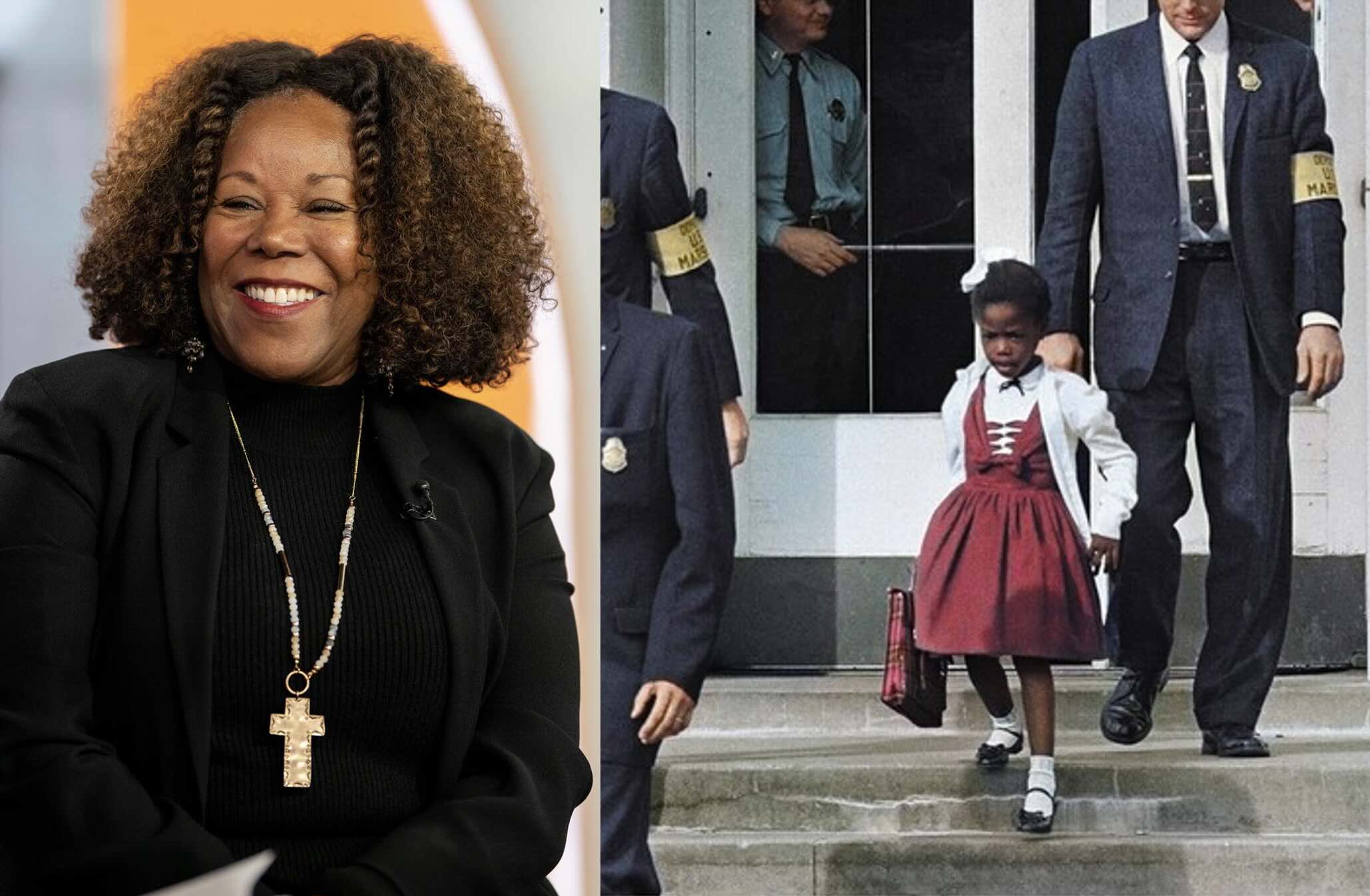
Photo: Ruby Bridges, escorted by federal marshals, enters William Frantz Elementary School in New Orleans, 1960. She was six years old | Emerald Book Image
The black-and-white photos make it feel like ancient history. A tiny girl flanked by towering federal marshals. Angry crowds screaming. A school that looks like it belongs in a sepia-toned relic of the past. But the math tells a different story. Ruby Bridges is 71 years old. She is younger than the current and most recent President of the United States. And while a rumor recently spread across social media that her TikTok account had been banned for posting "too much history," the truth is far more interesting, and far more profound.
The rumor, which sparked outrage on platforms like Threads and X, was never true. According to public statements from her family, Ruby Bridges does not have a personal TikTok account. The page that was banned was likely a fan page or an impersonator, removed for violating the platform's policies on impersonation. However, what the rumor inadvertently highlighted is the shocking disconnect between our perception of history and the reality of its timeline.
Ruby Bridges, born on September 8, 1954, is a digital native compared to many of her contemporaries. She joined Instagram in June 2020, during the height of the racial justice protests that followed the murder of George Floyd. Pop star Selena Gomez lent her 179 million follower platform to Bridges for the day, allowing her to share rare archival footage and reintroduce herself to a new generation. Today, her official account, @rubybridgesofficial, has over 580,000 followers. She uses it to promote the Ruby Bridges Foundation, advocate against book bans, and remind people that she is not a mythological figure from a distant past—she is a living, breathing grandmother with a smartphone.
The Math of Living Memory
The most confronting aspect of Ruby Bridges' age isn't just that she is still alive; it is the sheer volume of Americans who are older than her. According to current U.S. Census data, an estimated 35 to 40 million Americans are over the age of 71. That's about 11% of the current population. Think about that for a moment. Tens of millions of people alive today were breathing, walking, and watching the world on November 14, 1960, when Ruby walked past the mobs.
The protesters—the "cheerleaders" as they called themselves—who gathered outside William Frantz Elementary School to scream profanities and spit on a child were mostly in their 20s and 30s. A woman who was 25 in 1960 is now 91. A high school student who joined the rally is now in their mid-80s. They did not disappear. They are not a historical footnote. They are living in our communities today, as grandparents, as voters, and as citizens.
- 71 Years Old: Ruby Bridges is currently 71, born in the same year as the Brown v. Board of Education decision.
- 35-40 Million: The number of Americans alive today who are older than Ruby Bridges.
- 3.5-4 Million: The estimated number of Black Americans who were old enough (over age 13) in 1964 to vividly remember legalized segregation.
- 11%: The percentage of the U.S. population that lived through the Jim Crow era as adults or teenagers.
A Shared History, A Divided Memory
The reality of this timeline becomes even starker when you examine the racial demographics of the aging population. There are roughly 5.5 million Black Americans over the age of 65. There are roughly 42 million white Americans over the age of 65. This means that for every one Black senior who remembers navigating the terror of a segregated world, there are nearly eight white seniors who lived through that exact same moment from the opposite side of the color line.
These millions of white Americans experienced the Civil Rights era in vastly different ways. A portion of them actively participated in the resistance—signing petitions, throwing objects, and threatening children. A greater majority were simply silent observers. They attended all-white schools, drank from "white only" water fountains, and accepted the status quo because it was normal, legal, and comfortable. And a very small percentage, like Ruby's teacher Barbara Henry, risked their lives to do the right thing.
The notion that we are just one or two generations away from the "bigots" of the past dying off is a statistical fallacy. The people who enforced Jim Crow and the people who fought to dismantle it are the exact same generation currently living in our neighborhoods. They became the lawmakers, the school board members, and the voters who shaped the modern United States.
The Banned TikTok and the Digital Reality
The fake TikTok ban rumor resonated so deeply because it touched a nerve. In recent years, content creators have reported getting community guideline violations simply for posting videos about Ruby Bridges' experience. They highlight a genuine friction point: America is still fighting over how to tell its own story.
Ruby Bridges herself has been at the center of modern book bans, with her own children's books being challenged in school districts across the country. It is baffling that the first Black child to integrate William Frantz Elementary School in New Orleans, Louisiana, in 1960 is not only still alive but is also fighting the same battles over representation and truth from her Instagram grid. Her very existence is a contradiction to the historical abstraction. She is a real person, with real memories of hatred, and she is using digital tools to ensure those memories are not erased by the very "history" that pretends to honor her.
The next time you see the iconic Norman Rockwell painting, or the stark black-and-white news footage, remember that the colors were washed out by the media of the era, not by time. Those scenes happened in vibrant color, in the lifetime of the majority of your grandparents. Ruby Bridges is our contemporary. She is a digital citizen. And the people who hated her are still with us. The history is not in the past. It is sitting in the room with us, scrolling through its timeline.
No Ads. By Us. For Us.
This article was made possible by readers like you. We hope it inspired you to support Emerald Book, so we can continue producing content like this.
We will never show you ads, sell your data, or require a subscription to consume our content. Your gift helps us keep the truth accessible.
Click the Support button to give a gift of any amount today.
Thank you for making this work possible.