

Emerald Pages
◆
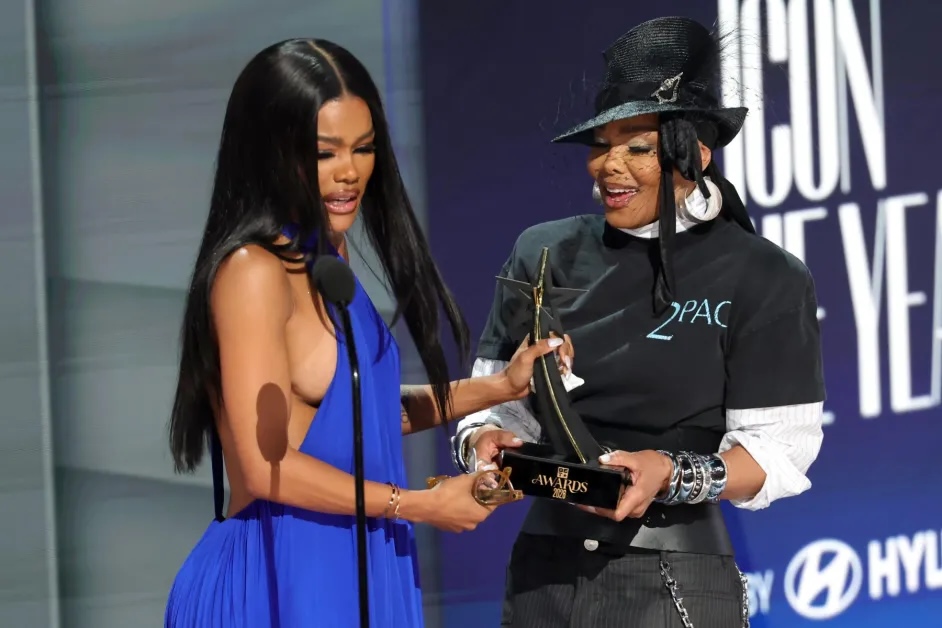
Photo: Kevin Winter | Getty Images
Scroll through the archives of BET's "Good Black News" and a pattern emerges immediately: nearly every single headline features a celebrity. A rapper's new album. An athlete's record contract. An actor's red carpet appearance. A mogul's latest business venture. For years, this has been the exclusive definition of "good news" for Black America—at least according to a network that was founded to uplift the community.
The problem is not that celebrities deserve no coverage. The problem is that they are virtually all that gets covered. Meanwhile, the actual victories that improve the material conditions of everyday Black people—grassroots organizing, policy reforms, local business growth, educational breakthroughs, labor union wins—are almost entirely absent from the platform. This is not an accident of editorial oversight. It is a calculated business strategy.
BET, now a subsidiary of Paramount Global, operates on a simple corporate logic: celebrity names drive clicks, and clicks drive ad revenue. A headline featuring Beyoncé, LeBron James, or Angel Reese guarantees millions of algorithmic impressions. A story about a successful tenant union, a community land trust, or a local Black-owned business cooperative does not. So BET chooses the former—every single time.
The Celebrity-Only Newsroom
A review of BET's "Good Black News" feature over the past several years reveals an astonishing lack of diversity in subject matter. The coverage is almost exclusively limited to:
- Entertainment: Album releases, award show wins, movie premieres, and Hollywood milestones.
- Sports: Contract signings, championship victories, and endorsement deals.
- Celebrity Philanthropy: Backpack giveaways, scholarship funds, and charitable donations—always framed as individual benevolence rather than systemic change.
- Business Ventures: Wealthy moguls launching new companies or selling their stakes for massive profits.
What is conspicuously absent? Coverage of grassroots organizers fighting for tenant rights. Reports on Black-led labor unions securing higher wages. Stories about local policy victories that expand healthcare access or improve public schools. Features on community-owned cooperatives fighting food deserts. These are the stories that define the daily lives of millions of Black Americans—and they are virtually invisible on BET's platform.
The Economics of Celebrity Aggregation
The reason for this celebrity obsession is purely financial. Digital media operates on the "attention economy," where platforms compete for user engagement measured in clicks, shares, and time spent on page. Search Engine Optimization (SEO) dictates that globally recognized names generate exponentially higher traffic than local or grassroots stories.
A headline reading "Beyoncé Donates $2 Million to Scholarship Fund" will generate millions of clicks. A headline reading "Local Tenant Union Secures Rent Control Victory in Atlanta" will not. The former requires no investigative reporting—simply rewriting a celebrity's Instagram post or press release. The latter requires actual journalism: interviews, document review, and on-the-ground reporting. One is cheap and profitable. The other is expensive and risky.
BET's digital strategy, therefore, is to aggregate celebrity content as cheaply as possible and package it as "good news." This requires no field reporting, no investigative budget, and no legal liability. It is "brand-safe" content that pleases advertisers while using racial imagery to capture a loyal audience. It transforms the rich tapestry of Black life into a narrow, commercially viable spectacle.
The Erasure of Real Community Wins
The most damaging consequence of this celebrity-only pipeline is the systematic erasure of genuine, structural victories that actually improve the material conditions of Black people. While BET's cameras focus on the red carpet, grassroots organizations are fighting for tenant rights, unionizing low-wage workers, and challenging predatory lending practices. These are the stories that define the everyday lives of millions of Black Americans, yet they are entirely absent from corporate media platforms.
Consider what BET's "Good Black News" does not cover:
- Labor Wins: Black-led unions successfully negotiating higher wages and workplace safety protections.
- Community Self-Reliance: Local neighborhoods establishing land trusts, community-owned grocery stores, and mutual aid networks.
- Policy Reforms: Grassroots legal organizations successfully challenging predatory cash bail systems or changing local housing laws.
- Educational Breakthroughs: Underfunded schools achieving remarkable outcomes through community investment and teacher organizing.
- Healthcare Access: Community clinics expanding services to underserved neighborhoods.
These are the victories that actually matter. Yet they are invisible on BET because they do not generate the algorithmic traffic that celebrity names do, and they do not fit the "brand-safe" template that corporate advertisers demand.
The Profit Pipeline: Selling Black Attention
The underlying mechanics of this operation are straightforward: BET uses Black celebrities to attract Black viewers, then sells those viewers' attention to corporate advertisers. The network does not make its billions by selling content to the community; it makes its billions by selling the community to advertisers.
This is the "audience-as-product" business model. The celebrity content is the bait. The Black consumer demographic is the product. The advertisers—predominantly white-owned corporations—are the customers. Every click on a celebrity headline, every view of a red carpet clip, every share of an award show moment is converted into ad revenue that flows directly out of the Black community and into the coffers of Paramount Global.
This dynamic explains why BET's coverage is so carefully curated. Truly covering the struggles and victories of working-class Black communities would require critiquing the very corporate structures that fund the network. It would mean reporting on labor exploitation, housing discrimination, and the racial wealth gap—topics that make advertisers uncomfortable. Celebrity coverage, by contrast, is safe, uplifting, and highly profitable.
The Betrayal of "For Us, By Us"
Perhaps the most cynical aspect of this operation is the co-optation of the "For Us, By Us" ethos. BET was originally founded in 1980 by Robert L. Johnson to give Black creators a platform when mainstream media ignored them. But after its sale to Viacom for $3 billion in 2001, the network's loyalty shifted from the community to Wall Street shareholders.
Today, the "For Us" branding is used as a marketing tool to build consumer trust, while the profits flow directly out of the Black community and into the coffers of a white corporate conglomerate. The network packages the real, historical pain, joy, and creativity of the Black community into an entertainment spectacle designed to capture massive television and digital metrics—all while ignoring the structural issues that affect the vast majority of Black people.
This performative solidarity creates a dangerous illusion. By broadcasting images of Black wealth and labeling it as "Black Excellence," the network implicitly tells working-class viewers that seeing a few multi-millionaires win trophies is equivalent to collective advancement. It absolves the corporate system of its failures and places the burden of success on the individual, ignoring the systemic barriers that remain firmly in place for the vast majority.
The Way Forward: Independent Media
The solution to this corporate extraction is not to demand better from BET—it is to bypass the network entirely. Independent, reader-supported Black media outlets are already filling the gap that BET refuses to address. Platforms like The Black Agenda Report, Word In Black, and BlackPressUSA cover the grassroots organizing, policy analysis, and community victories that corporate media systematically ignores.
These platforms operate without corporate advertisers, which means they are free to report on the issues that actually matter to working-class Black communities. They cover labor organizing, tenant rights, healthcare access, educational equity, and the systemic barriers that continue to shape Black life in America. They do not need celebrity names to generate traffic because their readers come for the substance, not the spectacle.
The choice is clear: continue consuming corporate media that reduces Black progress to celebrity gossip, or support independent platforms that treat the Black community as more than a product to be sold. The future of genuine Black journalism depends on which path we choose.
No Ads. By Us. For Us.
This article was made possible by readers like you. We hope it inspired you to support Emerald Book, so we can continue producing content like this.
We will never show you ads, sell your data, or require a subscription to consume our content. Your gift helps us keep the truth accessible.
Click the Support button to give a gift of any amount today.
Thank you for making this work possible.