

Emerald Pages
◆
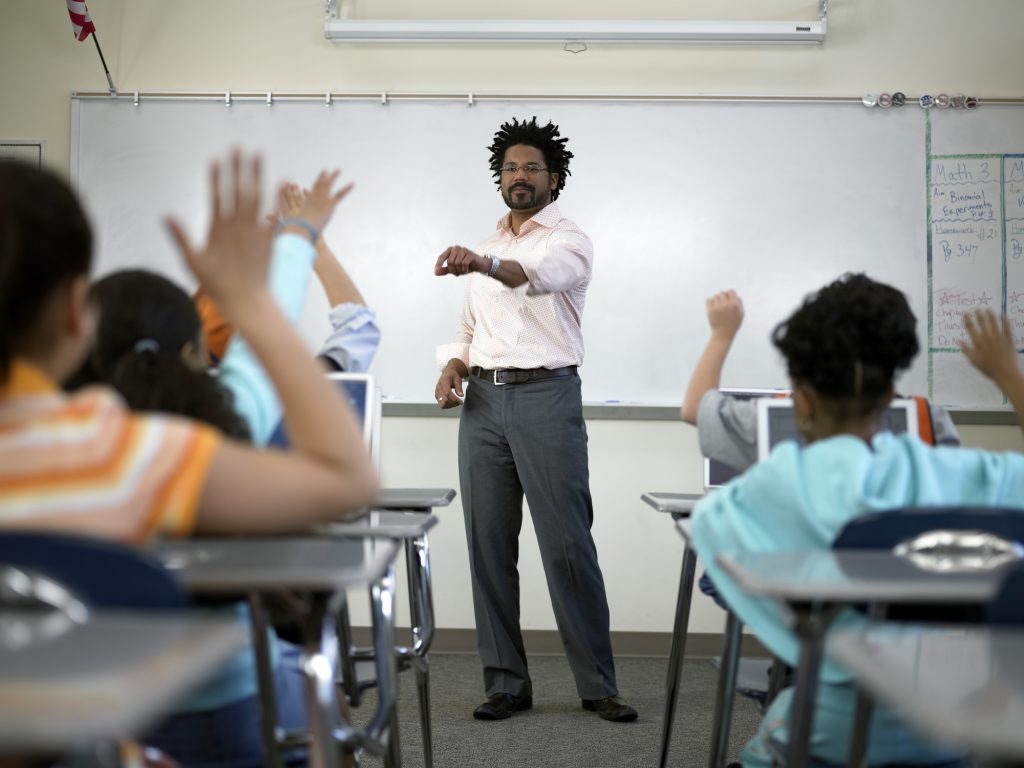
Photo: PBS
In a nation where Black students make up roughly 15% of the public school population, one might expect to see that diversity reflected at the front of the classroom. Instead, a stark and stubborn statistic persists: Black men constitute a mere 1.3% to 1.6% of all public school teachers in the United States. This figure is not an anomaly, a statistical blip, or the result of a simple lack of interest. It is the terminal symptom of a lifelong, systemic hostility that pushes Black boys and men out of education at every single level—a process that operates in near-total silence.
While the absence of Black male educators is often framed as a "shortage" or a "pipeline problem," the reality is far more insidious. Researchers and advocates describe a "push-out effect," a self-reinforcing loop where a hostile K-12 experience deters Black men from entering the profession, and the professional hostility they then face ensures they leave faster than any other demographic. This cycle is fueled by a combination of economic barriers, racial stereotyping, institutional neglect, and a pervasive code of silence that prevents Black boys and men from vocalizing their trauma, effectively camouflaging the crisis from the public eye.
To understand the depth of this crisis, one must trace the journey of a Black male from his earliest days in a classroom to the highest echelons of academia. At every step, the environment is not merely unwelcoming but is structurally designed to alienate and eject him.
The Hostile Foundation: K-12 Education
For Black boys, school is rarely a place of discovery and growth. Instead, studies consistently show it operates as a hostile space. The "discipline gap" is a well-documented phenomenon: Black boys are suspended and expelled at over three times the rate of their white peers for identical subjective infractions like "disrespect" or "loitering." This is compounded by the concept of "adultification," where educators perceive Black boys as older, less innocent, and more aggressive than their peers, leading to harsher punishments rather than academic support.
This creates a negative feedback loop. The school, which should be a nurturing environment, becomes a holding cell where they are viewed as threats. Furthermore, the lack of Black male role models—a direct result of the 1.3% statistic—means that teaching is never presented to them as a viable or desirable career option. Schools remain hostile and unwelcoming spaces for Black boys, effectively criminalizing their very presence.
The Broken Pipeline: Higher Education and Licensure
For those who survive the K-12 system, the barriers continue. Declining college enrollment among Black men is a major issue, but even for those who do pursue higher education, financial strain poses an immediate barrier. A college degree is a strict requirement for teaching, yet Black students are more likely to rely on student loans. The cost of college, coupled with months of unpaid student teaching, creates a financial bottleneck that pushes many out of education majors. Additionally, state licensure exams have historically shown racial scoring disparities, acting as yet another administrative blockade.
- The Dual Tax: Black male educators are frequently funneled into roles as disciplinarians rather than instructional leaders, diverting them from their passion and leading to burnout.
- Economic Pressures: Low starting salaries discourage many college-educated Black men, who may face familial pressure to pursue higher-paying fields to close generational wealth gaps.
- Isolation: Being the only Black male educator in a building creates professional isolation, with a lack of mentors or peers who share their lived experiences.
This "dual tax" and isolation ensure that Black men leave the teaching profession at higher rates than any other demographic. The system doesn't just fail to attract them; it actively repels them through burnout and a lack of support.
The Consequence of Silence
Perhaps the most profound element of this crisis is the silence that surrounds it. Black boys and men, socialized into stoicism by society's definitions of hyper-masculinity, rarely voice their trauma. Admitting to being hurt by a teacher's bias or expressing fear of the school environment is often stigmatized as a sign of weakness. For Black male educators, speaking out against a hostile work climate can be career suicide, labeling them as "difficult" or "aggressive."
This silence serves to camouflage the issue. Because the hostility is rarely spoken about out loud, policymakers and school boards conclude that "everything is fine" or that Black men simply "aren't interested" in education. The trauma is internalized, leading to high rates of anxiety, depression, and professional burnout. This causes Black men to quietly resign and slip away without anyone understanding why, leaving the next generation of educators to walk into the exact same minefield unwarned.
The Dearth at the Top: Higher Education and Administration
This hostile push-out is not confined to K-12 classrooms. It spans the entire educational hierarchy. In higher education, Black men make up just 3% of all full-time college faculty, and that number drops to just 2% at the level of full, tenured professors. They face a "Black Tax," where they are disproportionately burdened with unpaid diversity labor and mentorship, leaving them with less time for the research required to secure tenure. The dearth is also evident in school leadership, where Black men constitute only about 2% of all principals, often blocked from academic leadership tracks because they are pigeonholed into disciplinary roles.
This universal shortage across all tiers solidifies the self-reinforcing loop. If Black men are missing from the top, they cannot change the policies required to protect and recruit Black boys and men at the bottom. The decision-makers who design curriculum, write disciplinary policy, and allocate funding remain detached from the lived experiences of Black boys, ensuring the hostile environment is continuously maintained and replicated.
The numbers paint a clear picture, but the silence tells the real story. Only by creating psychologically safe spaces for Black men to speak openly about their experiences can we begin to disrupt the loop. It requires a concerted effort to dismantle the barriers at every level, from restorative justice policies in schools to eliminating biased testing in licensure and supporting diverse cohorts of educators from the classroom to the tenure track. Until that happens, the American education system will continue to be, for Black boys and men, a place of profound hostility, systemic push-out, and deafening silence.
No Ads. By Us. For Us.
This article was made possible by readers like you. We hope it inspired you to support Emerald Book, so we can continue producing content like this.
We will never show you ads, sell your data, or require a subscription to consume our content. Your gift helps us keep the truth accessible.
Click the Support button to give a gift of any amount today.
Thank you for making this work possible.