

Emerald Pages
◆
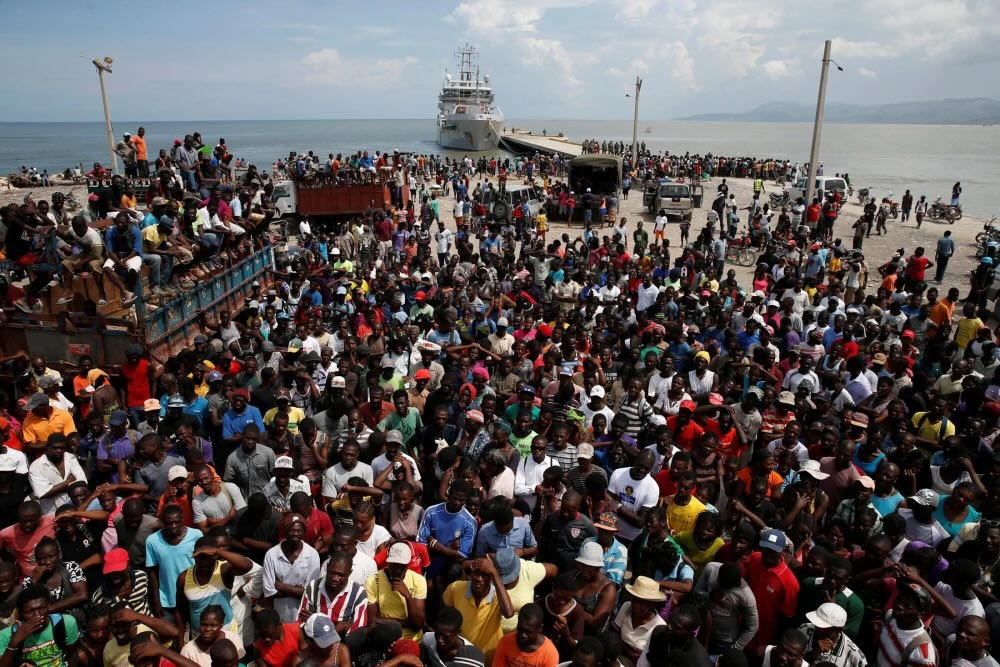
Photo: Carlos Garcia Rawlins | Reuters
On July 27, 2026, the Department of Homeland Security officially terminated Temporary Protected Status (TPS) for approximately 330,000 to 350,000 Haitian nationals. The legal battle was won. The Supreme Court had cleared the path. Federal judges had lifted the remaining injunctions. For the Trump administration, the humanitarian shield that had protected Haitians since the 2010 earthquake was finally, definitively, gone.
But then came the reality. The administration had stripped work authorization from 350,000 people overnight — and had absolutely no logistical capacity to actually deport them.
The gap between the administration's aggressive rhetoric and the physical realities of the immigration system has exposed a staggering operational failure. Critics, local officials, and even some Republican governors have drawn sharp attention to what they describe as a chaotic policy that damages the domestic economy while failing to achieve its stated goal.
The Numbers That Break the System
Let's start with the aviation math. According to Immigration and Customs Enforcement (ICE) data and independent tracking by organizations like the Human Rights First ICE Flight Monitor, the U.S. government typically operates around 280 to 300 total removal flights per month across all 79 receiving countries combined. This is the entire global capacity of the ICE Air Operations network.
To deport 350,000 Haitians, the administration would need to operate roughly 2,200 to 3,300 full charter flights — assuming each plane carries between 100 and 150 passengers. Put another way: that's more than seven times the total monthly global deportation capacity of the entire U.S. immigration enforcement apparatus.
The Haitian government, meanwhile, has officially been notified to expect an expansion to two flights per week, carrying roughly 250 people total. At that pace — which represents the real-world operational reality, not a theoretical surge — the math is devastating:
- Two flights per week × 250 people = 1,000 people per month
- 350,000 people ÷ 1,000 per month = 350 months
- 350 months = just over 29 years
Even under an absolute "wartime surge" scenario — where DHS redirects 25% of its entire global deportation fleet exclusively to Haiti, running two flights every single day — the timeline still stretches to 48 months of flawless execution. That's four years of perfect operations with zero plane breakdowns, zero hurricanes, zero court interventions, and zero tracking failures. In reality, experts estimate 6 to 10 years as the absolute best-case scenario.
Three Physical Roadblocks That Cannot Be Overcome
The flight math is only the beginning. The physical infrastructure of deportation makes a rapid removal structurally impossible.
1. Haiti Can Refuse the Airspace. A country must legally accept its citizens back. If DHS tries to land five planes a day, the Haitian government can simply shut down the runway, ground the planes, or refuse to process the paperwork. The U.S. cannot logistically execute mass deportations to a foreign nation without that country's operational compliance — and Haiti, already in crisis, has no incentive to cooperate with a flood of returnees it cannot absorb.
2. The Cap-Haïtien Airport Bottleneck. The primary airport in Port-au-Prince is heavily crippled by warfare that now controls approximately 85% of the capital. Flights are forced to use Cap-Haïtien International Airport — a small regional facility on the northern coast that lacks the refueling capabilities, tarmac space, air traffic control bandwidth, and security personnel to handle a constant influx of multiple federal jets per day.
3. The "Shuffle Flight" Bottleneck. For every single international removal flight that leaves the U.S., ICE has to run an average of 3 to 4 domestic "shuffle flights" to round people up from local field offices and fly them to central immigration staging hubs like Alexandria, Louisiana, or Miami. This creates a massive domestic aviation bottleneck that drains ICE personnel and funding before a single plane ever leaves U.S. airspace.
The Economic Chaos of Stripping Work Authorization
Because the administration cannot physically deport the population, it has instead created a massive economic disruption with no resolution. When TPS expired on July 27, 2026, the Employment Authorization Documents (EADs) held by these 350,000 individuals became legally void. Employers facing severe federal penalties — up to $16,000 per violation for "knowingly hiring" an undocumented worker — were forced to issue immediate terminations.
The result: 350,000 people stripped of their legal right to work overnight, while remaining physically present in the United States.
The devastation to critical sectors has been immediate:
- Elder Care and Nursing: Thousands of Haitian nationals worked as Certified Nursing Assistants (CNAs) and home health aides. Nursing homes — already facing chronic staffing shortages — are struggling to replace them, directly threatening patient care for vulnerable elderly populations.
- Agriculture and Food Processing: From industrial poultry plants to seasonal harvesting, food production facilities have lost a massive portion of their stable, experienced legal workforce, threatening supply chains and driving up costs.
- Manufacturing and Logistics: Factories and warehouses in regions with high Haitian populations have reported sudden labor deficits, forcing them to scale back production or operating hours.
- Tax Revenue Collapse: This community contributed billions in federal, state, and local taxes through automated payroll deductions. Overnight, those revenue streams vanished.
In cities like Springfield, Ohio — where thousands of Haitian nationals had stabilized the local manufacturing boom — business leaders warn that the sudden loss of workers will devastate regional economic growth. Ohio's Republican Governor Mike DeWine has expressed deep concern, noting that the loss of these hard-working communities will devastate the nursing, hospitality, and manufacturing sectors.
The Rise of the Underground Economy
Because the vast majority of these 350,000 people remain inside the United States — the planes simply don't exist to remove them — the policy has forced an integrated, tax-paying population into the shadows.
Stripped of legal protections, individuals are forced to seek under-the-table cash jobs to survive. This makes them highly vulnerable to wage theft, dangerous working conditions, and exploitation. Unable to legally drive, rent apartments, or earn a legitimate living, families are forced to rely heavily on local food banks, charities, and religious organizations for basic survival.
The administration's "solution" to this enforcement failure has been electronic surveillance. In places like Springfield, ICE is mailing check-in notices and outfitting individuals with electronic ankle monitors and smartphone tracking apps rather than executing immediate physical arrests. The government is explicitly banking on the pressure of these ankle monitors — combined with a $2,600 stipend and free commercial ticket home — to make people leave on their own.
But the self-deportation gamble is failing. Most people are not taking the offer. They are staying — trapped in legal limbo, unable to work, unable to drive, and waiting for immigration court dates that may take years to arrive.
A Policy That Outlives Its Proponents
The stark reality is this: the administration has won the legal battle, but it has lost the logistical war. By stripping work authorization without having the capacity to deport the population, the policy has effectively transformed hundreds of thousands of tax-paying employees into a legally frozen domestic underclass — a situation that will persist for years, if not decades.
At the current operational pace, the deportation of all 350,000 Haitians would stretch until 2053. Even the most optimistic surge scenario pushes well past the end of the current administration. The vast majority of these 350,000 people will be living in the U.S. without legal status for a very long time — unemployed, untrackable, and increasingly reliant on public assistance.
The administration has cleared the legal path. But the laws of aviation physics, airport capacity, and international diplomacy remain immovable constraints. In the end, the policy has achieved only one thing: it has made 350,000 productive workers unemployed overnight, destabilized critical American industries, and created an economic and humanitarian crisis that will outlive its architects.
No Ads. By Us. For Us.
This article was made possible by readers like you. We hope it inspired you to support Emerald Book, so we can continue producing content like this.
We will never show you ads, sell your data, or require a subscription to consume our content. Your gift helps us keep the truth accessible.
Click the Support button to give a gift of any amount today.
Thank you for making this work possible.