

Emerald Pages
◆
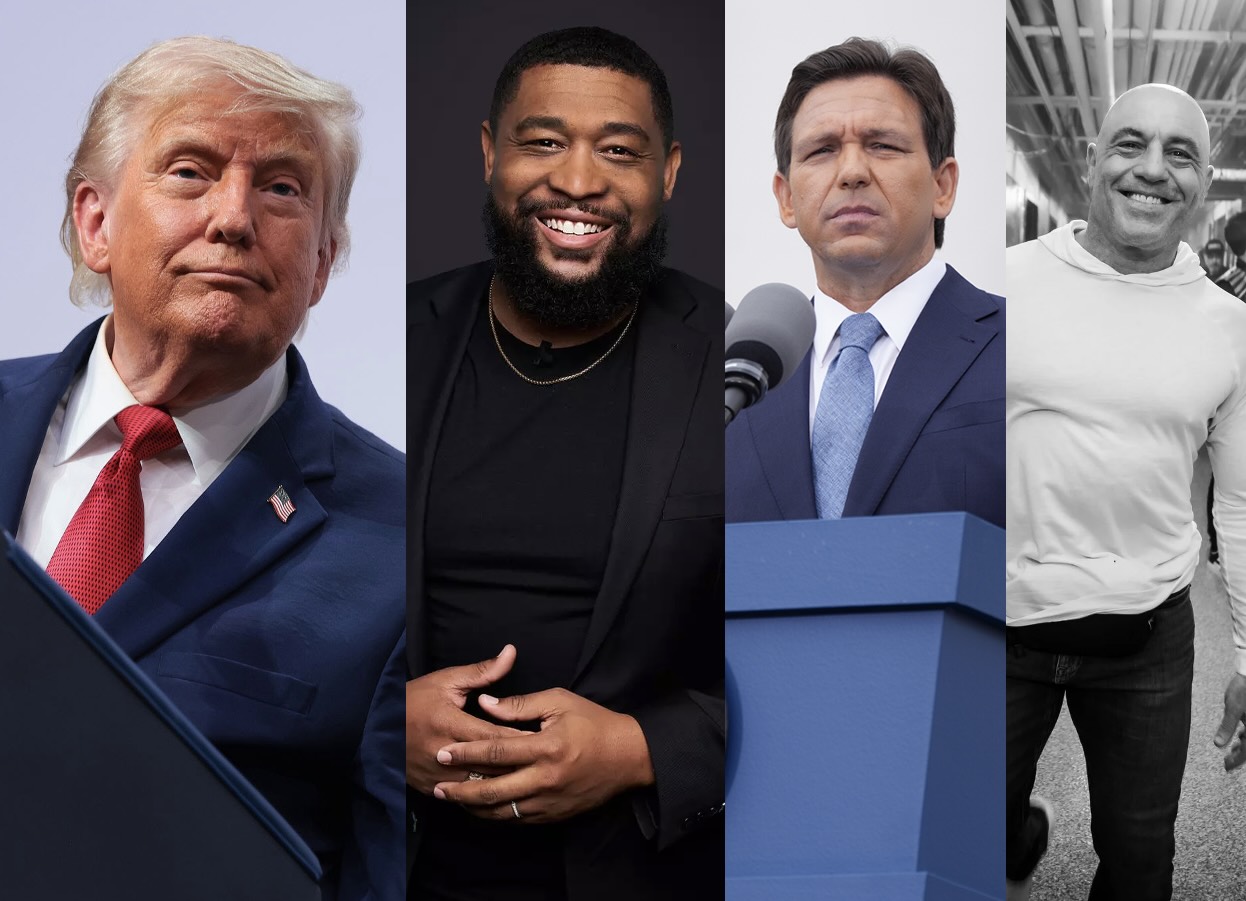
Photo: Emerald Book Image
Fewer than half of American adults read a single book for pleasure in 2022. Roughly 44% read zero books over the course of the year. The proportion of the population that reads for personal interest dropped from 28% to just 16% over the last two decades. The average adult now spends only 15 minutes a day reading. These numbers represent the erosion of cognitive stamina required for democratic citizenship—a transition into what sociologists call a "post-literate age," where complex, nuanced information is replaced by emotional soundbites and algorithmic outrage.
This decline directly fuels anti-intellectualism. When long-form reading drops, critical thinking collapses. Populations become susceptible to emotional slogans, misinformation, and the dismissal of expert consensus. Political scientists track this phenomenon through shifting public attitudes, data consumption patterns, and funding allocations. The data is clear: we are witnessing the most significant rejection of expertise in modern history.
The Measurable Collapse
The metrics are damning. The Institutional Trust Gap shows a historic collapse in confidence in higher education, tracked by Pew and Gallup. Since 2016, the partisan divide has widened dramatically—right-leaning voters increasingly view universities as politically motivated rather than objective. Meanwhile, researchers track "epistemic hubris"—the tendency of those with low factual knowledge to dismiss expert consensus. Public sentiment analysis shows a growing tendency to reframe specialized knowledge as "elitist."
This is reinforced by Policy and Budgetary Shifts. Public universities face aggressive budget cuts and direct challenges to their autonomy. The National Institutes of Health has documented how rural identity has become a contributing factor, with anti-intellectualism rising "particularly in communities that feel left behind by the knowledge economy." Finally, algorithmic architecture on platforms like TikTok, X, and Instagram prioritizes outrage and confidence over factual nuance, structurally changing how society values information.
- Fewer than half of Americans trust higher education "a great deal"—a historic low.
- Studies show individuals with low factual knowledge are most likely to dismiss expert consensus.
- State legislatures are aggressively defunding universities and altering tenure protections.
- Platforms are mathematically optimized to prioritize outrage over factual nuance.
The Global Network
While Donald Trump is the most visible face of American anti-intellectualism, a global network has built massive political capital by challenging academic systems and scientific institutions. Javier Milei of Argentina enacts "austerity shocks" targeting state-funded intellectual hubs. Viktor Orbán of Hungary forced Central European University out of Budapest, banned gender studies, and placed the Hungarian Academy of Sciences under state control. JD Vance explicitly urges conservatives to aggressively attack the universities. Jair Bolsonaro froze funding for federal universities and mocked scientific advisories.
In Europe, Jordan Bardella and Marine Le Pen channel an "anti-establishment mood" against Parisian elites. Alice Weidel of Germany's AfD campaigns to dismantle public health agencies. In Silicon Valley, Elon Musk champions "citizen journalism" over peer-reviewed reporting, while Marc Andreessen criticizes "elite experts" as obstacles to progress. The Heritage Foundation and Claremont Institute formulate policy frameworks to attack university accreditation and weaken academic tenure.
The American Vanguard: Trump, DeSantis, Rogan, and Tatum
In the United States, the movement is driven by state governors, media influencers, and alternative health advocates weaponizing public distrust to restructure laws, alter curricula, and bypass expertise.
Donald Trump is the ultimate accelerant. He codified anti-intellectualism into Trumpism—a structured, top-down assault on institutional expertise. He openly treats data and intelligence briefings as suspicious, labeling fact-checkers and academic institutions as "enemies of the people." He regularly deploys the phrase "the experts are terrible," weaponizing past failures to justify ignoring specialized expertise. His administration pushed through "Schedule F" executive orders, stripping job protections from career federal employees and transforming them into at-will staff who can be fired if their data conflicts with political goals. He unified working-class populists, Silicon Valley disruptors, and far-right policy architects into a single political force, providing the global blueprint for anti-intellectual governance.
Ron DeSantis has turned Florida into the primary testing ground for anti-intellectual policy. He signed bills to restrict diversity initiatives, overhauled New College of Florida to replace academics with conservative activists, and passed laws making it easier to challenge and ban school books. His administration treats universities not as centers of inquiry but as ideological battlegrounds.
Joe Rogan hosts one of the world's most-listened-to podcasts, becoming a hub for skepticism toward expert consensus. He elevates fringe scientists and frames agencies like the FDA and CDC as corrupt or dishonest. The "parasocial" bond is powerful—listeners spend hours with Rogan, feeling like they know him personally, while scientists speak from sterile professional distance. Humans are wired to trust people they feel they know over institutional figures.
Officer Brandon Tatum exemplifies the movement at the influencer level. During his Jubilee "Surrounded" appearance, he sat alone to debate 20 participants on policing, race, and politics. The vast gulf between being a visible media influencer and possessing verified data was exposed. He routinely substituted his personal experience for systemic data—when faced with statistical realities like Black maternal mortality disparities, he lacked baseline knowledge to engage. His default was the individualistic fallacy: if he hadn't personally witnessed a systemic bias, the data proving its existence could be dismissed. Media analysis showed his primary objective was brand management, not truth-seeking. When confronted with indisputable evidence—like Trump's record on the Central Park Five—he calculated how to pivot rather than adjust his worldview. Changing his mind would alienate his subscriber base and shatter his posture of absolute certainty. He has built a digital empire on the assumption that visibility equals competence, but when put in a room with people armed with actual data, the illusion evaporates.
Why Anti-Intellectuals Trust Conmen Over Doctors
It is disorienting to feel like the baseline for truth has eroded. We live in a world where the voice in a pair of headphones carries more authority than a wall of medical degrees. This happens because of how our brains process safety and authority.
First, the Parasocial Bond. When you listen to a podcaster for hours, your brain tricks you into feeling like they are a trusted friend. A doctor speaks from professional distance. A podcaster speaks conversationally. When a podcaster says, "I'm just a regular guy asking questions," it drops your defenses in a way an academic presentation never can.
Second, the Marketing of Absolute Certainty. Real science is cautious—"the data suggests," "we don't fully know yet." Conmen offer easy, absolute solutions. A doctor tells a patient that managing a chronic illness requires difficult lifestyle changes. An influencer offers one supplement that will "cure" it. People crave certainty in a chaotic world, and conmen sell a black-and-white illusion of control that honest science cannot promise.
Third, the Underdog Narrative. Modern media figures frame themselves as brave underdogs fighting a corrupt establishment. "The medical establishment doesn't want you to know this" appeals to people's love for the rebel hero. It tells the listener they are part of an enlightened club that sees through the "lies" of the mainstream. It transforms a lack of specialized knowledge into a badge of honor.
Fourth, the Broken Feedback Loop. People are driven into the arms of alternative figures by real systemic failures. Corporate healthcare gives doctors only 10 minutes with patients. When people feel dismissed or bankrupt by traditional medicine, they seek spaces where they feel heard. When institutions update guidelines as new data emerges, bad-faith actors point to those pivots as proof of conspiracy. We have arrived at a moment where the delivery of information matters more than its validity.
Conmen win by convincing the audience that everyone else is lying. When a figure faces felony convictions or scientific debunking, they reframe the entire system—courts, scientists, journalists—as a corrupt cabal. "They're not after me, they're after you" turns their failures into a badge of honor. To followers, convictions are not proof of guilt but proof of how terrified the "establishment" is.
True science is humbling. It tells us the world is complicated, our intuition is often wrong, and we must change based on new data. A conman tells us exactly what we want to hear. He validates anger, flatters instincts, and gives us a simple enemy. He offers a world where we don't have to do the hard cognitive work—we just have to believe.
We no longer share a single baseline of facts. Digital ecosystems completely dictate what people believe is real. A person immersed in alternative media rarely sees actual evidence—and if they do, it comes wrapped in commentary explaining why it's fabricated. In highly polarized environments, political alignment becomes identity. Admitting a scientist is right—or a preferred leader is a fraud—requires tearing down social circles and self-conception. For many, it is less painful to believe a lie than to endure the isolation of admitting they were conned.
Where Is Humanity Headed?
When leadership relies on personal anecdote over systemic evidence, sociologists call it a "gut-instinct technocracy"—a shift away from Enlightenment-era, data-driven governance toward tribal, personalized rule. When policy is written through a leader's singular experience rather than rigorous data, we see predictable outcomes.
Personal experiences do not scale. A rule that works for a wealthy individual often fails when applied to millions. A leader who grew up in security might assume hard work alone guarantees success, ignoring structural poverty, geographic isolation, or failing infrastructure. In science, a sample size of one is statistically useless. In governance, it creates laws that fail large-scale crises.
Data-driven systems are slow but stable. Personal-whim systems change when a new leader takes office—or when an existing leader has a bad day. If a leader has a bad experience with an agency, they may abolish it rather than reform it. Complex challenges—stabilizing power grids, preventing pandemics—require multi-decade planning. Instinct-based governance cannot plan beyond the next election cycle.
When leaders use personal experience as their compass, they can only feel empathy for what they have personally witnessed. A politician might vote against funding a rare disease program—until their own family member falls ill. This leaves thousands of other programs underfunded simply because the leader has no connection to them. Policy begins to favor the demographics and classes the ruling elite personally belong to, widening the gap between governed and governing.
Humanity does not collapse under anecdotal leadership, but progress slows. Societies that reject data-driven policy lose their competitive edge to societies that fund objective research. When ideological instinct overrides scientific consensus, top researchers leave for nations where expertise is valued. Anecdotal leadership is entirely reactive—it cannot anticipate crises; it can only respond after the crisis has personally impacted those in power.
Historically, this cycle self-corrects, though the correction can take a generation. When gut-instinct policy runs into the hard reality of physical or economic laws—a collapsing bridge that lacked engineered data, or an economy managed by personal feelings—the public experiences "consequence fatigue." The systemic failures become so widespread that the population pivots back, demanding credentialed competence to rebuild what was broken. Until then, we navigate the disorienting reality of trusting podcasters over experts, and conmen over doctors, hoping the course correction arrives before the damage becomes irreversible.
No Ads. By Us. For Us.
This article was made possible by readers like you. We hope it inspired you to support Emerald Book, so we can continue producing content like this.
We will never show you ads, sell your data, or require a subscription to consume our content. Your gift helps us keep the truth accessible.
Click the Support button to give a gift of any amount today.
Thank you for making this work possible.