

Emerald Pages
◆
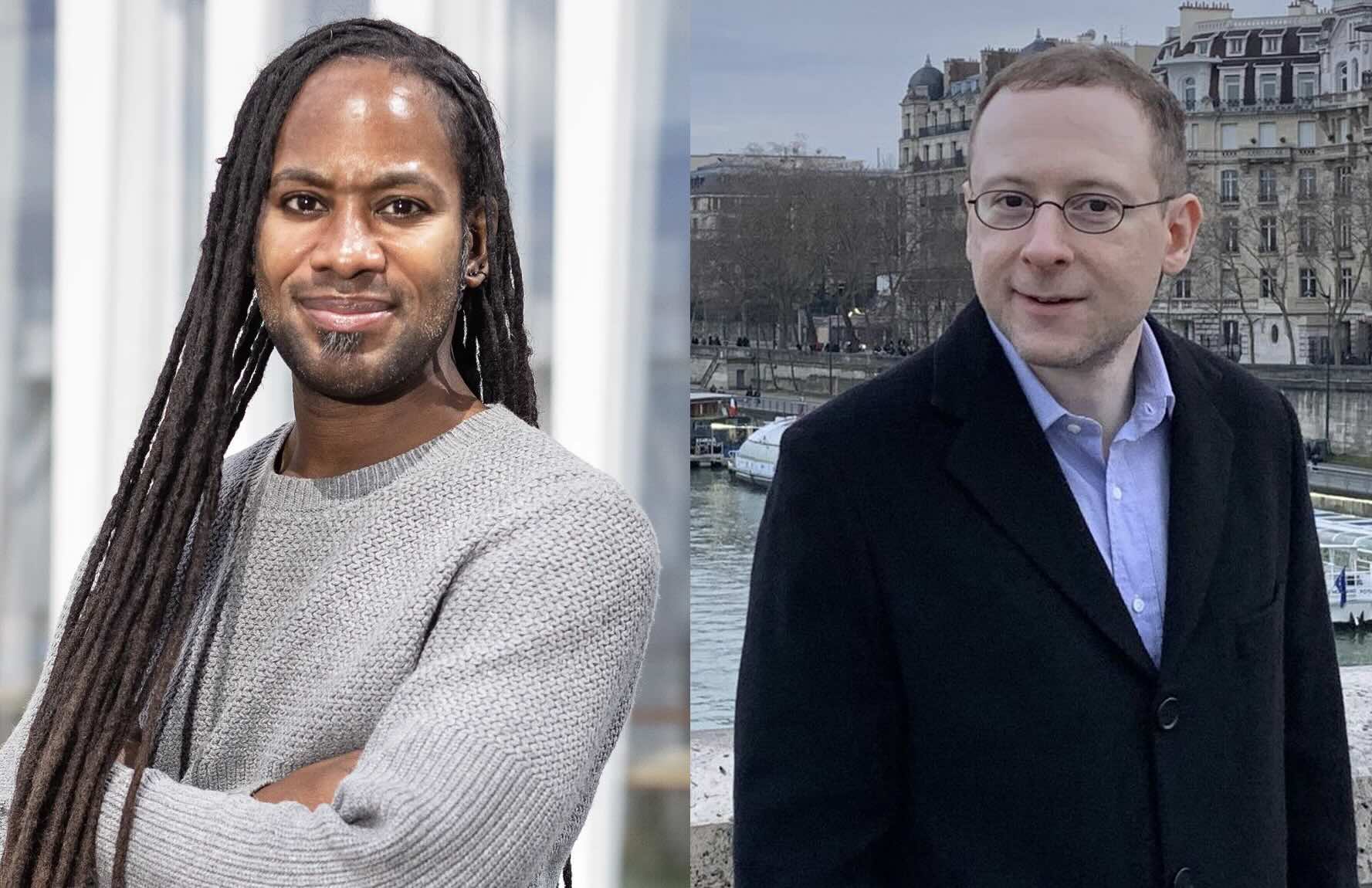
Photo: Jason Arday (left) and Nathan Cofnas (right) | Emerald Book Image
In 2023, the academic world celebrated a landmark moment. Professor Jason Arday was appointed as the youngest Black professor in the 800-year history of the University of Cambridge. His story was one of profound inspiration—a man who could not read until the age of 18 due to autism and a global development delay had risen to the pinnacle of British academia. He was a symbol of resilience, diversity, and institutional progress.
Just three years later, on August 5, 2026, that symbol lay in ruins. Arday resigned "with immediate effect" as Cambridge launched a formal investigation into his credentials, marking a spectacular fall from grace that has sent shockwaves through the academic community.
The unraveling began with Nathan Cofnas, a controversial researcher who had been fired from his own role at Cambridge in 2024 following an uproar over a blog post in which he argued that under systemic meritocracy, Black people would be underrepresented in higher education. Cofnas, who has openly described himself as a "race realist," was the first to publicly expose Arday's plagiarism.
The Evidence: Undeniable Fraud
The evidence Cofnas unearthed—and that was later independently verified by The Times of London, the BBC, and Retraction Watch—was damning. Whistleblowers used plagiarism-detection software to find that Arday's 2015 Ph.D. thesis contained 188 sentences that were identical or near-identical to a 2009 thesis from Brunel University. The copying was so sloppy that it retained unique copy-editing mistakes from the original.
But the deception ran far deeper than text. In a 2018 paper, Arday rewrote analytical paragraphs from an epidemiologist's study and presented them as verbatim quotes from Black research participants he claimed to have interviewed. In another, his data claimed that 78% of his interviewees were female and 32% were male—a mathematical impossibility totaling 110%.
The fraud extended beyond his research. Investigators found that Arday had claimed visiting professorships at the University of Glasgow and Ohio State University, both of which denied having any record of his appointment. He publicly claimed to have raised £5.5 million for charity and run 30 marathons in 35 days—feats that could not be substantiated by public records. He even alleged being targeted by a masked intruder with a knife, a claim that campus CCTV did not capture and was never reported to police.
The Racist Whistleblower and the Defense of Arday
The identity and motivations of Cofnas are central to this scandal. Because Cofnas has a history of writing provocatively about race and intelligence, Arday's defenders—including thousands of academics, a prominent autism researcher, and several British members of parliament—argued that the investigation was a targeted, politically and racially motivated smear campaign. They claimed a white professor with minor errors would not have faced the same obsessive, hostile scrutiny.
Arday himself has strongly defended his integrity, stating that his resignation is not an admission of guilt but a necessity for his own mental well-being. He attributed errors in his early work to his autism and global development delay—noting that he relied on mimicry to process information—and argued that the intense scrutiny was a "racially motivated" campaign.
However, investigative journalists and neutral observers argue that while the whistleblower's personal politics are highly controversial, the actual factual evidence he uncovered is undeniable. Mainstream outlets like the BBC, The Times, and The Guardian did not rely on Cofnas's word; they launched their own independent investigations and verified the 188 plagiarized sentences, the impossible 110% data statistics, and the false visiting professorship claims.
Ultimately, the argument that it was purely a racist smear collapsed when Professor Arday himself publicly admitted to making severe "mistakes" in his early work and misrepresenting his charitable marathon achievements. Cambridge did not force Arday out because of who blew the whistle; they forced him out because they could no longer defend the fraudulent data.
The 11-Year Cover-Up
The timeline of the deception is staggering. It began in 2015, 11 years before his resignation, with his plagiarized Ph.D. thesis. In 2018, he published fabricated data. In 2021, he secured positions at the University of Glasgow and Oxford, built on this fraudulent foundation. When Cambridge hired him in 2023, they turned him into a global symbol.
But how did this fraud survive for over a decade? The answer lies in a powerful combination of institutional inertia, legal aggression, and a systemic failure of oversight. When early whistleblowers brought evidence to Cambridge, the university—having invested immense prestige in Arday—publicly dismissed the allegations as a "racially motivated campaign." Meanwhile, Arday retained Carter-Ruck, one of the UK's most feared defamation law firms. In 2025, when a journalist from Times Higher Education finalized a comprehensive exposé, the law firm issued severe legal threats that spiked the story for nearly a year. In an extraordinary escalation, Arday filed a harassment complaint with Scotland Yard against the journalist, leading police to officially warn the reporter to stop asking questions.
A Systemic Problem, Not an Isolated Incident
The Arday case is a devastating indictment of modern academia's structural flaws. Critics argue that the system is built on a foundation of trust that is easily exploited. Peer review, the cornerstone of academic publishing, relies on an honor code where reviewers rarely request raw data or verify if interview quotes are real. The pressure to "publish or perish" incentivizes quantity over quality, while compelling narratives are often fast-tracked through the system because they generate positive public relations.
Most damning is the failure of basic vetting. Elite universities routinely fail to verify simple CV claims, over-relying on the prestige of previous institutions. Cambridge, Oxford, and Glasgow hired Arday without checking his visiting professorships or his athletic achievements. When institutions discovered a problem, they prioritized protecting their brand and vanity metrics over academic integrity.
Yet we must also confront the context in which this scandal unfolded. The investigation was initiated by Nathan Cofnas—a researcher who was fired from Cambridge for writing that Black people would be underrepresented under meritocracy and who has openly described himself as a "race realist." His history of provocative writing about race and intelligence led many to view his campaign against Arday as a racially motivated attack on a high-profile Black scholar who championed diversity.
While the factual evidence Cofnas uncovered—the plagiarized sentences, the fabricated data, the false CV claims—is undeniable, the selective and obsessive nature of the scrutiny raises uncomfortable questions. Arday's defenders, including thousands of academics and several British MPs, have argued that a white professor with similar errors would not have faced the same relentless campaign. The academic establishment, eager to protect its reputation, ultimately abandoned Arday, leaving many to wonder whether the system was more interested in punishing a Black success story than in pursuing truth.
The Arday case is a wake-up call. It exposes the vulnerabilities of an academic system that relies on reputation over verification, narrative over truth, and brand protection over integrity. For every scholar who does good work—and there are thousands—this scandal serves as a reminder that the system must reform. As universities grapple with the fallout, the question remains: how many other Jason Ardays are hiding in plain sight—and how many will be destroyed by the next campaign disguised as a quest for integrity?
No Ads. By Us. For Us.
This article was made possible by readers like you. We hope it inspired you to support Emerald Book, so we can continue producing content like this.
We will never show you ads, sell your data, or require a subscription to consume our content. Your gift helps us keep the truth accessible.
Click the Support button to give a gift of any amount today.
Thank you for making this work possible.