

Emerald Pages
◆
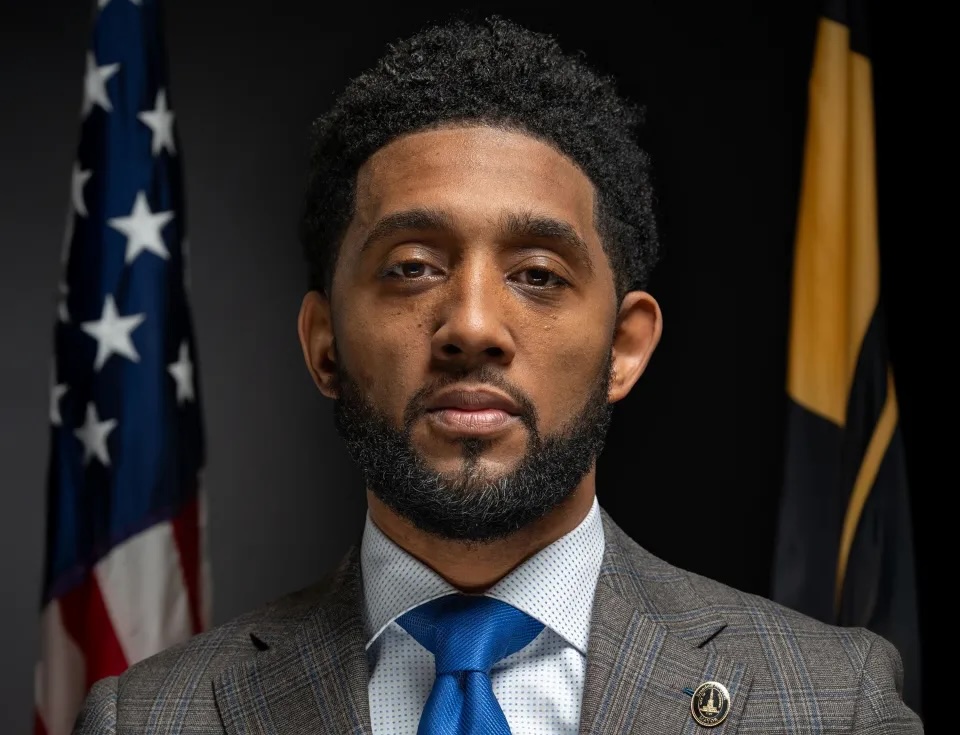
Photo: Baltimore City Mayor Brandon M. Scott
In 2019, Baltimore was a city in crisis, recording 348 homicides—one of the deadliest years in its history. The narrative was grim, and conventional wisdom suggested the only solution was a massive expansion of the police force. But by 2026, the city has completely rewritten that story, achieving a near-50-year low in homicides with a police department that is smaller and more resource-strained than it was during its peak crime years.
This unprecedented shift proves that reducing violent crime isn't about putting more officers on the streets; it's about using the resources you have more intelligently. Baltimore has slashed its homicide rate by 68% from its 2019 peak—a decline that has outpaced the national average and positioned the city as the leading municipality in the United States for the rate of crime reduction. While Baltimore does not have the lowest absolute homicide rate, its trajectory is unmatched.
The numbers are undeniable. Baltimore recorded just 5 homicides in April 2025 and 7 in July 2026—marking the fewest murders for any July on record and only the second time the city has seen single-digit homicides in that month in the last 25 years. As of August 2026, the city is on pace to record fewer than 100 homicides for the first time since the mid-1960s. To understand how they did it, you have to look beyond the badge.
The Data Behind Baltimore's Historic Drop
Baltimore's violent crime rates have plummeted to levels the city has not seen in decades. The 2025 calendar year finished with 133 homicides—dropping below the 200 threshold for the first time in over a decade and hitting the lowest total annual death toll in nearly 50 years.
The momentum has only accelerated in 2026. Mid-year data released by the Baltimore Police Department shows homicides dropped another 23% year-over-year, falling to 50 homicides by July 1 compared to 65 at the same time last year—the fewest first-half homicides ever recorded in the city's tracking history.
A July 2026 report from the Council on Criminal Justice (CCJ) highlighted that Baltimore's homicide rate is now 68% lower than it was during its peak in 2019. As of August 3, 2026, Baltimore has recorded 60 homicides year-to-date, marking a 25.9% decrease compared to the 81 homicides recorded by the same date last year.
Non-fatal shootings have also declined, dropping to 187 incidents year-to-date from 191 during the same period in 2025. The city's homicide clearance rate has surged to roughly 60% to 70%, up from 54% over the same period last year, meaning detectives are closing cases much faster and breaking the cycle of retaliatory violence.
The progress extends to property offenses as well. Compared to their highest recent peaks, carjackings are down 73% and motor vehicle thefts have dropped 51%, according to the CCJ.
A Strategy of Precision, Not Saturation
The centerpiece of Baltimore's transformation is the Group Violence Reduction Strategy (GVRS). Rather than blanket over-policing entire neighborhoods, data analysts pinpointed the incredibly small percentage of individuals responsible for the vast majority of gun violence.
This strategy follows a strict process:
- Direct Call-Ins: High-risk individuals are called into meetings with law enforcement, community elders, and social workers.
- The Ultimatum: They are told clearly that the shooting must stop. If their group commits another murder, the entire group faces immediate, coordinated federal and local prosecution.
- The Help: Simultaneously, they are offered an immediate way out, including emergency housing, stipends, education, and employment help.
- Success Rate: Over 91.5% of GVRS participants have not been revictimized or re-involved in shootings after enrolling.
The city also invested heavily in its Community Violence Intervention (CVI) ecosystem, which includes programs like Safe Streets and nonprofits like Roca. These programs hire "trusted messengers"—often formerly incarcerated individuals from the neighborhood who have high street credibility—to track neighborhood feuds and physically step in to mediate gang disputes and retaliatory beefs before anyone pulls a trigger. Hospital-Based Intervention Programs place counselors at trauma centers; when a shooting victim arrives, counselors immediately work with the victim's family to prevent retaliatory violence from sparking.
Because Baltimore was plagued by untraceable weapons, Brady: United Against Gun Violence partnered with the City of Baltimore to bring litigation against a national manufacturer and regional dealer of ghost guns. These cases became an important part of the city's broader strategy to disrupt the supply of illegal firearms.
Leading the Nation Without More Officers
Perhaps the most significant takeaway is that Baltimore has achieved these historic lows while suffering from a severe police shortage. During its deadliest years (2015 to 2019), when the city consistently surpassed 300 murders annually, the Baltimore Police Department typically maintained roughly 2,400 to 2,500 sworn officers. By the time homicides plummeted to modern record lows, the department was operating with roughly 2,000 sworn officers—representing a shortage of 400 to 500 personnel from its authorized capacity. The city did not choose to shrink the force; a nationwide police recruitment crisis simply left hundreds of positions vacant.
Baltimore's success decisively dispelled the traditional myth that lowering crime requires expanding police headcounts. The city succeeded by shifting its focus entirely toward efficiency and community integration: precision targeting of the tiny fraction of the population actively driving gun violence; civilian support to handle paperwork and data analysis; and community interrupters to do the heavy lifting in preventing retaliatory shootings before law enforcement ever needed to be called.
The Architects of Change
This effort was spearheaded by Mayor Brandon Scott, who took office in late 2020 on a platform centered entirely around reforming public safety and treating gun violence as a public health epidemic. While Mayor Scott holds ultimate accountability, the successful execution of this model depends heavily on three key leaders who manage its different components:
- Stefanie Mavronis (Director of MONSE): As the head of the Mayor's Office of Neighborhood Safety and Engagement, Mavronis leads the civilian and public health side of the strategy. Her office manages the millions of dollars in federal and city funding flowing into community violence interrupters, GVRS, trauma center counselors, and youth outreach nonprofits like Roca.
- Richard Worley (Police Commissioner): Appointed by Mayor Scott in 2023, Commissioner Worley transitioned the Baltimore Police Department away from zero-tolerance, mass-arrest tactics toward the "precision policing" model. Worley coordinated police resources to cooperate directly with federal prosecutors, focusing tightly on the city's most prolific violent offenders while implementing the department's civilianization plan.
- Anthony Barksdale (Deputy Mayor for Public Safety): A highly respected former Baltimore Police Deputy Commissioner known for driving down homicides in the late 2000s, Barksdale serves as the primary bridge between the civilian violence interrupters at MONSE and the sworn officers in the police department, ensuring that both law enforcement and community groups operate with the same data and goals.
The strategy also relied heavily on external leadership to keep it precise and accountable: Dr. Daniel Webster and the Johns Hopkins Center for Gun Violence Solutions provided ongoing research and data expertise, advising policymakers on patterns of gun violence and effective interventions. Brady: United Against Gun Violence partnered with the City of Baltimore to bring litigation against a national ghost-gun manufacturer and regional dealer, while Everytown Law pursued separate litigation involving Glock and federal crime-gun data.
Baltimore has proven that smarter, not harder, is the future of public safety. By reallocating resources from mass enforcement to targeted intervention and community support—all while operating with a smaller police force—the city has broken a cycle of violence that once seemed unbreakable. The myth that crime reduction requires more police has been definitively debunked.
No Ads. By Us. For Us.
This article was made possible by readers like you. We hope it inspired you to support Emerald Book, so we can continue producing content like this.
We will never show you ads, sell your data, or require a subscription to consume our content. Your gift helps us keep the truth accessible.
Click the Support button to give a gift of any amount today.
Thank you for making this work possible.