

Emerald Pages
◆
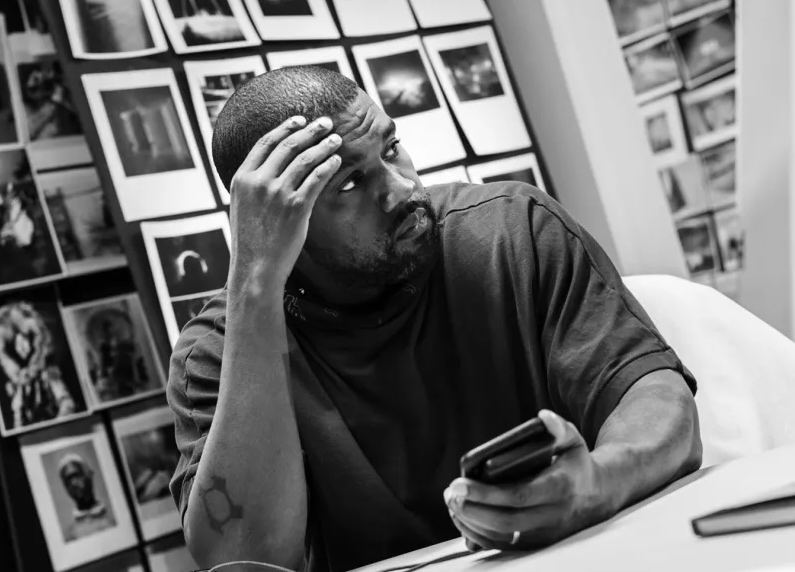
Photo: Rolling Stone
In the volatile world of fashion finance, few stories are as compelling—or as contradictory—as that of Yeezy. At its peak as a corporate partner, it was a multi-billion dollar machine, generating nearly 10% of Adidas's total revenue. Today, operating independently under Kanye West's sole ownership, its valuation is a subject of bitter financial debate, ranging from a staggering $2.77 billion to a mere $0.
To understand the Yeezy financial paradox, one must first grasp the fundamental shift from a traditional corporate model to an independent "ghost" one. While Kanye West has always owned the Yeezy trademark through his holding company, Mascotte Holdings, the brand's operational reality has changed entirely. The breakup with Adidas and the termination of the Gap deal stripped away the multi-billion-dollar supply chains, factories, and shipping networks, forcing a complete reinvention of how the brand operates, spends money, and ultimately, how it is valued.
The Adidas Era: The Corporate Infrastructure Machine
When Yeezy was with Adidas, the operational model was the exact opposite of today's "ghost infrastructure." It was a textbook corporate brand licensing and profit-sharing partnership, where the two entities split responsibilities cleanly down the middle. Kanye West was the creative director, while Adidas acted as the entire corporate engine. Here is exactly how that partnership operated:
The division of labor was clear: West's team in Los Angeles focused entirely on aesthetic design, prototyping new silhouettes, choosing colorways, and generating global marketing buzz. Adidas took those concepts and completely handled the capital-intensive, high-risk operational steps. They paid for all raw materials, managed factory relationships, absorbed the upfront manufacturing costs, and operated the entire global logistics network.
The Adidas supply chain engine was efficient. Instead of ordering garments from random white-label factories after customers paid, the Adidas engine operated a highly optimized, predictive corporate supply chain. Adidas leveraged its massive network of tier-1 factories across Asia to mass-produce sneakers, integrating proprietary performance technologies like BOOST™ foam cushioning directly into Yeezy designs. Because Adidas ordered tens of millions of pairs globally, they purchased materials at rock-bottom wholesale prices that an independent brand could never secure.
Warehousing, tech, and delivery were also handled by Adidas. Flash sales didn't run on a standard website. They were funneled through specialized, highly secure enterprise platforms like the Adidas CONFIRMED app. When a shoe sold out in minutes, the shoes already existed inside Adidas's massive global fulfillment centers. Global couriers dispatched them immediately, meaning customers received their packages in days, rather than waiting months for a pre-order.
The financial split was incredibly high-margin and highly lucrative for West. Kanye West did not pay for manufacturing or shipping. Instead, Adidas paid West a massive 15% royalty fee on all wholesale sales. At its peak, this resulted in an estimated $1.7 billion to $2.0 billion in annual revenue for the Yeezy line, from which West personally took home an estimated $190 million to $220 million annually in high-margin royalty checks.
The legal catch that broke the brand was this: because Adidas funded the entire infrastructure, the contract granted Adidas the sole ownership of the physical design patents, tooling, and shoe molds (such as the 350, 700, and Yeezy Slide shapes). Kanye West only owned the Yeezy name and trademark. This is why, when the relationship collapsed, Adidas kept the physical shoe designs and spent over a year selling off the remaining inventory on its own balance sheets, leaving West with a globally famous brand name but absolutely zero physical infrastructure to make the shoes.
The Independent Era: The "Ghost Infrastructure" Model
Operating a massive fashion brand with no internal infrastructure means shifting from a traditional corporate asset model to an extreme "Ghost Infrastructure" model. When Kanye West lost Adidas and Gap, he lost their multi-billion-dollar supply chains, factories, shipping networks, and wholesale teams. Operating a global brand completely independently without those assets changes the economics entirely, relying heavily on outsourcing.
Production becomes a matter of white-label and "on-demand" manufacturing. Without dedicated factories, the brand relies on third-party manufacturing facilities on a contract basis. The brand buys blank or basic silhouettes from existing apparel mills, then pays local or overseas texturing facilities to apply custom dye washes, cuts, and screen prints. To keep manufacturing simple, independent Yeezy drops use an ultra-reduced "1, 2, 3" sizing system rather than complex, multi-size grading.
Logistics becomes the direct-to-consumer nightmare. Without an established warehouse network, inventory logistics become highly volatile. The brand contracts out fulfillment to independent warehouses (Third-Party Logistics or 3PLs) that pack and ship orders. When a massive surge of orders hits an outsourced system (such as millions of orders from a Super Bowl ad), this ghost infrastructure easily breaks down. Independent Yeezy buyers frequently face months of backlogged shipping times and customer service blackouts.
Retail shifts to B2B partnerships. To solve shipping and logistical nightmares, the brand eventually has to lease someone else's infrastructure. For example, Yeezy recently bypassed its DTC shipping issues by securing an exclusive retail distribution partnership with JD Sports to sell the independent YS-01 Slides. JD Sports provides the physical brick-and-mortar storefronts, global shipping networks, and point-of-sale infrastructure that Yeezy completely lacks internally.
Marketing relies entirely on "aura" and virality. Traditional brands spend billions on billboard ads and retail marketing teams. An independent brand cuts this cost to almost nothing by weaponizing the founder's celebrity status, fan communities, and social media controversy to generate billions of free media impressions. The marketing infrastructure is replaced entirely by cultural relevance.
The Financial Paradox: Fixed vs. Variable Costs
For a ghost-infrastructure brand like Yeezy, the financial model completely flips traditional retail economics. By stripping away physical corporate assets, fixed costs are reduced to almost zero, while variable costs skyrocket. The brand trades predictable overhead for highly volatile, transaction-based expenses.
Fixed costs, or the overhead, come in under $500,000 annually. Traditional fashion houses pay millions annually for corporate office rent and salaries for massive teams. Yeezy replaces this with an ultra-lean structure, paying a small core group of specialized entertainment lawyers and business managers. There are fixed annual fees required to maintain, defend, and renew thousands of international trademark protections.
Variable costs, the operational expenses, run millions per drop. Because the brand owns no factories or fulfillment centers, every single operational step becomes a per-unit or per-service cost. This includes payment to independent mills per garment, pick-and-pack fees (usually $2 to $5 per order) charged by logistics hubs, and payment processing fees. For a $20 million sales weekend, processing fees (roughly 2.9% + $0.30 per transaction) eat up over $600,000 instantly.
The massive upside is that if Kanye West chooses not to release clothing for six months, the company loses almost no money because there is no factory rent or massive payroll to cover.
The massive downside is that because the brand does not own the warehouses or shipping lines, it has no control over shipping delays, poor packaging, or systemic customs backlogs, leading to a chaotic customer experience.
The Billion-Dollar Dispute: Why the Valuation Split?
The drastic shift in the company's valuation comes down to a clash between major financial trackers and Kanye West's personal financial audits. This is exactly why Forbes strips the Yeezy brand of its multi-billion-dollar valuation. Traditional financial institutions calculate a consumer brand's value based on predictable cash flow, formal retail distribution, and operational scalability—all of which collapsed when corporate partnerships ended.
The pessimistic view, held by Forbes, is that West owns the Yeezy trademark and name, but he does not own the actual physical tooling, technical designs, or manufacturing molds for his most famous products. The design patents for the iconic Yeezy Boost 350 and Yeezy Slide shapes belong largely to Adidas. Without Adidas, Yeezy cannot legally manufacture or sell those exact shoes. Under the Adidas deal, West was paid an estimated $220 million annually in passive royalties. The total erasure of that guaranteed contract wiped $1.5 billion from his brand equity instantly. Without transparent, audited corporate balance sheets, Forbes pegs his net worth at $400 million (relying mostly on cash, real estate, and his music catalog).
The optimistic view, held by Eton Venture Services and West himself, paints a different picture. Other valuation sources, such as independent financial auditing firm Eton Venture Services, price Kanye West's total net worth at $2.77 billion. The single biggest argument for a multi-billion dollar valuation is that West still retains 100% sole ownership of the global Yeezy trademark. Corporate valuation firms view a trademark of that size as an incredibly valuable asset that can be licensed again to future manufacturing partners. Optimistic analysts focus heavily on the brand's ability to generate massive revenue entirely on its own, such as driving $19.3 million in apparel sales off a single Super Bowl commercial. This proves that the brand does not need a middleman to move tens of millions of dollars in product.
The Current Revenue Reality
Because Yeezy is entirely privately held and operates without public corporate partners, it has no single, verified annual revenue figure. Instead, the brand's revenue must be split into two categories: its historical peak corporate revenue and its unverified, volatile independent sales.
- Historical Corporate Revenue (The Peak): At its absolute peak, the Adidas Yeezy line generated an estimated $1.7 billion to $2.0 billion in annual revenue. Following the breakup, Adidas spent over a year selling off its leftover, backlogged warehouse inventory, generating roughly $696 million in revenue in 2024.
- Independent DTC Revenue (The Current State): Today, Yeezy's revenue flows completely through West's independent website, Yeezy.com. Following a 2024 Super Bowl commercial, West self-reported that the website generated $19.3 million in revenue in a matter of weeks by selling $20 apparel items. Financial tracking groups note that if the brand manages to replicate these viral flash drops 5 to 6 times a year, independent revenue could scale to roughly $100 million annually.
- The Supply Chain Reality: Independent Yeezy operates by outsourcing its entire supply chain to a fragmented network of overseas factories, domestic third-party logistics companies, and regional shipping couriers. Because Yeezy coordinates this through disconnected third parties rather than an integrated internal system, it experiences major logistical blockages. Items regularly take 3 weeks to 5 months to arrive from the factory, and when millions of orders flood an independent warehouse, physical capacity caps out, resulting in massive shipping backlogs.
The Yeezy story is the ultimate parable of modern business: a tale of two economies. One is built on physical assets, predictable royalties, and corporate infrastructure. The other is built on intellectual property, cultural dominance, and the ability to command a market with nothing more than a name and a direct line to consumers. Whether it is worth $2.77 billion or $0 depends entirely on whether you value the infrastructure of yesterday or the potential of tomorrow.
No Ads. By Us. For Us.
This article was made possible by readers like you. We hope it inspired you to support Emerald Book, so we can continue producing content like this.
We will never show you ads, sell your data, or require a subscription to consume our content. Your gift helps us keep the truth accessible.
Click the Support button to give a gift of any amount today.
Thank you for making this work possible.