

Emerald Pages
◆
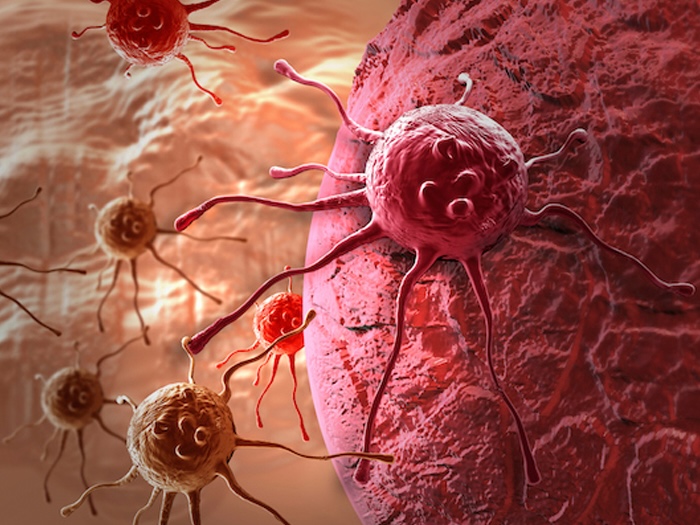
Photo: The Ohio State University Comprehensive Cancer Center
When we talk about "the economics of curing cancer," we need to start with a fundamental truth: cancer is always evolving. Unlike infectious diseases that can be eradicated with a single intervention, cancer is a moving target — biologically, genetically, and economically. And that means the economic problem of cancer isn't shrinking; it's growing.
The famous Goldman Sachs question — "Is curing patients a sustainable business model?" — misses a critical point when applied to cancer. Hepatitis C was a single disease with a finite patient population. Cancer is thousands of distinct diseases, each with its own genetic profile, and new cases are diagnosed every single day. The World Health Organization projects that global cancer cases will climb from roughly 20 million annually to 35 million by 2050.
The Numbers: A $25.2 Trillion Global Problem
According to a landmark macroeconomic study published in JAMA Oncology, cancer is projected to cost the global economy $25.2 trillion between 2020 and 2050. This immense financial toll is equivalent to an annual tax of 0.55% on total global Gross Domestic Product (GDP). The problem breaks down into two categories:
- Direct Costs: Money spent on healthcare infrastructure, including diagnosis, intensive surgeries, radiation, and the rapidly climbing costs of oncology drugs. Global spending on cancer therapeutics alone has grown at an accelerating annual rate of nearly 12% in recent years.
- Indirect Costs: When a person is forced to leave the workforce early or dies prematurely, it results in permanent macroeconomic productivity losses. It also accounts for the lost wages of family members who step down from full-time jobs to act as informal caregivers.
- $25.2 trillion in total economic impact — roughly the GDP of China
- 35 million new cancer cases per year by 2050 — up from 20 million today
- 75% of cancer deaths occur in low- and middle-income countries
- 12% annual growth in global spending on cancer therapeutics
When you look at these numbers, the pharmaceutical industry faces not a shrinking market, but a perpetually growing problem. Every "cure" developed for one subtype of cancer represents progress against one piece of the puzzle. Because cancer is always evolving, the problem is always renewing itself.
The Thousands of Cancers Problem
Medically and economically, "cancer" is not a single disease but an umbrella term for thousands of distinct conditions. While the World Health Organization categorizes cancer into roughly 200 distinct types based on the organ of origin, modern genetics has shattered that simple model. When you factor in unique genetic mutations, patient profiles, and cellular behavior, there are thousands of unique cancer subtypes.
- Hyper-niche patient populations: Instead of one treatment for millions of lung cancer patients, researchers must now develop unique treatments for subsets of patients who carry rare genetic mutations (such as EGFR, ALK, or ROS1 drivers). Each niche requires its own research and development.
- The "Orphan Drug" reality: When a disease market is sliced into thousands of micro-populations, each individual variant becomes a rare or "orphan" disease. These drugs receive regulatory incentives and extended patent protection, but the patient populations are tiny.
- Premium pricing is necessary: If a drug costs $1 billion to develop but can only treat 2,000 patients worldwide, the company must price the drug at $500,000 per patient just to break even. This places an enormous financial strain on patients and healthcare systems.
- Zero cross-compatibility means starting over: A breakthrough that successfully cures triple-negative breast cancer is completely useless against pancreatic cancer, colorectal cancer, or even other subtypes of breast cancer. This means researchers and companies must develop, test, and manufacture each cure separately.
This fragmentation means a universal "silver bullet" cure for cancer is a scientific impossibility. The medical industry is forced to fund, test, and manufacture thousands of bespoke, highly individualized cures — explaining why the financial problem of curing cancer is so incredibly steep.
The Fixed vs. Variable Cost Breakdown
Because cancer therapies are shifting from mass-produced chemicals to personalized biologics, the cost structure has changed dramatically. These costs are one of the core problems in the economics of curing cancer.
Fixed Costs (The Upfront Investment): These don't change based on how many patients you treat.
- Pre-Clinical Research and Discovery ($100M – $500M): Years of basic laboratory science, genetic sequencing, identifying tumor targets, and testing molecules in petri dishes and animal models.
- Clinical Trials ($500M – $1B+): Running human clinical trials is the single largest fixed cost. Oncology has a 90% failure rate in human trials — meaning the cost of successful drugs must also cover the billions spent on failed candidates.
- Specialized Facility Construction ($200M – $500M): Building cleanrooms and manufacturing centers that meet strict cGMP regulations.
- Regulatory Approval and Legal Fees ($10M – $50M): Preparing thousands of pages of documentation for global regulatory bodies, paying filing fees, and securing international patents.
Variable Costs (Per-Patient Expenses): These are higher for personalized therapies, making each treatment extremely expensive.
- Cell Harvesting and Apheresis ($10,000 – $20,000): A patient's blood must be drawn at a specialized hospital, and their white blood cells must be separated out using expensive, specialized machinery.
- Cryogenic Specialized Logistics ($5,000 – $15,000): Living human cells must be frozen and shipped via highly tracked, temperature-controlled cryogenic shipping networks.
- Genetic Engineering and Processing ($50,000 – $100,000): Technicians use viral vectors to physically insert new genetic code into the patient's cells.
- Quality Assurance and Sterility Testing ($10,000 – $30,000): Every single batch must undergo rigorous, individual DNA sequencing, sterility tests, and potency checks.
The Most Expensive Cancers
Just five specific cancer types account for exactly half of the global $25.2 trillion economic problem. Each presents its own financial challenge:
- Tracheal, Bronchus & Lung (15.4%): $3.9 trillion — the single largest cancer problem
- Colon & Rectum (10.9%): $2.8 trillion
- Breast (7.7%): $2.0 trillion
- Liver (6.5%): $1.7 trillion
- Leukemia (6.3%): $1.6 trillion
Geographic Imbalances: The financial weight of cancer is distributed unequally across the globe. China faces the highest projected fiscal loss at $6.1 trillion (24.1%), followed closely by the United States at $5.3 trillion (20.8%). Roughly 75% of global cancer deaths occur in low- and middle-income nations, where access to expensive precision therapies is limited.
Redesigning the Economic Model
If curing cancer is both biologically and economically challenging, how can society address this problem? Several innovative financing frameworks are being explored:
- Value-Based Installment Systems: Payers spread the multi-million dollar cost over several years, stopping payments if the patient relapses. This aligns payments with actual patient outcomes.
- "Netflix-Style" Subscription Models: Governments pay a flat annual fee for unlimited access to a drug to cure entire populations, decoupling payment from per-patient pricing.
- Public-Private Development Partnerships: Government grants absorb early-stage scientific risks to lower final market prices, making it financially viable to pursue cures for smaller patient populations.
- Standardized Global Risk-Sharing Pools: International reinsurers cover ultra-high-cost therapeutic claims to protect local hospital networks from catastrophic financial exposure.
The $25.2 Trillion Bottom Line
The global cost of cancer is projected to reach $25.2 trillion by 2050. That's the scale of the problem we're facing. For patients, families, and healthcare systems, cancer represents a growing economic challenge that shows no signs of abating.
The critics who say that curing cancer would destroy the market are missing the point. Cancer isn't like polio or smallpox — it's not a single disease that can be eradicated with one vaccine. It's an evolving, mutating, adaptive biological phenomenon that will continue to generate new medical challenges for as long as human beings exist.
The real challenge is whether we can develop the scientific, clinical, and economic infrastructure to keep pace with the disease's evolution. With a $25.2 trillion problem on the line, finding solutions has never been more urgent.
No Ads. By Us. For Us.
This article was made possible by readers like you. We hope it inspired you to support Emerald Book, so we can continue producing content like this.
We will never show you ads, sell your data, or require a subscription to consume our content. Your gift helps us keep the truth accessible.
Click the Support button to give a gift of any amount today.
Thank you for making this work possible.