

Emerald Pages
◆
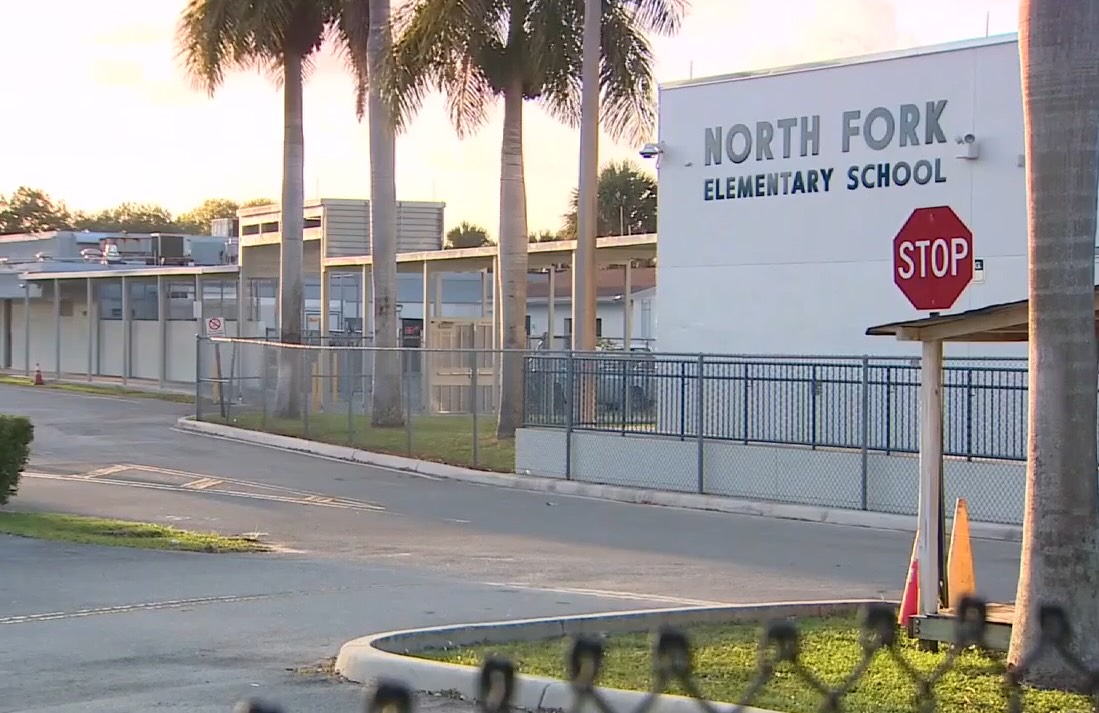
Photo: WSVN Miami
The headlines are stark and uniform: Public school closures have spiked 35% nationwide over the past four years. According to newly released data from the National Center for Education Statistics (NCES), districts shuttered more than 1,000 public schools during the 2025–26 academic year alone—a sharp increase from the 755 closures recorded in 2021–22. But behind these staggering numbers lies a more troubling pattern of inequality. The crisis, which education experts are calling "the big shrink," is not affecting all communities equally. It is landing with devastating precision on Black neighborhoods, transforming a national demographic shift into a localized civil rights emergency.
The immediate cause of the surge is a one-two punch: a steady, two-decade decline in U.S. birth rates—a phenomenon demographers call the "baby bust"—colliding with the abrupt expiration of $190 billion in federal COVID-19 relief funds. These temporary lifelines had artificially propped up district budgets, allowing administrators to keep underutilized buildings open. Now that the money has dried up, school districts are facing severe budget deficits. With state funding tied directly to enrollment numbers, empty seats translate into immediate revenue losses, forcing superintendents to pull the trigger on campus consolidations.
While the enrollment declines affect nearly every district in the country, the financial and structural fallout is profoundly unequal. A landmark study from Stanford University found that majority-Black schools—which make up just 10% of all public schools—account for roughly 25% of all closures. The risk is more than three times higher, and in high-poverty districts, the rate is double that of schools with no Black students. This disparity persists even when academic performance and enrollment declines are identical, suggesting that deeper, structural forces are at play.
A Double Blow: Demographic Decline and Financial Squeeze
The crisis is a double blow. The first is the demographic collapse. Black birth rates have plummeted to an all-time low of 1.5 births per woman, well below the replacement rate of 2.1. This drop has accelerated the creation of empty desks in historically Black neighborhoods. The second blow is the financial squeeze. Because public schools rely heavily on local property taxes, historically redlined and disinvested Black neighborhoods generate significantly less local revenue. When the federal "ESSER cliff" hit, high-poverty districts lost the most funding, forcing them to make the most drastic cuts.
Furthermore, decades of deferred maintenance have left schools in Black neighborhoods with aging, expensive-to-repair infrastructure. When districts look to cut costs, these expensive facilities are targeted first for consolidation, while newer buildings in wealthier, whiter areas remain untouched.
The Trump Administration's Role: An Accelerant
While the Trump administration did not start the fire, its current policies have acted as a powerful accelerant. Since taking office in 2025, the administration has implemented several major overhauls that have directly intensified the financial and demographic pressures on local districts.
- Draining Public Funds: The administration signed a landmark national school-choice initiative into law, creating a massive tax-credit scholarship program to subsidize private school tuition. By actively diverting taxpayer dollars away from traditional public systems, the policy accelerates the exodus of students and the revenue loss that drives closures.
- Shrinking the Student Pool: Strict immigration restrictions have removed a key demographic cushion. Economists note that projected enrollment drops were calculated before these cuts; tightening borders has further shriveled the pool of incoming kindergarteners, particularly in urban districts.
- Removing Federal Protections: The Department of Education rescinded the "disparate impact" standard under Title VI of the Civil Rights Act. This means the federal government will no longer consider school policies discriminatory just because they disproportionately harm Black students, making it much easier for local school boards to close schools in Black neighborhoods without fear of federal intervention.
The demographic shift created the empty desks, but the administration's aggressive push for privatization and federal funding cutbacks has forced districts to pull the trigger much faster.
Ground Zero: The Cities Hit Hardest
The crisis is most acute in major urban centers experiencing an "urban exodus"—cities where families are moving out due to high costs. These cities, which overlap heavily with large, historically concentrated Black populations, are at the forefront of the consolidation wave.
- Houston, TX: The Houston Independent School District (HISD) has finalized plans to close over a dozen elementary campuses despite massive protests.
- Pittsburgh & Philadelphia, PA: Pittsburgh voted to close 12 schools, while Philadelphia is pushing forward with plans to shut down up to 18 schools. Local advocacy groups have filed civil rights complaints, noting that the decisions disproportionately displace Black students.
- South Florida: Broward County Public Schools has already closed campuses and has warned that up to 10 additional schools face the chopping block by 2028.
- St. Louis, MO: Facing a massive historical shift where the student population plummeted from 115,000 to just 18,000, the district has mapped out plans to downsize by shutting up to 37 schools—more than half its total footprint.
The damage goes far beyond a closed building. It creates a domino effect that destabilizes the entire community. Students are forced onto buses for longer commutes, driving up absenteeism. Local schools, which often serve as polling places and community hubs, are lost. And the closure often accelerates urban flight, as young families refuse to move into a neighborhood without a local elementary school.
As the data makes clear, the 'big shrink' is not just a story about declining birth rates. It is a story about which communities are forced to bear the cost of that decline, and how policy choices—from school choice vouchers to the rollback of civil rights protections—are deepening the divide.
No Ads. By Us. For Us.
This article was made possible by readers like you. We hope it inspired you to support Emerald Book, so we can continue producing content like this.
We will never show you ads, sell your data, or require a subscription to consume our content. Your gift helps us keep the truth accessible.
Click the Support button to give a gift of any amount today.
Thank you for making this work possible.