

Emerald Pages
◆
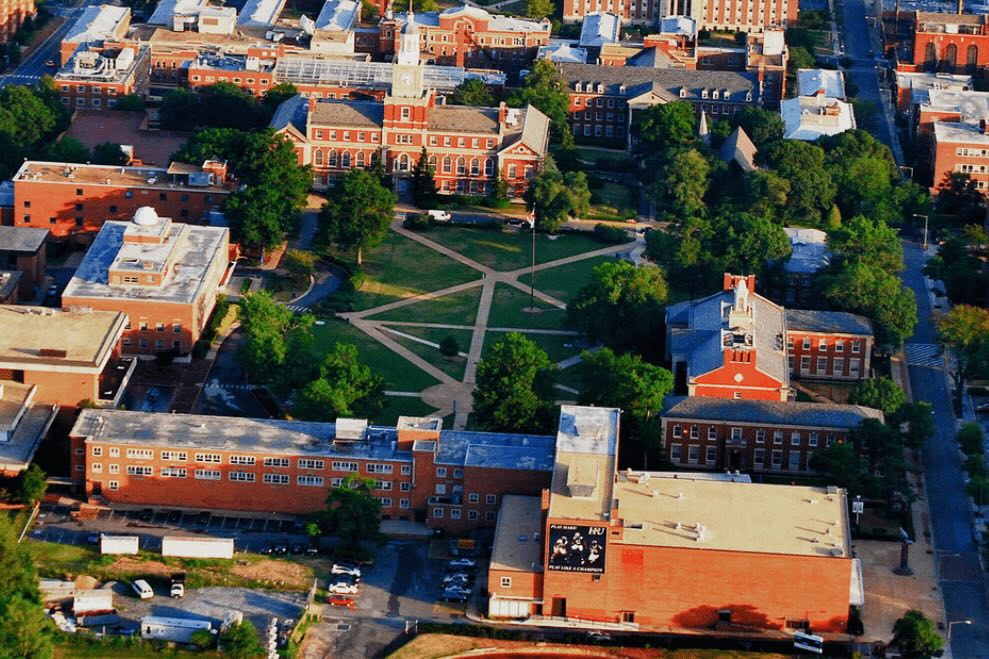
Photo: The Yard | Howard University
Universities are often perceived as pristine centers of learning, dedicated to the pursuit of knowledge. While that is their core mission, they are also massive, labor-intensive, and asset-heavy financial machines. To understand the crises and triumphs in modern higher education, one must first understand the underlying economics. This is the story of how universities balance diversified revenue streams against staggering fixed costs, and why, despite being multi-billion dollar enterprises, they often operate on a financial knife's edge.
At their core, university economics rely on balancing diversified revenue streams against heavy operational fixed costs. Most institutions function as labor-intensive organizations where tuition and government funding subsidize research, student services, and campus maintenance. The financial model is a complex juggling act, attempting to fund the present while building for the future.
The Revenue Engine: Where the Money Comes From
A university's income isn't a single stream but a portfolio of five primary sources, each with its own rules and risks. Understanding this diversification is key to grasping their financial strategy.
- Tuition and Fees: The core funding for instruction. However, it's heavily offset by institutional financial aid, meaning the "sticker price" is often far higher than the net cash collected.
- Government Appropriations: For public schools, this is direct state funding. For all institutions, it includes federal grants for operations and research, which come with strict stipulations.
- Research Grants: Federal and private funding, tightly restricted to specific scientific or academic studies. This money drives innovation but is not a fungible resource for general operations.
- Endowment Distributions: Investment payouts from the university's endowment, which fund restricted chairs, scholarships, and capital projects. It's a critical, but often restricted, revenue source.
- Auxiliary Revenues: Self-sustaining commercial operations including housing, dining, athletics, and campus stores. These services often need to pay for themselves.
The Cost Structure: The People and the Plant
Operating costs for a university are highly rigid and dominated by human capital. A significant portion of the budget is consumed by people, a factor that makes scaling or cutting costs particularly difficult.
Personnel Compensation: The Largest Cost Driver
Compensation comprises 60% to 70% of total university budgets. This includes tenured and tenure-track faculty, a massive administrative staff for compliance, advising, and student affairs, and rising healthcare and benefits costs. This is the greatest source of financial inflexibility.
Operations and Assets: The Hidden Cost
The remaining 30% to 40% of expenses go towards the physical and technological infrastructure. This includes maintaining specialized laboratories, historic classrooms, and dormitories, as well as the massive costs for student financial aid, enterprise software, cybersecurity, and digital library licenses.
The Economic Dilemma: High Fixed Costs and Operating Leverage
A fundamental challenge for universities is the extreme imbalance between fixed and variable costs. This rigid structure means that adding or losing a few students does not significantly change operational expenses, making universities highly sensitive to enrollment fluctuations.
- High Fixed Costs (The Cost of Existing): Tenured faculty salaries, facilities maintenance, administrative overhead, debt service on construction bonds, and campus-wide technology infrastructure. These costs must be paid regardless of student numbers.
- Low Variable Costs (The Cost per Student): Food and dining services, dormitory consumables, instructional supplies like lab chemicals, and student health resources.
Because roughly 80% to 90% of a university's costs are fixed, it possesses immense operating leverage. A small drop in enrollment can have a catastrophic impact on the bottom line. Once fixed costs are covered, each additional student is almost pure profit; but if enrollment misses its target by even 5%, the university cannot easily lay off 5% of its tenured faculty or turn off the lights in half its buildings, triggering immediate budget deficits.
Building a University from Scratch
Building a traditional, physical university from scratch is one of the most capital-intensive endeavors in the modern economy, typically costing between $200 million and $3 billion+. The final price tag depends entirely on student capacity, geographic location, and whether it includes advanced scientific research infrastructure. The timeline is equally daunting: 8 to 12 years from initial concept to the day the first class graduates.
Phase 1: Physical Infrastructure ($150M – $2B+)
Higher education construction is significantly more expensive than standard commercial real estate. The standard allocation is roughly 250 to 270 square feet per full-time student.
- Standard Classrooms: General-purpose academic buildings cost roughly $240 to $350 per square foot. A mid-sized, 100,000-square-foot building averages $25 million to $50 million.
- Scientific Research Labs: Wet labs and medical facilities skyrocket to $800 to $1,800+ per square foot, frequently pushing single lab complexes past $100 million.
- Auxiliary Buildings: Student centers, dining halls, libraries, and recreation facilities add a combined $100 million to $300 million.
- Student Housing: Dormitories run anywhere from $40 million to $150 million depending on scale and regional labor costs.
Phase 2: Academic & Institutional Capital ($25M – $100M+)
Before a university can legally open its doors, it must invest heavily in non-physical assets:
- Accreditation and Licensing: Securing regional accreditation is a multi-year process. Legal, consulting, and application fees easily reach $1 million to $3 million.
- Technology Infrastructure: Building or licensing a robust Learning Management System, student information software, and academic journal databases costs $5 million to $15 million upfront.
- Faculty Start-Up Packages: For STEM fields, providing a new professor with equipment, lab tech, and travel stipends ranges from $200,000 to over $1 million per scientist.
Phase 3: The Operational Runway ($30M – $100M/year)
A brand-new university cannot enroll 10,000 students on day one. It usually takes 4 to 6 years to scale to full capacity, meaning the school operates at a massive deficit early on. The "ghost campus" period — when buildings are under construction and accreditation is pending — requires a dedicated cash reserve or "runway" of at least $30 million to $50 million per year to prevent immediate bankruptcy.
Real-World Capital Benchmarks
- Micro-Campus / Niche College: $50M – $150M (Leased land, focused majors, online hybrid)
- Mid-Sized State Campus: $500M – $1B (e.g., UC Merced initial build phase)
- Elite Global Research University: $3B+ (e.g., NYU Abu Dhabi)
The Debt and Endowment Paradox
A common point of confusion is how a university can be both incredibly wealthy (via its endowment) and deeply in debt. The answer lies in the legal and strategic restrictions placed on these two financial tools.
Why Universities Borrow Money
Universities carry debt for the same reason a high-earning individual takes out a mortgage: they don't have enough immediate cash on hand to pay for massive, multi-million-dollar capital projects upfront. Debt is a tool to growth-fund large investments, spreading the cost over decades to preserve daily cash flow. They issue tax-exempt bonds to finance new labs, dorms, and athletic complexes, often pledging future revenue streams like student housing fees to pay back the debt. However, this creates an inflexible fixed cost that can become a major liability if enrollment or revenue projections fail to materialize.
Understanding the Endowment
An endowment is not a giant checking account. It is a structured collection of thousands of individual, legally restricted donation funds invested to support the institution permanently. The core capital donated is never spent; instead, it is invested, and only a small fraction of the investment returns is used for annual operations.
- The 5% Spending Rule: Most universities target an annual spending payout of 4% to 5% of the endowment's average market value. A $1 billion endowment generates roughly $45 million to $50 million per year for the operating budget.
- Legal Asset Restrictions: Roughly 70% to 80% of endowment funds are donor-restricted. A donation for a specific cancer research chair cannot be legally used to repair a dormitory roof or cover a budget deficit.
- Budget Coverage Limits: Even at wealthy schools, the annual endowment payout typically only covers 30% to 40% of the university's total annual operating budget. The remaining 60%+ must still be covered by tuition, research grants, and medical center revenues.
Why They Need Federal Funding
Even though universities function as massive capital machines, they rely heavily on federal funding because the government is buying specific national outcomes—advanced scientific research and low-income student access—that a university's internal budget cannot independently afford. The federal government provides tens of billions annually for R&D through agencies like the NIH and NSF. This funds risky, foundational "basic research" that private companies rarely invest in, leading to breakthroughs like the internet and modern vaccines. Furthermore, the government underwrites student access through Pell Grants and federal loans, injecting billions directly into university bursar accounts and ensuring revenue flows even if families cannot pay full tuition.
Anatomy of a Closure: The Death Spiral
When the economics of a university fail, it often follows a predictable and catastrophic loop known as the "Death Spiral." The collapse begins with a sustained drop in enrollment, which leads to plummeting tuition revenue. The university responds by increasing its tuition discounting rate (giving out more scholarships) to fill seats. However, this reduces the net cash collected per student below the cost of educating them.
As cash reserves evaporate, the university burns through its emergency operating funds. Because its endowment is largely restricted, it cannot legally touch that capital to pay daily bills. The school begins using next semester's tuition deposits to pay this semester's past-due bills. Wall Street rating agencies notice the cash shortage and downgrade the university's credit rating, making it impossible to borrow more money and potentially triggering "acceleration clauses" on existing loans.
Seeing the financial instability, the regional accrediting body places the university on probation. This status is public. Once parents and prospective students read that a school is in danger of losing its accreditation, new student applications drop to zero, current students panic and transfer out. With no incoming tuition, no credit line, and an unlivable cash reserve, the board of trustees votes to close, executing a "teach-out" agreement with a rival college to allow remaining students to finish their degrees elsewhere.
No Ads. By Us. For Us.
This article was made possible by readers like you. We hope it inspired you to support Emerald Book, so we can continue producing content like this.
We will never show you ads, sell your data, or require a subscription to consume our content. Your gift helps us keep the truth accessible.
Click the Support button to give a gift of any amount today.
Thank you for making this work possible.