

Emerald Pages
◆
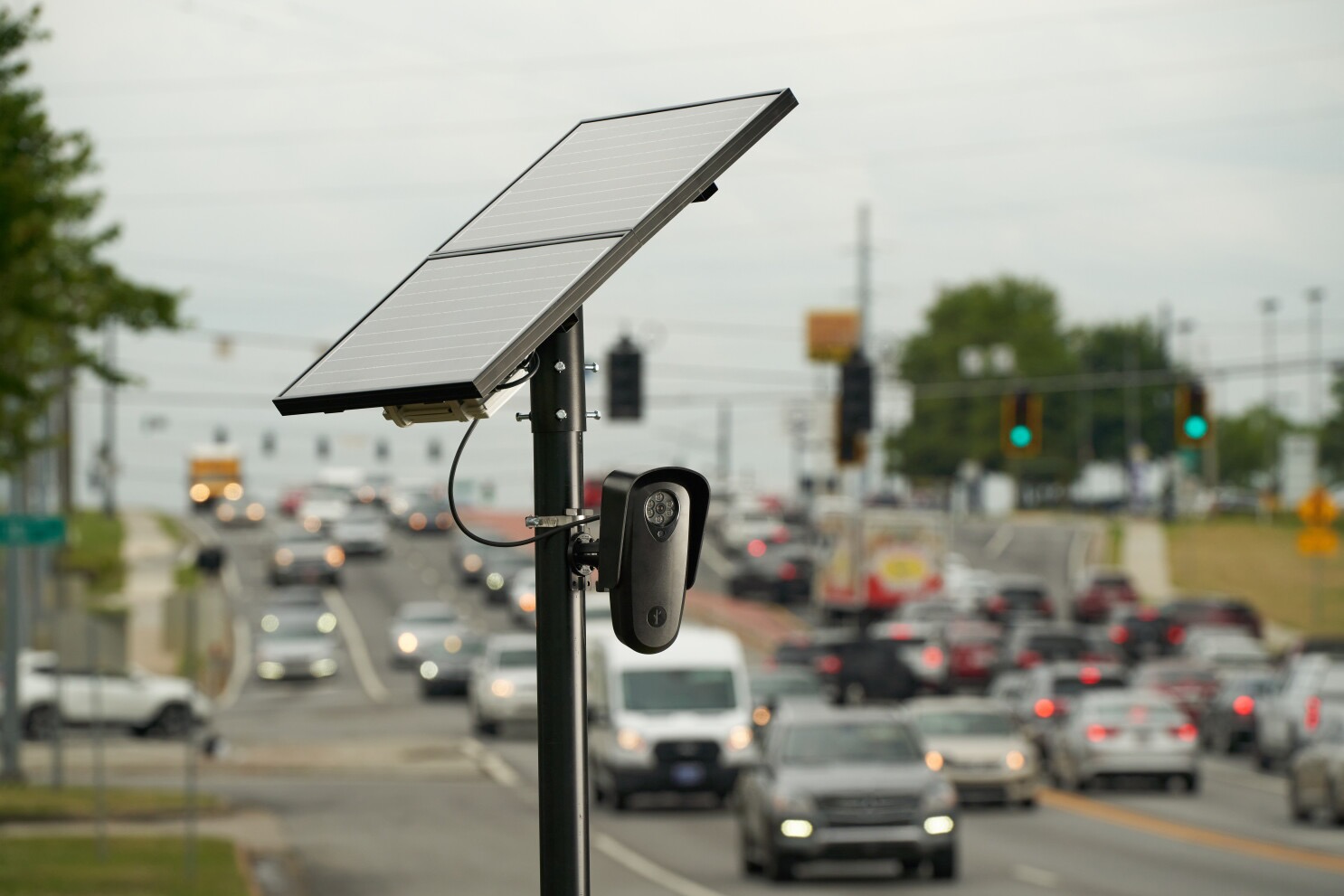
Photo: Flock Safety
In August 2020, Brittney Gilliam, a Black mother of four, was running errands with her children when police cruisers swarmed her vehicle in a shopping center parking lot. Officers drew their weapons and ordered the family out of the car. The screaming children were forced onto the hot asphalt in handcuffs as police kept their weapons trained on them. The reason? An automated license plate reader had flagged her blue SUV as stolen. The camera read the plate correctly, but the system failed to verify the state of origin. The actual stolen vehicle was a motorcycle with the same plate number from a completely different state. Gilliam's SUV was never stolen; the system was simply wrong. The city of Aurora eventually paid a $1.9 million settlement to the family for the trauma inflicted. This case is far from an anomaly—it is a predictable outcome of a surveillance network built on a shaky technological foundation and deployed with a glaringly inequitable geographical bias.
Flock Safety, an Atlanta-based tech startup valued at a staggering $8.4 billion, has rapidly blanketed American streets with its AI-powered cameras. While law enforcement agencies defend the system as a critical "force multiplier" for solving crimes and recovering stolen vehicles, a closer examination reveals a deeply troubling reality. The technology suffers from a documented 32% error rate, is trained by underpaid overseas gig workers, and—most alarmingly—is disproportionately installed in majority-Black and low-income neighborhoods, creating a discriminatory surveillance dragnet that echoes historic patterns of redlining.
A Systemic Disparity in Camera Placement
The geographical distribution of Flock cameras is not random. A landmark 2026 study by professors at Christopher Newport University used geographic information systems (GIS) to map over 600 Flock cameras. The findings were stark: majority-Black neighborhoods are saturated with surveillance at nearly four times the rate of their majority-white counterparts.
Civil rights advocates argue that this is a modern-day iteration of redlining. Police departments often justify camera placement by claiming they are targeting "high-crime areas." However, this creates a dangerous feedback loop. By placing 80% of their cameras in minority neighborhoods, the system inevitably generates the highest number of alerts—including a massive volume of false positives—which police then use to justify keeping the cameras in those same communities, leaving affluent, white suburbs largely "statistically clean" and unmonitored.
Garbage In, Garbage Out: The Flawed AI Engine
The AI driving this surveillance grid is inherently flawed. An audit by the Los Angeles Police Department Inspector General revealed that Flock's system produces a false-positive rate of over 32%, meaning nearly one out of every three "stolen car" alerts is incorrect. The causes are rooted in poor engineering and worse training.
- Optical Confusion: The software frequently misreads similar characters (e.g., confusing "B" with "8" or "D" with "0") and struggles with out-of-state plates or unique vertical lettering.
- Environmental Blindness: Performance drops sharply in the presence of rain, snow, headlight glare, or the physics of nighttime reflections.
- Flawed Training Data: The AI is trained by low-wage, unvetted freelance gig workers in the Philippines and Eastern Europe, who manually label American citizens' real-time footage—often with inconsistent tagging.
The industry refers to this as a "garbage in, garbage out" pipeline. Instead of learning from pristine datasets, the AI is continuously retrained on its own blurry, mislabeled mistakes, reinforcing systemic blind spots rather than fixing them.
The "Shady" Business Model and Data Loopholes
Beyond the technology itself, Flock’s business practices have drawn intense scrutiny. The company operates on a "Surveillance-as-a-Service" subscription model, allowing police departments to bypass lengthy city council budget approvals. Furthermore, Flock utilizes a network effect strategy: when one town buys cameras, surrounding towns feel pressured to buy them too to share data.
Privacy advocates are particularly alarmed by the system's hidden capabilities. Training materials for Flock's TALON operating system reveal a "Convoy Analysis" feature that tracks relationships by identifying multiple vehicles driving in close proximity repeatedly. Additionally, citizens often cannot audit the data collected on them because Flock stores information on Amazon Web Services (AWS)—not on local police servers. Cities frequently reject public records requests, claiming they do not technically "possess" the third-party database.
High-Stakes Consequences for Minority Drivers
When a faulty AI system is heavily concentrated in a specific community, the real-world fallout is devastating. Civil rights lawsuits have detailed cases where innocent Black drivers were pulled over at gunpoint, bitten by police dogs, or subjected to terrifying ordeals because a poorly calibrated Flock camera misread a single digit on their plate. The one-in-three error rate doesn't just represent a software glitch; it represents a one-in-three chance that a resident in a heavily surveilled neighborhood will be stopped based on faulty intelligence.
Flock maintains that its tech is race-blind because it focuses on vehicles rather than individuals. However, critics argue this is a deceptive "tech-wash" of historic discrimination. By placing the cameras in areas historically marked for redlining and then claiming the resulting data is "objective," departments mask systemic bias behind a veneer of algorithmic neutrality.
As the backlash grows, nearly 90 cities have canceled their Flock contracts. However, many are simply replacing them with competitor systems like Axon or Motorola—trading one logo for another while the intrusive surveillance of Black communities persists. While Flock denies the racial bias inherent in its deployment, the data, the lawsuits, and the lived experiences of targeted residents tell a very different story.
No Ads. By Us. For Us.
This article was made possible by readers like you. We hope it inspired you to support Emerald Book, so we can continue producing content like this.
We will never show you ads, sell your data, or require a subscription to consume our content. Your gift helps us keep the truth accessible.
Click the Support button to give a gift of any amount today.
Thank you for making this work possible.