

Emerald Pages
◆
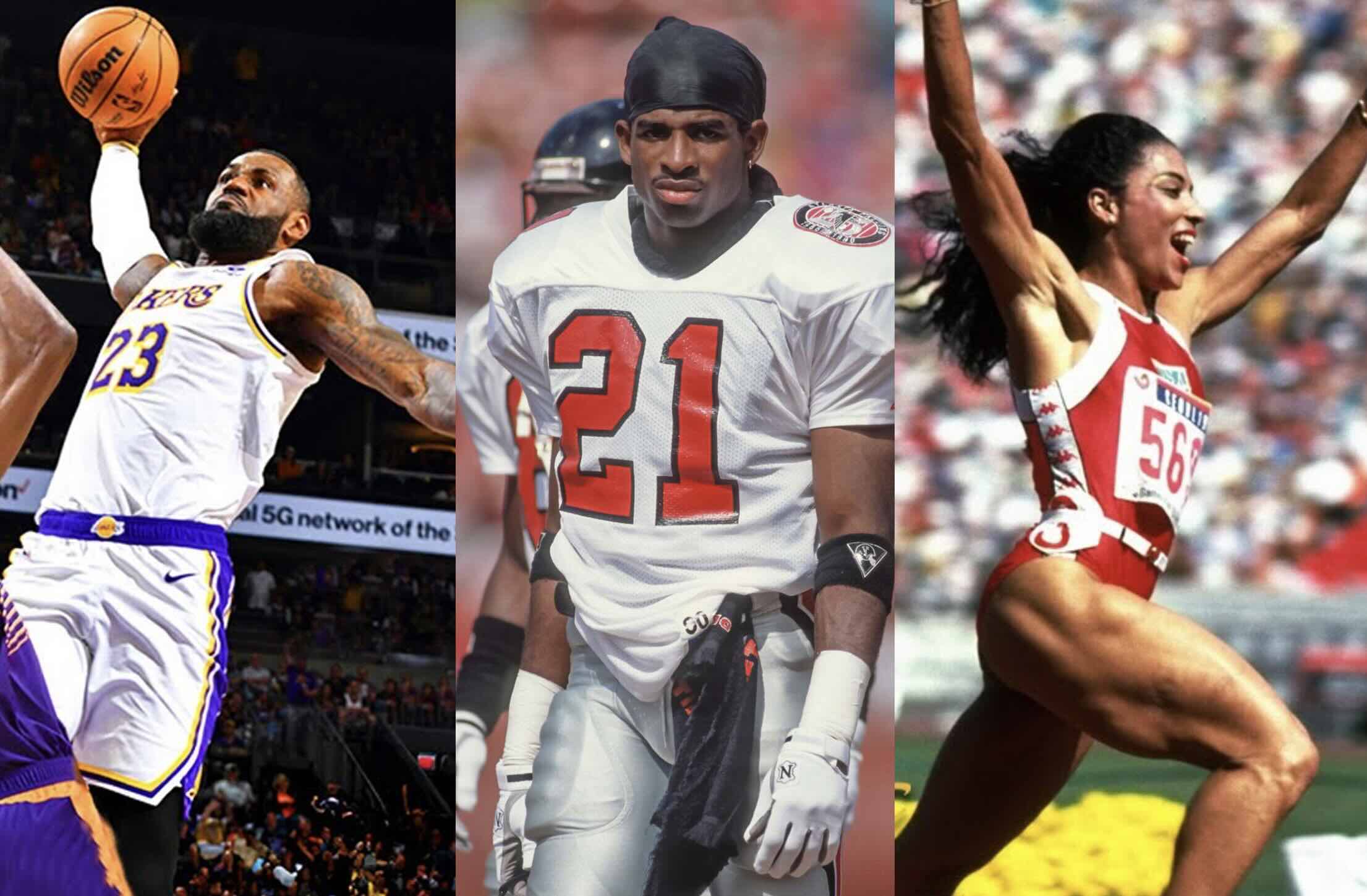
Photo: Emerald Book Image
The modern American sports league—whether it is the National Basketball Association (NBA), the National Football League (NFL), or even the global phenomenon of track and field—is a multi-billion-dollar industry. It is a product that commands record-breaking television deals, drives a $300 billion sneaker and apparel market, and anchors massive real estate developments that have reshaped city skylines. But if you were to ask who built this economic engine, the answer is clear. It was not the billionaire owners, the network executives, or the private equity firms. It was the Black athletes who, once given a level playing field, transformed localized games into a universal cultural currency.
This is not a story about "natural athleticism." It is a story about economics, access, and structural power. The dominance of Black athletes in basketball and football is not a biological anomaly; it is the logical outcome of economically reachable sports. Sports like hockey, golf, or swimming require expensive equipment, exclusive clubs, and specialized facilities. In contrast, basketball requires a ball and a hoop—infrastructure that is abundant in most neighborhoods. Football requires open space. Track requires a pair of shoes. Because these sports were accessible to millions of families regardless of income, they became hyper-competitive talent incubators. The result was a survival-of-the-fittest environment where only the most skilled, creative, and resilient athletes survived.
This accessibility created a distinct style of play. Players like Julius Erving and Michael Jordan took basketball off the floor and into the air, introducing a high-flying, creative flair that was perfect for the television era. In football, athletes like Barry Sanders and Deion Sanders redefined speed and agility, turning the gridiron into a stage for explosive athleticism. By injecting swagger, charisma, and cultural expression into these sports, Black athletes made them worth watching. This is why white-dominated American sports are so boring. Even golf didn't become entertaining until Tiger Woods played. Woods brought the intensity and magnetism of stadium sports to the quiet, exclusive country club, single-handedly doubling PGA Tour prize money from $67 million to over $250 million by the mid-2000s.
The Economic Paradox of the "Employee" Model
The irony of this economic reality is that while Black athletes drive the cultural popularity and television ratings that generate wealth, they are structurally positioned as temporary employees rather than permanent equity owners. The Collective Bargaining Agreements (CBAs) that govern these leagues strictly ban active players from holding equity stakes in teams. Consequently, players are locked into fixed salary pools (typically around 50% of defined revenue), while the other half—and crucially, 100% of the asset appreciation and ancillary real estate revenue—goes to ownership.
The modern sports franchise is no longer just a team; it is the anchor of a multi-billion-dollar real estate empire. Stan Kroenke's SoFi Stadium complex and the Atlanta Braves' Battery Atlanta generate more wealth from the rent, retail, and land appreciation surrounding the stadium than from ticket sales. Because of America's deep intergenerational wealth gap and historical barriers to land acquisition, Black families were largely excluded from the early capital accumulation cycles that funded these modern franchise buy-ins. As a result, the majority of NFL and NBA owners are white billionaires or corporate entities.
- The Star Power Paradox: The leagues built on the style of Black athletes (NBA, NFL) are the most culturally influential. The leagues that excluded them (MLB, NHL) have seen their domestic relevance decline or remain niche.
- The Real Estate Gap: Players generate revenue; owners generate wealth. The true value is in the "dirt the stadiums sit on," which players never own.
- The "Pay-to-Play" Barrier: Sports that require significant wealth to participate in (golf, hockey) fail to develop the same level of talent or entertainment value, proving that accessibility is the key driver of innovation.
Emerging athlete-counter strategies, such as LeBron James' venture capital firm (LRMR Ventures) and Kevin Durant's Thirty Five Ventures, attempt to bypass these restrictions by investing in external sports technology, media, and global sports groups. However, these initiatives represent a shift from "employee" to "investor," not a structural change to the ownership model. The wealth remains concentrated at the top.
The Future of American Soccer and the "Color Line"
For decades, the American youth soccer system was built on an expensive, suburban, "pay-to-play" pipeline. By restricting the sport to affluent, predominantly white suburbs, the U.S. Soccer establishment locked out the very talent pools that could have infused the sport with the cultural magnetism needed to make it a mainstream obsession. However, now that this "color line" is breaking down—with initiatives like Black Star funding fields in urban neighborhoods and the U.S. Men's National Team becoming more diverse—soccer is finally capturing the mainstream American imagination.
The reality is that Black athletes made accessible American sports into global franchises. They didn't need to fix soccer; they built the sports that were open to them. The NBA was a struggling league before the 1980s; the arrival of Black superstars turned it into a global lifestyle brand. The NFL's rise to the top of American television ratings coincided with the integration of Black playmakers who made the game more dynamic. The product we watch today—the highlights, the sneakers, the merchandise, the cultural crossover—is the economic output of that talent.
Yet, as the data shows, this dominance is concentrated in specific arenas. While Black athletes make up roughly 55-60% of the NFL and 70% of the NBA, their representation in Major League Baseball has plummeted to just 6-7%, replaced by a surge of Latino athletes. The NHL remains over 90% white. This is not proof of a biological decline; it is proof that economics and access dictate participation. When the rules of access are fair—when performance is measured objectively—talent and hard work dictate the outcome.
No Ads. By Us. For Us.
This article was made possible by readers like you. We hope it inspired you to support Emerald Book, so we can continue producing content like this.
We will never show you ads, sell your data, or require a subscription to consume our content. Your gift helps us keep the truth accessible.
Click the Support button to give a gift of any amount today.
Thank you for making this work possible.