

Emerald Pages
◆
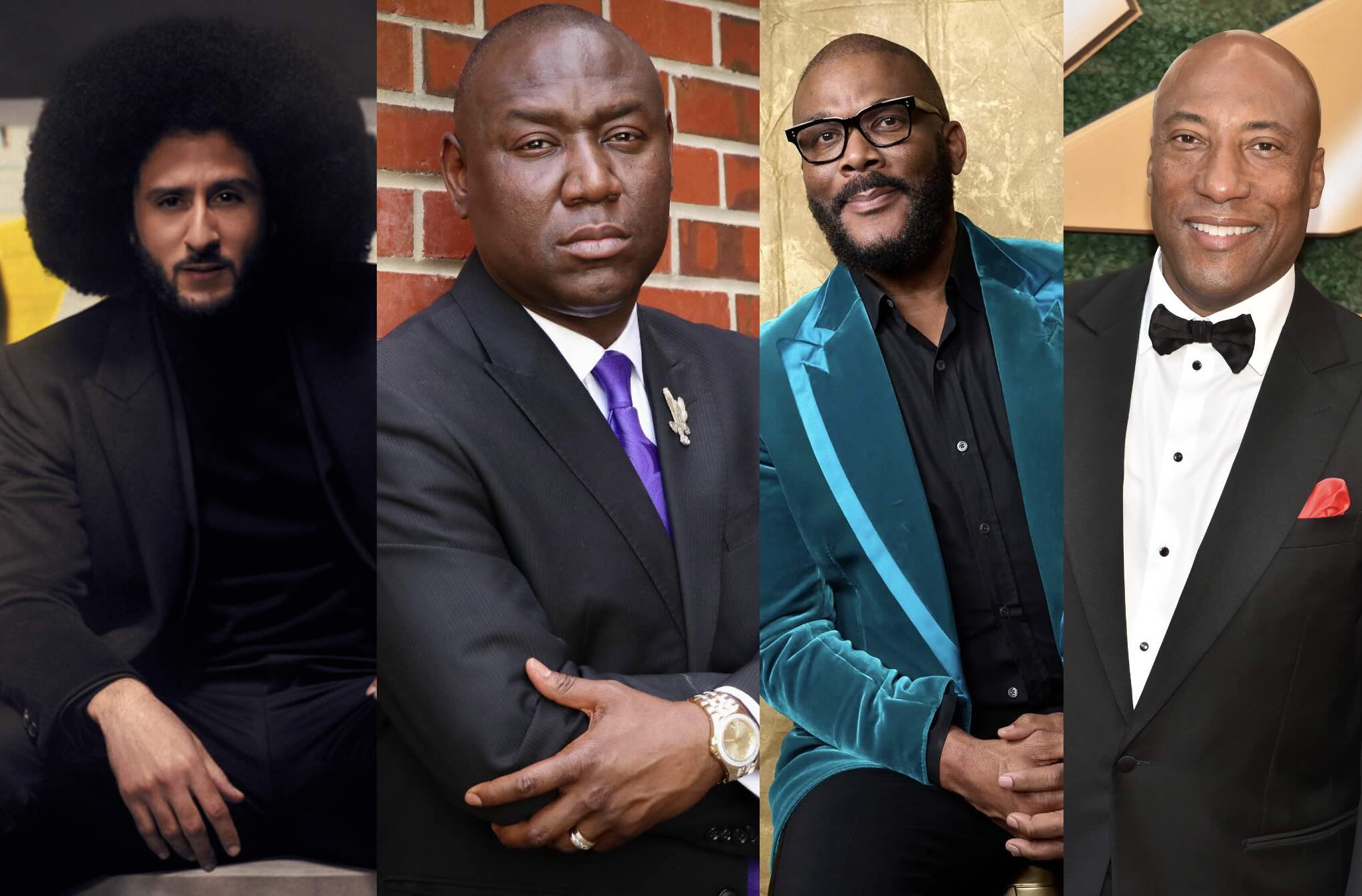
Photo: Emerald Book Image
The death of 18-year-old Nolan Wells in Mississippi is supposed to be a straightforward case. A young man, a college football player and athlete, found dead in the water off Horn Island. But when Jackson County Sheriff's Department quickly announced "no foul play suspected" and suggested drowning—before a single autopsy was complete—the narrative began to unravel. Even the coroner later admitted that the initial statement was a "poor choice of words." The Wells family was left with nothing but grief and a growing suspicion that the truth was being buried. In a functioning legal system, this would be the moment the machinery of justice kicks into gear. Instead, what we witnessed was the slow, agonizing failure of that system—a failure so profound that the family has been forced to rely on a coalition of celebrities to do the job that law enforcement is paid to do.
The case of Nolan Wells is not an anomaly; it is a stark reflection of a reality that Black Americans have understood for generations. The legal system, which takes a portion of our income every year through taxes, often fails to deliver results when it matters most. The events unfolding in Mississippi reveal a system that is not only ineffective but actively harmful, forcing families to rely on the charity of the rich and famous simply to get a fair investigation.
The Celebrity Coalition: What They Actually Did
When the local system failed, a coalition of high-profile Black celebrities and leaders stepped forward—not with empty words, but with concrete actions designed to bypass a broken system. Here is exactly what they did:
- Tyler Perry: The filmmaker privately contacted the family and committed to covering all of Nolan's funeral expenses. He released a statement noting that the agony of unresolved family tragedies is "debilitating."
- Colin Kaepernick: The former NFL quarterback and activist flew Nolan's body to Washington, D.C., and completely funded an independent autopsy through his Know Your Rights Camp initiative. This ensured an unbiased medical review away from local Mississippi law enforcement.
- Byron Allen: The media mogul donated $100,000 to the family's official GoFundMe campaign, making it the top donation to help ease financial burdens and fund legal resources.
- Ben Crump: The renowned civil rights attorney took on the family's case for free, pushing for full transparency and guarding against any potential cover-up. He is now coordinating with the FBI to demand federal oversight.
- Rev. Al Sharpton: The civil rights leader and his organization, the National Action Network (NAN), backed the family. Sharpton hosted a major press conference for the parents in Harlem and announced he will officiate Nolan's funeral.
- Spike Lee: The legendary filmmaker attended the family's national press conference in Harlem to show solidarity and keep national media attention on the case.
- Jenifer Lewis, Eric Benét, and MC Lyte: The actress, R&B singer, and hip-hop pioneer have all spoken out publicly on social media, demanding transparency and amplifying attention for the case.
- Lil Rel Howery and Deuce Knight: The comedian and college football quarterback also contributed financial support through the family's fundraising efforts.
Together, this coalition has raised over $500,000 through the family's GoFundMe, funded an independent autopsy, covered funeral costs, and forced national media to pay attention. But why was any of this necessary in the first place?
The Price of Truth: Paying for Justice
The first sign of systemic failure in the Wells case came not from the evidence, but from the cost of finding it. The nation's distrust of the local Mississippi authorities was immediate. Christine Wonsley, Nolan's mother, had to track her son's phone herself after authorities claimed he left it behind on the island. She found it in the possession of his friends back on the mainland—a contradiction the local sheriff seemed willing to overlook.
To counter this, the Wells family needed resources they did not have. They needed an independent autopsy to challenge the state's narrative—which Colin Kaepernick funded. They needed private investigators to trace the digital footprint that law enforcement ignored. They needed legal representation to protect them from potential cover-ups—which Ben Crump provided for free. The cost of these necessities is astronomical. Without celebrity intervention, a working-class family could be bankrupted simply trying to find out what happened to their child. This is the reality of justice in America: it is locked behind a paywall.
The Evidence Contradictions: A Narrative Unraveling
The frustration and skepticism felt by the family and the public stem from major contradictions between early statements from law enforcement and the actual evidence emerging in the case.
Local law enforcement claimed: "No foul play suspected," that Nolan drowned, and that he "chose to stay behind" on Horn Island to meet a girl. They emphasized that his friends were cooperative and that he simply left his phone and keys behind by accident.
The emerging evidence tells a different story:
- Contradictory Stories: The girl Nolan was supposedly meeting has denied that she ever met up with him or that he was supposed to stay behind.
- Video Evidence: A viral, grainy video surfaced showing a heated verbal argument on the island shortly before Nolan disappeared. In the video, Nolan can be heard frantically demanding, "Give me my freaking phone!"
- Digital Tampering: When the family retrieved Nolan's phone, they discovered his text messages had been deleted and his Snapchat account was completely wiped of recent photos.
- Legal Representation: The three friends on the boat with Nolan have since retained legal counsel—a move that raises further questions about their cooperation.
- Physical Ability: Ben Crump pointed out that Nolan was a highly athletic college football player and an excellent swimmer, making the drowning narrative deeply suspect.
When a local police department declares "no foul play" before a full medical autopsy is finalized, before toxicology reports are back, and while digital evidence is actively missing or altered, it creates a deep crisis of public trust. Historically, especially in cases involving minority victims in the Deep South, rushing to label a suspicious death an "accident" or "drowning" is seen as a way to avoid a complex homicide or civil rights investigation. This is precisely why the family chose to bypass local officials and fly Nolan's body to Washington, D.C., for an independent autopsy—funded by Colin Kaepernick.
Celebrities as a Shield Against Systemic Bias
The involvement of these high-profile figures serves a purpose far beyond financial aid. They act as a shield against the implicit biases that plague the American justice system. The stark contrast in how cases are treated based on race is so well-documented it has a name: "Missing White Woman Syndrome."
Media saturation for cases involving young, white, middle-class women often results in immediate, non-stop national news coverage. This intense spotlight creates massive public pressure, leading law enforcement to dedicate massive resources, round-the-clock investigators, and federal help to the case right away. By contrast, cases involving Black men, particularly young Black men, are far less likely to get national media coverage. When they don't get media attention, there is less public pressure, and local authorities may not feel the same urgency to investigate deeply.
Civil rights advocates point out that in many cases involving young Black men, authorities may rely on implicit biases or harmful assumptions—defaulting to assuming a lifestyle factor, an accident, or voluntary behavior rather than treating a suspicious disappearance or death as a potential crime from day one. If a young white woman disappeared under identical circumstances—where a video showed a heated argument, her phone was taken by others, her messages were deleted, and her body was later found in the water—the public expectation is that the people last seen with her would be treated as immediate suspects and interrogated aggressively.
The core of the protest and advocacy surrounding Nolan Wells is the demand that his life be treated with the same value, urgency, and thoroughness as anyone else's. When the local system fails to treat a case with that level of seriousness, it forces outside organizations, civil rights attorneys, and celebrities to step in to demand the bare minimum: a complete and honest investigation.
A History of Self-Reliance: Why This Is Not New
For generations, Black Americans have had to build their own systems of support because the government and courts failed to protect them. This self-reliance has been a survival strategy rather than a choice.
- The Underground Railroad: Regular citizens and leaders risked their lives to free enslaved people when the law stated that human beings could be treated as property.
- The Civil Rights Movement: In the 1950s and 1960s, Black communities had to organize their own legal defense funds, boycotts, and protection groups because local police and judges were often the ones enforcing segregation and violence.
- Black Media and Press: For over a century, Black-owned newspapers and media outlets were the only places that reported on violence against Black people, because mainstream news completely ignored those stories.
The reliance on celebrities is not a solution; it is a symptom of this long history. It is a testament to the fact that for many Black families, justice is not a right but a commodity—one that is only accessible if you have a millionaire philanthropist on your side. We are left to wonder: what happens to the thousands of other families who do not have Tyler Perry's number? Their cases remain cold, their questions unanswered, and their grief compounded by the knowledge that their government has abandoned them.
The Problem with Relying on Celebrities
While the generosity of people like Tyler Perry and Colin Kaepernick is life-changing for Nolan's family, relying on famous people is not a permanent solution to a broken system.
- Not Everyone Gets a Celebrity: There are thousands of families going through similar tragedies who do not get national news attention. Their cases often remain unsolved or ignored because no billionaire steps in to help them.
- Justice Should Be Free: A person's wealth, race, or social status should not determine whether their death is investigated properly. The truth should be available to everyone equally.
- Celebrity Support Cannot Make Arrests: Even with millions of dollars in support, celebrities cannot force a district attorney to file charges or put someone in jail. Only the legal system holds that power, which is why the lack of trust is so dangerous.
The most painful irony is that the system failing the Wells family is funded by the community it fails. Every year, Black Americans contribute billions in taxes to support police departments, district attorneys, and the judicial system. These institutions are designed to protect and serve. However, when they are needed most—in the case of a suspicious death—they often default to protecting themselves, closing cases to avoid difficult questions. A history of rushed closures and biased investigations has eroded the Black community's trust in law enforcement to the point where celebrity intervention feels like the only path to transparency.
The Fight for Federal Oversight
While the celebrities provide a shield, the ultimate goal is to force the legal system to do its job. Ben Crump's legal team is pushing for federal oversight, a move that highlights the desperate need for outside intervention when local systems fail. The independent autopsy funded by Kaepernick isn't just about finding a cause of death; it is about proving that the local investigation was insufficient. It is about creating a paper trail that demands accountability.
The hope is that by exposing these systemic flaws, we can build a future where a grieving mother doesn't have to beg for transparency. Where the truth isn't determined by the size of a celebrity's bank account. But until that day comes, the Black community will continue to rely on itself—on its leaders, its artists, and its advocates—because the system they pay into has consistently failed to protect them.
Nolan Wells deserves justice. His family deserves peace. But more than that, a nation that calls itself a democracy deserves a legal system that works for everyone, not just those who need a committee of celebrities to watch over it.
No Ads. By Us. For Us.
This article was made possible by readers like you. We hope it inspired you to support Emerald Book, so we can continue producing content like this.
We will never show you ads, sell your data, or require a subscription to consume our content. Your gift helps us keep the truth accessible.
Click the Support button to give a gift of any amount today.
Thank you for making this work possible.