

Emerald Pages
◆
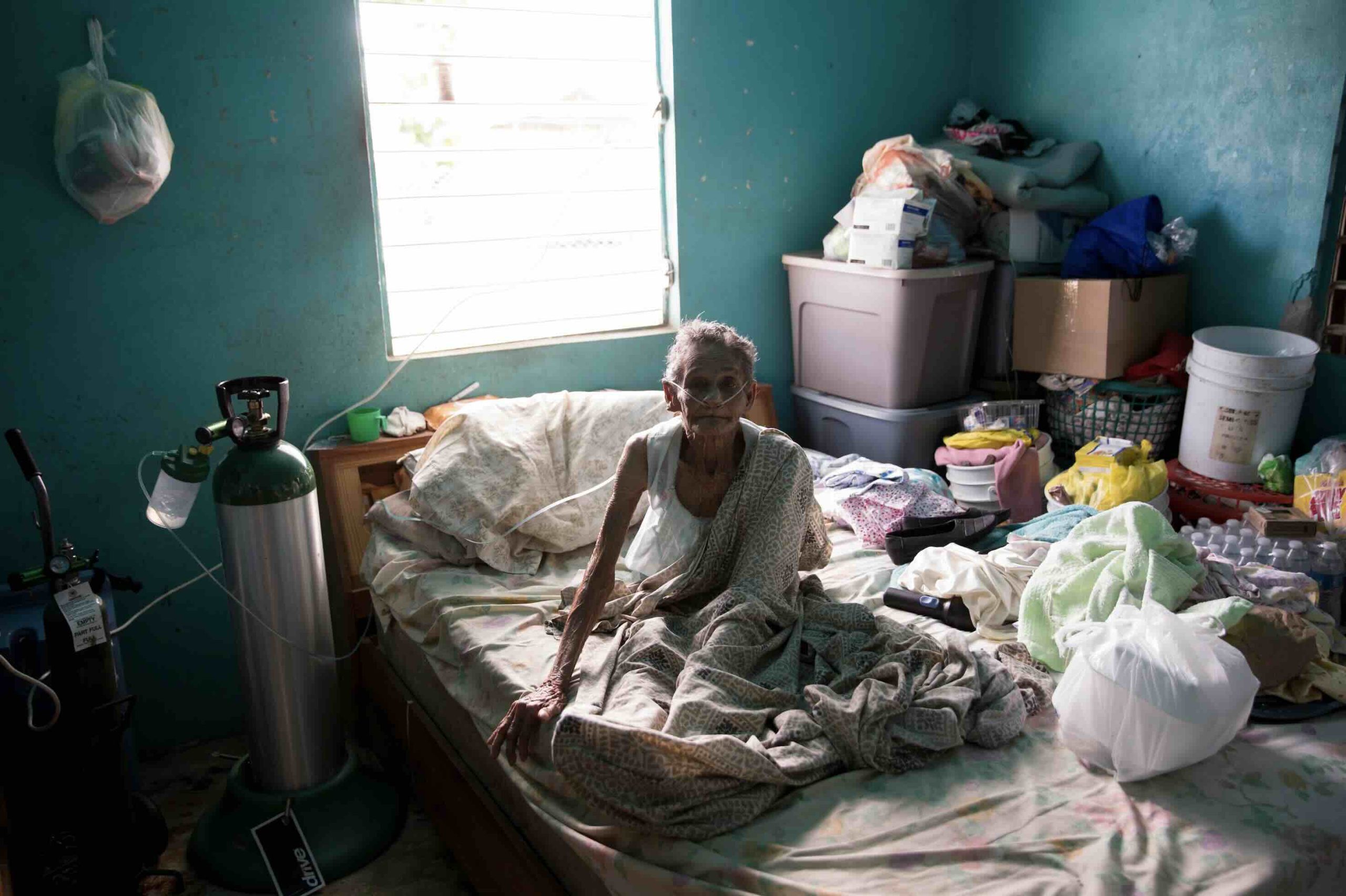
Photo: Jose Jimenez-Tirado | Getty Images
For decades, poverty has been presented as a complex riddle—an intricate web of personal failings, market inefficiencies, and cultural deficiencies. Experts and politicians have spoken in tongues, using terms like "human capital," "labor optimization," and "macroeconomic headwinds" to explain why millions struggle to survive. But by distilling the conversation to its purest form, a startlingly simple and undeniable truth emerges: the root cause of poverty is a lack of money.
This is not a glib or reductive observation; it is the foundational fact upon which all other discussions must rest. The moment we accept this, the conversation shifts from blaming the individual for their "lack of resourcefulness" to examining the system that withholds the resources. The problem is not that the poor are broken; the problem is that the pipes designed to distribute wealth are clogged, and those who hold the keys to those pipes prefer them that way.
To understand this, we must first understand the mechanics of money. It does not appear from nowhere. It must be given to you by an outside source—an employer, a bank, the government, or a family member. When a person is poor, it is not because they lack the will to earn, but because the external entities with the power to give them money have chosen not to.
The Four Pathways to Money: All Blocked
The economy operates on four primary avenues through which money flows to an individual. When poverty is the outcome, each of these avenues is either broken or deliberately obstructed.
- The Labor Pathway: A person offers their time and skill in exchange for wages. This pathway is blocked when good-paying jobs are scarce or when employers, driven by profit margins, choose to pay the absolute minimum the market will bear, regardless of the worker's needs.
- The Asset Pathway: A person trades assets like property or investments. This pathway is empty from the start because it requires capital to generate capital. Without an initial sum, a person is locked out of the wealth-generating machine entirely.
- The Government Pathway: The state redistributes tax dollars through social safety nets. This pathway is often throttled by political will. Governments frequently choose to underfund these programs, spending more on military or corporate subsidies than on ensuring a basic standard of living for their citizens.
- The Social Pathway: Money is given as gifts or inheritance. This pathway is unreliable and often dry, as the families and communities of the poor are typically struggling themselves, unable to provide a financial cushion.
When we examine this model, the conclusion is inescapable: a person is poor not because of a character defect, but because the system does not see a profit in giving them money. The market, which is supposed to be a neutral arbiter of value, is instead a filter that keeps wealth at the top.
The Great Distraction: Over-Complication
This leads us to a critical insight: the deliberate over-complication of poverty is not an accident; it is a mechanism of protection. By making the problem seem infinitely complex, the wealthy and powerful shield themselves from blame and direct action. If poverty is a mysterious, unfixable problem, no one can be held accountable.
This is achieved through economic jargon, a focus on individual "financial literacy," and labyrinthine tax codes designed by lobbyists. While the public is distracted arguing over the "laziness" of the poor, the ultra-wealthy quietly continue to accumulate a disproportionate share of the world's resources. The issue is not that the rich are evil, but that the rules of the game—which they have a significant hand in writing—are designed to keep the money flowing upward.
The central mathematical reality is that most people cannot afford to help. The working and middle classes use almost all their income just to survive, leaving nothing to give. Meanwhile, the top 1% holds a staggering portion of the world's wealth—enough to solve the crisis many times over. Their accumulation is not a sign of a functioning economy, but a sign of a system that has failed to distribute its bounty.
The "Temporarily Embarrassed Millionaire" Phenomenon
This brings us to one of the most powerful psychological tricks in modern society. It is a profound irony of the economic system that millions of people in the middle and bottom classes actively vote against their own financial interests. They will fight to protect the tax cuts, loopholes, and wealth of billionaires.
Why do they do this? They have been sold a specific dream: the belief that with enough hard work, they will one day join that top 1%.
- The Lottery Ticket Mindset: People treat the economic system like a giant lottery. Even if the odds of winning are one-in-a-million, they don't want the government to tax the "jackpot." They think, "When I finally make it to the top, I don't want anyone taking my money." They are protecting a future version of themselves that, statistically, will almost certainly never exist.
- The Meritocracy Myth: From a young age, people are taught that the world is a perfect "meritocracy"—a system where you get exactly what you earn. If you believe this myth, then billionaires must be geniuses who worked harder than everyone else, and poor people must just be lazy. By defending billionaires, people in the middle feel like they are defending the idea of fairness itself, even though the system is heavily rigged by inherited wealth and privilege.
- Status Anxiety and Scarcity: People in the middle class are often terrified of falling into poverty. Instead of looking up and blaming the billionaires who hold all the wealth, they look down. They worry that if the government gives money to the very bottom, the poor will catch up to the middle class. They fight to keep the system rigid because it gives them a sense of status to know they are at least doing better than someone else.
This mindset is the greatest tool the ultra-wealthy have. The top 1% don't even have to fight their own battles. They use media, political campaigns, and the "American Dream" narrative to convince the 99% to fight each other, all while they continue to accumulate more wealth.
The Only Path Forward: A Choice
By following this logical chain, we arrive at the final, uncomfortable truth. The root cause of poverty is not a lack of work, a lack of education, or a lack of grit. The root cause is a lack of money. And the reason there is a lack of money at the bottom is simply because those with the most money at the top choose not to give it.
The solution, therefore, is not complicated, though it is difficult. It requires a fundamental re-routing of the flow of money. This can happen through government intervention—progressive taxation, universal basic income, and strong safety nets—or through a radical shift in corporate and social ethics. Ultimately, ending poverty is not a question of economic theory, but of political will. It is a choice we make as a society. Do we want to fix the pipes, or continue to let them leak?
The Bottom Line
The entire debate about poverty has been intentionally obscured by those who benefit from the status quo. They have created a labyrinth of jargon, personal blame, and psychological manipulation to keep people confused and divided. But the truth remains simple, sharp, and undeniable.
Poverty exists because money exists at the top, and the people holding it refuse to let it go. The middle class is too squeezed to share, and the poor are blamed for their own condition. The system is not broken; it is working exactly as designed—to concentrate wealth and power in the hands of a very few.
The question we must ask ourselves is not how to fix poverty—we already know the answer. The question is why we haven't chosen to do it.
No Ads. By Us. For Us.
This article was made possible by readers like you. We hope it inspired you to support Emerald Book, so we can continue producing content like this.
We will never show you ads, sell your data, or require a subscription to consume our content. Your gift helps us keep the truth accessible.
Click the Support button to give a gift of any amount today.
Thank you for making this work possible.