

Emerald Pages
◆
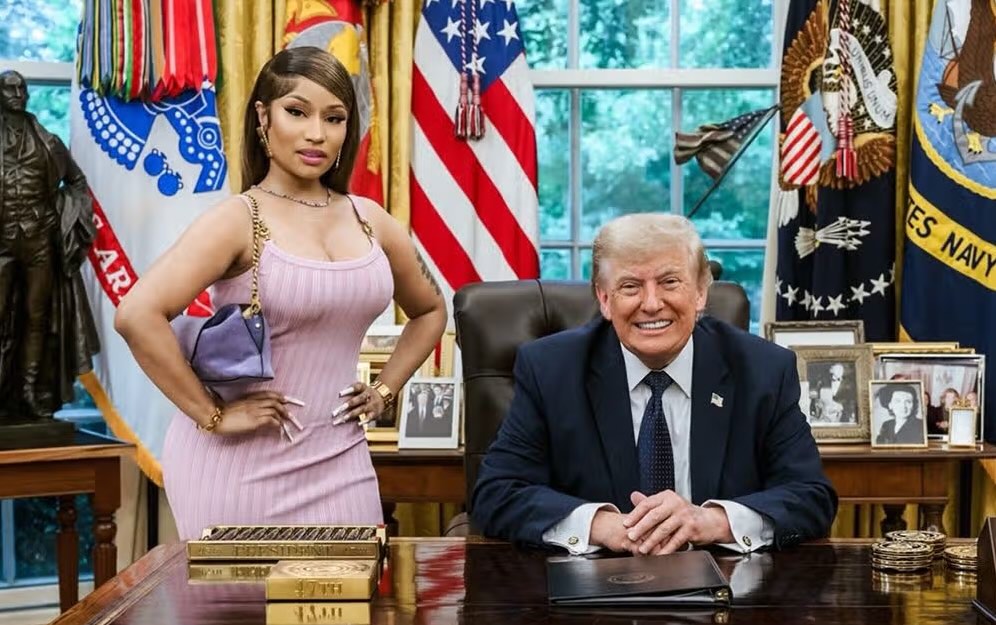
Photo: NICKIMINAJ | X
In the landscape of celebrity political endorsements, the line between genuine conviction and cold, hard strategy is often blurred beyond recognition. However, when examining the recent, fervent alignment of rapper Nicki Minaj with the MAGA movement, the evidence points overwhelmingly to a meticulously calculated financial play. Once a casual supporter who criticized Donald Trump, Minaj has now crowned herself his self-proclaimed "number one fan," a pivot that coincides almost perfectly with a period of severe personal financial strain and a noticeable decline in her mainstream cultural dominance.
To understand this shift, one must look beyond the headlines and the fiery social media posts. The financial records, court documents, and recent career moves paint a picture of an artist facing a liquidity crisis—a situation where immense net worth on paper does not translate to cash in the bank. A $503,000 default judgment from a 2019 concert assault case forced a judge to the "one-yard line" of ordering a forced auction of her $20 million Hidden Hills mansion. She was seemingly unable—or unwilling—to pay it swiftly, and only settled at the eleventh hour.
The drama exposed a deeply disorganized financial foundation. Minaj publicly blamed her business managers, claiming in deleted social media posts that they kept her in the dark and "stole from [her] many times." She also flagged unapproved transactions on her credit cards. For a woman worth an estimated $150 million to $190 million on paper, the inability to quickly produce half a million dollars raised serious questions. It turned out the mansion carried a $13.2 million mortgage lien, and her liquid accounts reportedly had nothing payable to collectors at the time.
The Illusion of Wealth: Net Worth vs. Liquid Cash
The phrase "net worth" is often misunderstood. A $150 million valuation typically means money is locked in music catalogs, investment portfolios, and real estate—not sitting in a checking account. Minaj's predicament is a textbook case. Financial experts note that forcing a multi-millionaire to cash out even half a million dollars quickly can cause a severe cash-flow pinch, especially if they aren't actively touring or releasing new music.
Her legal team fought the judgment using "every other option" before a sale could be forced. They attempted to garnish her bank accounts and pause payments from companies that owed her money. According to court filings, these efforts failed because the banks and companies reported they had nothing payable to her at the time. This strongly implies that her active bank accounts did not have the necessary liquid balance sitting ready to be taken. Keeping up with massive monthly mortgage payments, property taxes, and security costs for an 11-bedroom estate drained cash quickly.
Mainstream Burnout and a Fractured Fanbase
Beyond her financial dramas, Minaj's grip on the modern, mainstream pop-culture zeitgeist has noticeably loosened. In the past, she was the undisputed "Queen of Rap," but recent years have been defined by public feuds, online "temper tantrums," and erratic behavior rather than massive hit records.
Her historic core fanbase was heavily made up of the LGBTQ+ community and young progressive women. However, by spreading vaccine misinformation during the pandemic, picking fights with beloved contemporary artists like SZA, and lashing out at industry moguls like Jay-Z, she severely fractured her relationship with the very people who built her career. As music journalists have pointed out, when an artist feels their natural cultural relevance slipping, switching to a strategy of intentional public outrage is a known tactic to stay in the headlines.
In a massive plot twist that shocked longtime fans, Minaj sat down for an interview where she completely renounced the music eras that made her famous. She claimed her past hits pushed "hypersexuality and materialism" and led young people down the wrong path. She even stated that her old music was "demonic." This sudden pivot into traditional, conservative moral panic serves as a perfect bridge to invite a completely new demographic—conservative Christians and right-wing voters—into her circle, replacing the progressive fans she lost.
The New Alliance: A Strategic Ecosystem
When a celebrity faces a severe cash-flow crisis and a dwindling mainstream audience, aligning with a powerful political movement like MAGA offers a unique ecosystem of financial rewards, legal protection, and business opportunities that the traditional entertainment industry cannot provide.
For Minaj, the shift was driven by several key factors. First, there was her growing frustration with Democrats. She explicitly blamed high-profile figures like California Governor Gavin Newsom and former President Barack Obama for alienating her and ignoring her concerns. Then came the "swatting" incidents—fake emergency calls that sent police to her home. While she felt ignored by local Democratic leaders, Republican Congresswoman Anna Paulina Luna reached out directly to connect her with federal law enforcement and private security. This personalized assistance deeply impacted her view of the party.
Monetizing a New Base of Consumers
Conservative consumers frequently rally behind public figures who publicly "cross the aisle," intentionally buying their products, streaming their music, and attending their events to show solidarity. For an artist whose mainstream corporate sponsorships might be drying up due to personal or financial drama, this new fanbase acts as a financial safety net.
Minaj has actively used her social platforms to promote specific policies championed by the Trump administration, including vocal support for banning transgender athletes from women's sports and backing stricter immigration measures. She also partnered with the Trump administration on international issues, speaking out at a UN event alongside Trump officials against the persecution of Christians in Nigeria.
High-Yield Political Partnerships
The political world has its own lucrative economy. Celebrities who align with the movement are frequently booked for high-paying speaking gigs at political conferences, fundraisers, and private donor events. Minaj has emerged as a cornerstone promoter for "Trump Accounts," a tax-advantaged investment and savings program for children under 18. She pledged between $150,000 and $300,000 of her own money to support the fund—a strategic business partnership designed to generate fresh income or secure tax advantages.
- Access to Federal Power: The White House rollout positions her as the celebrity cornerstone for the Treasury Department's new youth investment initiative.
- Massive Financial Ties: Her pledge directly hooks her name into a program backed by multi-billion-dollar corporate giants like JPMorgan Chase and Charles Schwab.
- Absolute Validation: At a recent Rose Garden luncheon, President Trump personally introduced her to elite donors, calling her "so respected and so hot."
The "Trump Reward System" in Action
There is a clear precedent that people who fiercely defend Donald Trump are often rewarded with promotions, business backing, and entry into an exclusive network of billionaire donors and powerful operators. For an artist who publicly complained that the music industry forces a "Democratic family" mindset upon creators, stepping out of that box allows her to court a different group of ultra-wealthy benefactors who are eager to fund culturally influential figures.
From a strategic perspective, the MAGA movement heavily courts figures like Minaj because she commands a massive following of young, predominantly Black women. Political analysts note that her validation provides Trump's platform with a powerful cultural currency, challenging traditional voting demographics and proving that right-wing alignment is gaining open traction within the entertainment industry.
Did It Work?
The strategy is working perfectly to keep her financially afloat, culturally relevant, and deeply protected. By pivoting to the MAGA ecosystem, Nicki Minaj has successfully transformed her mainstream career slump and financial drama into an entirely new, highly lucrative type of celebrity power.
Instead of just fighting for streaming numbers on Spotify, Minaj has stepped into federal economic policy. She serves as the celebrity cornerstone for the Treasury Department's new "Trump Accounts" program, securing her brand as a major financial player in Washington, not just a pop star.
Whenever Minaj faces financial or legal scrutiny—like her ongoing lawsuits over unpaid concert production bills—she now has a built-in defense mechanism. She publicly brushes off criticism by framing herself as a warrior fighting against a "system" out to get her. This instantly flips any bad press about her money or her music into a political battle, rallying millions of conservative fans to defend and support her out of political loyalty.
By trading the unpredictable mainstream music market for a guaranteed, fiercely loyal political fanbase, she didn't just survive her financial pinch—she completely insulated her wealth and gained a level of institutional power most artists could only dream of. The self-proclaimed "Queen of Rap" has, in effect, become a queen of a new political court, and the checks are cashing in.
No Ads. By Us. For Us.
This article was made possible by readers like you. We hope it inspired you to support Emerald Book, so we can continue producing content like this.
We will never show you ads, sell your data, or require a subscription to consume our content. Your gift helps us keep the truth accessible.
Click the Support button to give a gift of any amount today.
Thank you for making this work possible.