

Emerald Pages
◆
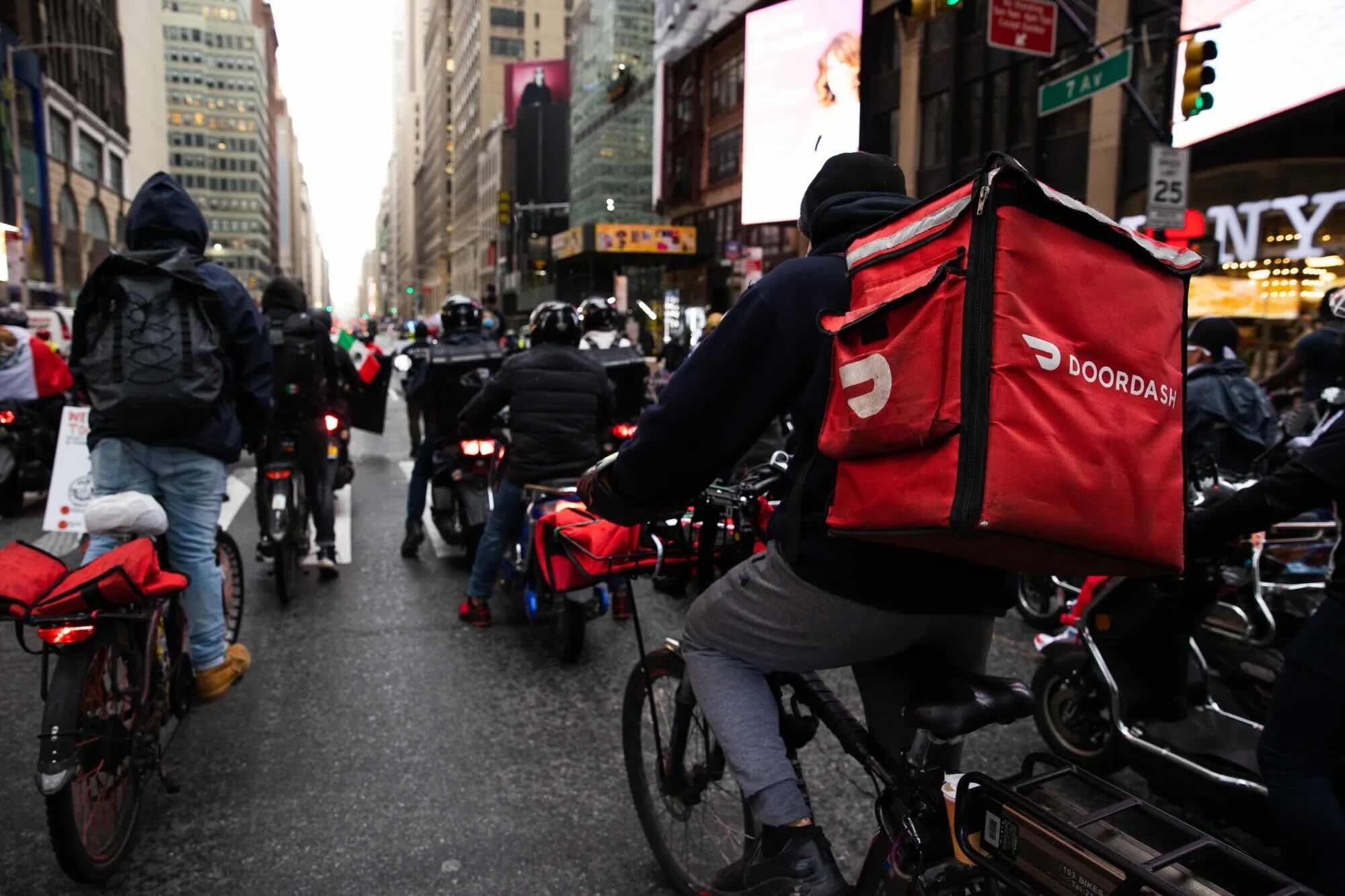
Photo: Bloomberg
T he headline numbers look reassuring. The U.S. unemployment rate hovers around a historically low 4.2%. The economy is growing. Yet, if you talk to the average worker, the mood on the ground tells a very different story. The disconnect between official statistics and lived experience is not an accident; it is by design. At the heart of this statistical mirage is the gig economy — a system that has evolved from a niche side hustle into a sprawling, multi-billion-dollar industry that simultaneously exploits its workforce and masks the true extent of underemployment in America.
The gig economy is often marketed as the future of work — a world where you are your own boss, where you can "hustle" your way to freedom by driving for Uber, delivering for DoorDash, or freelancing on Upwork. But for the vast majority of adults relying on these platforms as their primary source of income, the promise of flexibility is a trap. It is a high-tech system designed to shift the costs and risks of doing business from wealthy corporations onto the shoulders of the most vulnerable workers, all while providing a convenient statistical hiding place for a struggling labor market.
To understand the harm, you must first understand the bait. The gig economy thrives on the rhetoric of entrepreneurship. It paints a picture of independence, where workers can choose their hours and be rewarded for their hustle. But the reality is a system where a worker with five years of experience on the platform is paid the exact same rate by the algorithm as a rookie who signed up yesterday. There is no upward mobility, no path to a raise, and no promotion. In a traditional career, experience leads to job security; in the gig economy, experience leads to nothing but more wear and tear on your car.
The Exploitation of Vulnerability
The gig economy took traditional labor laws — which took a century of worker fighting to build — and stripped them away by simply changing a job title to "independent contractor." This classification is the linchpin of the exploitation. It allows companies to shift 100% of the operational costs — from vehicle maintenance and gas to healthcare and insurance — onto the worker.
The data reveals a deeply troubling pattern. Reports, such as a major study by Human Rights Watch, highlight how apps use opaque algorithms to drop pay rates to the absolute lowest amount a worker will accept, rather than paying what the labor is actually worth. This system disproportionately impacts Black, Latino, and immigrant workers, who are heavily overrepresented in delivery and ride-share apps. Many critics argue the system deliberately relies on people who are financially desperate enough to accept sub-minimum wages, turning economic precarity into a business model.
This is compounded by the very nature of "ghost work." Adults often spend hours of unpaid time waiting in parking lots for an order, driving between gigs, or dealing with app glitches. Because they are only paid per completed task, a worker might spend a 10-hour day on the road but only get paid for 5 hours of actual active work, dragging their true hourly wage far below the legal minimum.
The Statistical Mirage: Hiding Underemployment
Perhaps the most insidious impact of the gig economy is how it distorts our understanding of the entire economy. When the government measures unemployment, it asks a simple question: "Did you do any work for pay this week?" If an adult drove an Uber for just three hours to buy groceries, the government officially marks them down as fully employed. The data doesn't care that the worker wanted a 40-hour office job, has no healthcare, and made less than minimum wage after paying for gas.
This creates a "fake safety net." A town can look like it has "0% unemployment," but in reality, half the town is underemployed—working insecure, part-time gigs just to survive day by day. The official U-3 unemployment rate (the famous 4.2% figure) ignores this reality completely. The real-life number is the U-6 rate, which measures underemployment and sits much higher at 7.9%. This broader metric includes part-time gig workers who desperately want a full-time career and "discouraged workers" who have stopped applying to jobs because the market is so brutal.
Ultimately, the gig economy acts as a giant sponge that soaks up people during layoffs or tough times. It keeps people from technically falling into "unemployment," but it traps adults in a state of survival mode rather than helping them build stability. Recent reports from Goldman Sachs show that when adults lose a traditional job and turn to gig work, they only make 50% to 65% per hour of what they used to earn. Yet, on paper, they never missed a day of work.
- U-3 Rate (Headline): 4.2% — Only counts those actively looking for work. Ignores gig workers.
- U-6 Rate (Underemployment): 7.9% — Includes gig workers, part-timers seeking full-time, and discouraged workers.
- The Cost Cut: Gig workers are roughly 30% cheaper to hire than regular employees because apps skip paying payroll taxes, workers' comp, or healthcare.
- The Trap: The U.S. economy is in a "low-hire, low-fire" rut, forcing many into gig work to survive.
This "hidden" workforce gives giant corporations massive advantages while leaving the public to pick up the pieces. Companies like Uber or Instacart use gig workers to absorb market swings. If demand drops, the company doesn't have to pay for layoffs; the drivers just sit in parking lots earning zero dollars. The cost and volatility are passed entirely onto the individual.
The Unsustainable Middle Layer
Adding to the frustration is the fact that these apps have become an expensive, unnecessary middle layer. What started as a cheap way to connect people has turned into a system of multiple expensive layers: service fees, menu markups (up to 23% added to restaurant prices), and regulatory fees. By the time a customer checks out, a $15 meal can cost $30, yet the worker delivering it might only see a tiny fraction of that increase.
This has led to a rise in "de-platforming." Customers are finding reliable workers on apps once and then offering to pay them directly via cash or Venmo. Driver-owned cooperatives, like The Drivers Cooperative in New York City, are emerging to bypass corporate greed entirely, proving that the middleman is not only unnecessary but actively harmful to both worker and consumer.
A Loophole, Not a Remedy
The gig economy did not emerge to fix unemployment. It emerged because tech companies found a highly profitable way to act as digital middlemen. A bad economy simply provides these apps with a constant supply of desperate workers who have no other choice but to accept lower pay. The system is a perfect loop for corporations and a trap for adults.
However, the tide is starting to turn. Governments around the world are realizing they cannot rely on fake economic numbers forever while their citizens struggle. The United Nations' International Labour Organization (ILO) recently passed historic global rules to stop apps from misclassifying workers. Cities and states are stepping in to force these apps to guarantee a minimum hourly wage, regardless of what the algorithm wants to pay.
The gig economy proves that the true state of the economy cannot be measured by who is working alone. It must be measured by how people are working, how secure they feel, and whether they can build a life. The mirage of the gig economy is beginning to dissipate, and what remains is a stark reminder that an economy built on exploitation is not an economy at all — it is a gamble, and the house always wins.
No Ads. By Us. For Us.
This article was made possible by readers like you. We hope it inspired you to support Emerald Book, so we can continue producing content like this.
We will never show you ads, sell your data, or require a subscription to consume our content. Your gift helps us keep the truth accessible.
Click the Support button to give a gift of any amount today.
Thank you for making this work possible.