

Emerald Pages
◆
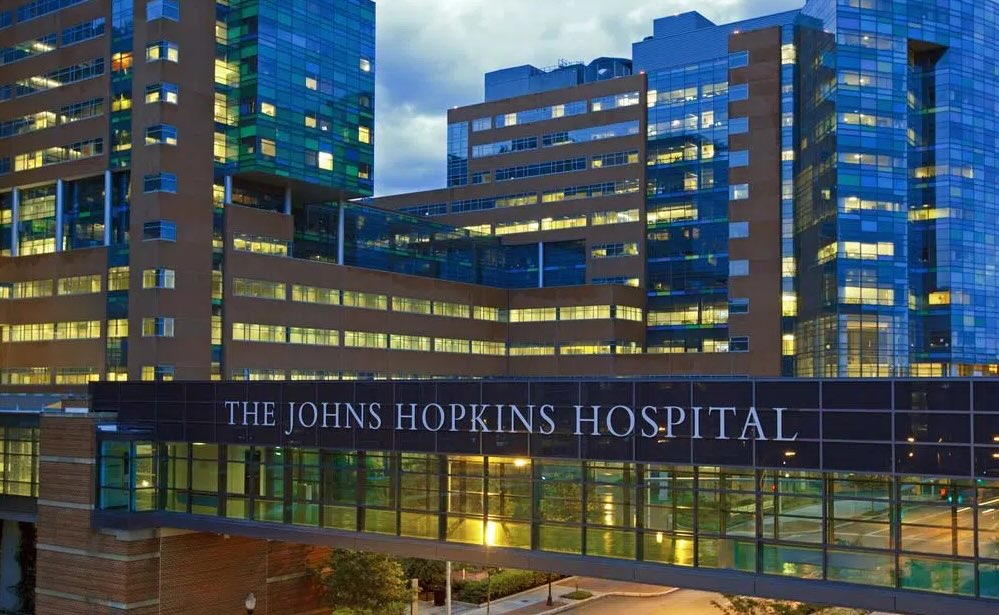
Photo: The Johns Hopkins Hospital
The numbers are staggering. To build a mid-sized community hospital from scratch in 2026, you are looking at a baseline investment of $60 million to $180 million. For a major regional medical center, that figure rockets to $500 million or more, easily exceeding $1 billion for premier facilities. This is not simply a matter of high costs; it represents a fundamental economic absurdity that has completely locked independent owners—including community groups, minority entrepreneurs, and anyone without a corporate empire—out of the hospital-building business.
The sheer scale of capital required is only the first layer of a multi-tiered financial gauntlet. Hospital construction is two to three times more expensive than standard commercial real estate, averaging between $400 and $800 per square foot. This is driven by specialized infrastructure: advanced HVAC systems for infection control, medical gas pipelines, and heavy-duty backup generators. These mechanical, electrical, and plumbing (MEP) systems alone can consume up to 50% of the entire construction budget.
However, the physical building is only half the battle. The cost to outfit a hospital with state-of-the-art medical technology often matches or exceeds the cost of the building itself. Outfitting a single imaging department with MRI machines, CT scanners, and X-ray suites can easily add $10 million to $20 million. Furthermore, the multi-million dollar licensing fees and annual maintenance costs for essential Electronic Health Record (EHR) software like Epic create a technological monopoly that a standalone hospital simply cannot afford.
The Gauntlet: Financial Hurdles to Building a Hospital
For an independent owner, the dream of building a hospital today is crushed by a series of impossible financial hurdles. It is not just about having a lot of money; it is about navigating a system rigged in favor of corporate giants.
- The Capital Access Hurdle: Raising the necessary $100 million to $500 million is the first impossible task. Commercial banks will not issue loans for independent hospitals due to the extreme risk of failure. Startups lack the credit rating for tax-exempt municipal bonds, and venture capitalists demand unrealistically fast returns that a hospital's long construction timeline cannot provide.
- The Regulatory Sunk Cost Trap: Before a single shovel hits the dirt, millions must be spent on legal battles to secure a "Certificate of Need" (CON) from the state. This process, which requires proving the community needs a new hospital, is routinely contested and blocked by existing corporate hospital chains that wield massive lobbying power to prevent competition.
- The Construction & Infrastructure Premium: Building a hospital requires rigid structural codes for heavy equipment, complex filtration systems to prevent disease spread, and redundant power grids to ensure life-support systems never fail. This makes construction up to three times more expensive than a standard office building.
- The Outfitting & Tech Monopoly: The cost of medical equipment (MRI machines, CT scanners) often equals the cost of the building. Installing and maintaining legally-compliant software systems like Epic requires a massive initial licensing fee and millions of dollars in annual maintenance, creating a financial barrier that crushes independent facilities.
- The Operational Cash Flow Trap: A new hospital does not make money on day one. It takes 60 to 120 days for insurance companies to reimburse for services, meaning the hospital must cover millions in payroll out-of-pocket for months. Independent hospitals often attract a high percentage of uninsured or Medicaid patients, whose reimbursements are below the cost of care, creating a "predatory" financial environment.
This financial reality has led modern Black medical entrepreneurs and other independent groups to abandon the traditional hospital model entirely. Instead of building massive, money-losing inpatient towers, they are pivoting to profitable, lean healthcare models that bypass the economic absurdity of a full-scale hospital.
Ambulatory Surgical Centers (ASCs) allow doctors to perform high-profit, low-risk procedures where patients go home the same day. Urgent Care and Micro-Hospitals (with 8 to 10 beds) handle emergencies at a fraction of the cost and staffing requirements. Finally, Concierge Direct Primary Care (DPC) models cut out insurance companies entirely, guaranteeing steady cash flow through patient membership fees. These modern strategies represent a smart, financially viable path forward, avoiding the financial suicide of building a traditional, full-service hospital.
Building a hospital is not a construction project; it is a financial gauntlet designed to be run only by the wealthiest corporations and state-backed institutions. The economic absurdity is clear: the system that was once built by communities and philanthropists has become a tool of exclusion. For all but the largest conglomerates, the numbers simply do not add up.
No Ads. By Us. For Us.
This article was made possible by readers like you. We hope it inspired you to support Emerald Book, so we can continue producing content like this.
We will never show you ads, sell your data, or require a subscription to consume our content. Your gift helps us keep the truth accessible.
Click the Support button to give a gift of any amount today.
Thank you for making this work possible.