

Emerald Pages
◆
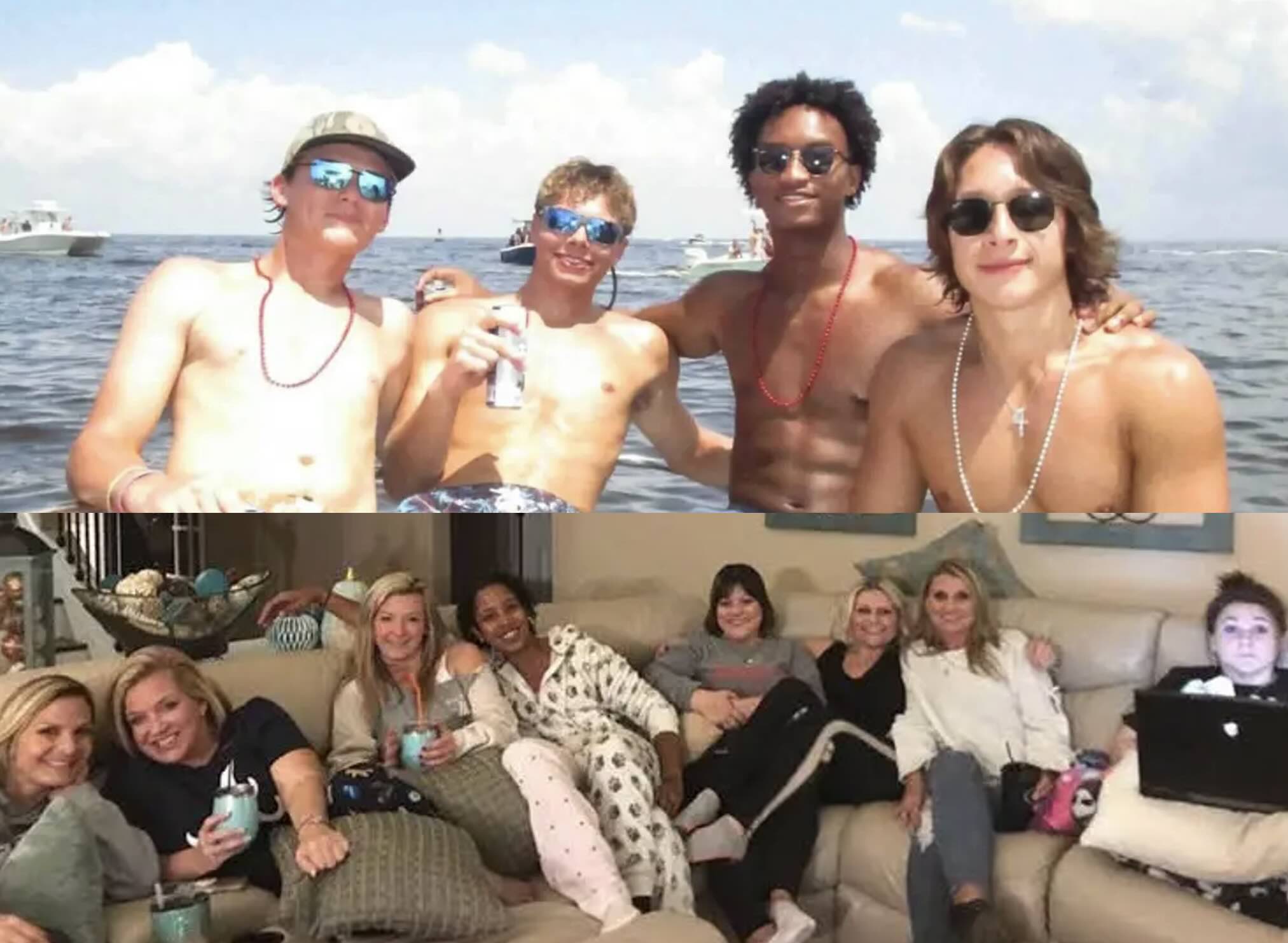
Photo: Emerald Book Image
In Black communities across America, there is an unspoken conversation that happens in living rooms, at kitchen tables, and between parents and their children. It is a conversation about survival. It is the warning that being the "only one"—the sole Black person in an otherwise all-white group—carries risks that extend far beyond social awkwardness or cultural isolation. The tragic cases of Nolan Xavier Wells and Tamla Horsford have thrust this painful reality into the national spotlight, forcing America to confront an uncomfortable truth: when Black lives are isolated in white spaces, their value is often not measured not by their humanity—leading to a cold disregard of black life.
Nolan Xavier Wells was an 18-year-old college football player from Ocean Springs, Mississippi, with his entire future ahead of him. On July 4, 2026, he joined a group of friends for a boat trip to Horn Island. Photos from the trip showed Nolan as the only Black teenager in a large group of white peers. When the group returned to the mainland, Nolan did not return with them. His mother had to report him missing late that night. After an intensive multi-agency search, a body matching Nolan's description was found washed ashore on July 6. The rest of the group claimed they "didn't know what happened."
Tamla Horsford's story echoes this same haunting pattern. In November 2018, the 40-year-old mother of five attended an overnight "football moms" slumber party in Cumming, Georgia. She was the only Black woman at the gathering. The following morning, she was found dead in the backyard. Local law enforcement ruled her death an accidental fall, but an independent medical examiner found extensive injuries that did not align with a simple fall. The Georgia Bureau of Investigation reopened the case in 2020, and subsequent investigative reports by outlets like Rolling Stone revealed multiple errors and unprofessional behavior by initial responding officers. The question that haunts both cases remains: why didn't anyone act with urgency?
The "Token Friend" as a Safety Risk
The term "token Black person" describes someone included in a group primarily to create an illusion of diversity, rather than for their actual merit or individuality. But in the context of Nolan and Tamla's cases, the term takes on a much darker meaning. It highlights the terrifying difference between people who want you around for entertainment and people who will actually protect you when you are vulnerable.
The phrase "they don't know what happened" became a symbol of public frustration in both cases. To outsiders, it felt as though the groups treated the disappearance of a human being as a minor detail rather than an absolute emergency. In a tight-knit friend group, if one person vanishes, the normal human reaction is instant panic, screaming their name, and refusing to leave until they are found. Instead, the initial reaction from the peers appeared passive—a silence that spoke volumes about how little they valued the lives of their Black companions.
- Leaving the scene without them: In Nolan's case, the group left the island without him. In Tamla's case, no one noticed she was missing during the night.
- The slow response: Both cases featured delayed reactions from peers, who seemed more focused on self-protection than finding answers.
- Protecting the group over the individual: After both incidents, peers focused on hiring lawyers and shutting down communication rather than supporting grieving families.
This indifference taps into a historical and psychological wound that runs deep in Black communities. There is a painful feeling that to these specific groups, the Black friend was expendable—a presence welcome for the party, but not worthy of the same protective instinct that would be extended to someone within their own community.
The Weight of Being the "Only One"
Being the only Black person in a group means carrying a burden that white peers rarely understand. It means being the "Black-opedia"—the person expected to explain Black culture, comment on racial tragedies, and give permission on what is culturally acceptable. It means the pressure to act perfectly, because your friends may judge the entire Black community based solely on your behavior. And it means constant vigilance, watching for subtle shifts in behavior or hidden biases.
The psychological toll of this isolation is profound. Many Black individuals feel forced to code-switch heavily—changing their tone of voice, language, style, and interests to match the dominant culture. Over time, wearing this "mask" can cause a sense of loneliness and a disconnect from one's own heritage. It is not about saying that people of different races cannot be genuine friends. Instead, it emphasizes that true friendship requires active allyship—a commitment to protecting and validating each other, especially when things go wrong.
A One-Way Street of Care?
A common question that arises in discussions of these cases is whether the opposite dynamic exists—whether white individuals face similar dangers when they are the "only one" in an all-Black group. The answer reveals uncomfortable truths about power, media bias, and systemic inequality.
When crimes or accidents occur involving a white person in a majority-minority space, the public and media conversations generally play out very differently. White families have high confidence that law enforcement will automatically investigate thoroughly, look at all angles, and heavily interrogate anyone present. The historical fear of a "systemic cover-up" protecting a group of Black peers at the expense of a white victim does not align with how judicial and police systems have historically functioned in America. This is the reality of unequal power dynamics.
Sociologists have long documented a phenomenon called "Missing White Woman Syndrome"—the tendency of mainstream media to provide relentless coverage to missing or harmed white individuals, while giving far less attention to Black victims. Because mainstream media naturally provides heavy coverage and pressure to these cases, white families rarely have to rely on grassroots social media campaigns or viral hashtags to force local police to take the case seriously. The contrast with how Black families must fight for basic investigative steps is stark and deeply troubling.
Institutional Failure and the Fight for Justice
The perception that "white people do not value Black life" is heavily reinforced by how institutions respond to Black tragedy. In the cases of Nolan Xavier and Tamla Horsford, families felt that local law enforcement treated the deaths with a lack of urgency, immediately leaning toward "accidental" conclusions rather than conducting rigorous forensic investigations. This lack of institutional care forces Black communities to rely on grassroots internet activism—hashtags like #JusticeForTamlaHorsford and campaigns demanding investigations—just to get basic investigative steps taken.
This pattern is not limited to these two cases. Across the country, Black families have experienced the same heartbreak of watching authorities dismiss their loved ones' deaths while white families receive immediate, thorough investigations. The anger and caution discussed in Black communities are a direct response to a system that historically requires a public fight to prove that a Black life has value.
Protecting Ourselves, Demanding Better
The conversation about the dangers of being the only Black person in a group is not born out of paranoia—it is born out of history and a real need for self-preservation. In many Black communities, there is a serious talk given to young people about the invisible risks of being "the only one." This caution is about protecting one's peace and life. It emphasizes that true safety is found in spaces where you are valued as a full human being, not just accepted as a visual addition to the group.
But individual caution is not enough. America must confront the systemic indifference that allows these tragedies to occur and then be dismissed. True change requires recognizing that the difference between "being around" and "being safe" is a matter of life and death. It requires white allies to actively protect, validate, and share the emotional weight of navigating a racially complex world. And it requires institutions—law enforcement, the media, and the justice system—to treat every life with equal urgency, regardless of race.
The stories of Nolan Xavier Wells and Tamla Horsford are not just tragedies—they are warnings. They remind us that being the "only one" in a group is not just uncomfortable; it can be dangerous. They challenge us to ask hard questions about who we trust, who we protect, and who we leave behind. And they demand that we do better.
No Ads. By Us. For Us.
This article was made possible by readers like you. We hope it inspired you to support Emerald Book, so we can continue producing content like this.
We will never show you ads, sell your data, or require a subscription to consume our content. Your gift helps us keep the truth accessible.
Click the Support button to give a gift of any amount today.
Thank you for making this work possible.