

Emerald Pages
◆
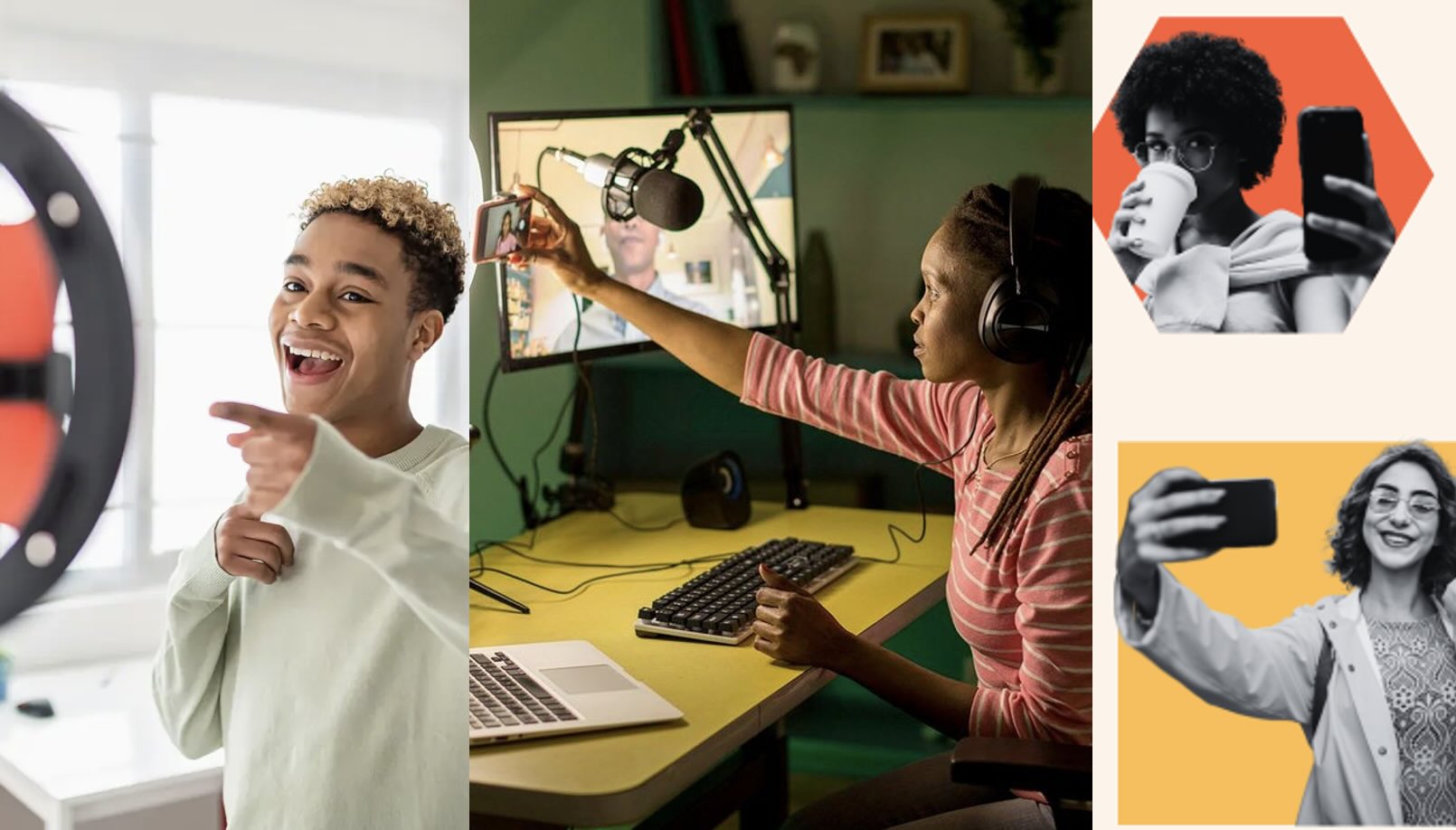
Photo: Emerald Book Image
In 2023, a landmark study by the Keller Advisory Group revealed something that should have shocked the world: there are approximately 27 million content creators and influencers in the United States. Of these, roughly 12 million work full-time — meaning they dedicate 40 to 60 hours a week to creating content, managing their brand, and chasing the algorithm. Yet nearly half of all creators make less than $10,000 annually, and most earn far below minimum wage.
How did this happen? How did social media companies convince millions of people to work a full-time job while paying them nothing and stripping away every protection a traditional employee would receive?
The answer lies in a masterclass of psychological manipulation, clever software engineering, and gamification. Social media platforms didn't build corporate offices; they built digital arenas and told everyday users that if they supplied the entertainment, they might get rich and famous. It was the ultimate bait-and-switch, and millions took it.
The Dopamine Loop: A Digital Slot Machine
When a creator posts a video, the platform doesn't pay them in cash — it pays them in validation. The algorithm acts like a casino game: one video gets 50 views, the next might get 50,000. This unpredictable reward system triggers massive dopamine rushes in the brain. Because creators never know which video will hit the jackpot next, they keep posting more content for free, constantly chasing that next high.
Tech companies hired top behavioral psychologists to design these systems. The creator dashboard was deliberately engineered to look and feel like a video game. Follower counts, view numbers, and likes aren't just metrics — they're "high scores." Watching a number climb from 900 to 1,000 delivers the exact same brain thrill as leveling up a character in a game.
The Illusion of Free Distribution
Social media companies convinced people to work for free by offering a seductive trade: "You give us free content, and we'll give you a free stage to broadcast it to the world." In the past, getting on TV or in a magazine cost millions. Social media made broadcasting free for anyone with a smartphone.
Creators thought they were getting a great deal — ignoring the fact that the platform makes billions by placing advertisements right next to their free work. The platforms take no financial risk, pay no base salaries, and own all the data. Meanwhile, creators are left to buy their own cameras, lighting, editing software, and computers just for a chance at making money.
Survivorship Bias: The Lottery Effect
Platforms constantly highlight their top 1% of mega-earners — creators like MrBeast or Charli D'Amelio — on the home screen. Seeing regular teenagers become multi-millionaires makes everyday users think, "If they can do it, I can too!"
This creates survivorship bias, where people focus only on the few who win the lottery while ignoring the millions of creators who work full-time hours for zero dollars. The influencer economy is shaped like a pyramid: the bottom 90% make $0 to $1,000 a year; the middle 9% make $10,000 to $50,000 (nice side-hustle money, but rarely enough to live on); and the top 1% make $100,000 to millions.
- The Bottom 90%: Earn $0–$1,000 per year. Often spend more on gear than they ever make back.
- The Middle 9%: Earn $10,000–$50,000 per year. Decent side income, but rarely sustainable as a sole career.
- The Top 1%: Earn $100,000 to millions per year. These are the only creators we see on our feeds, creating the illusion that the job pays well for everyone.
Gamification: Turning Work Into Play
This is where the exploitation reaches its most insidious form. Social media platforms didn't just create a marketplace — they built an addictive game with carefully designed mechanics to keep people playing indefinitely.
The Scoreboard: Follower counts, view counts, and likes are presented as your "high score." Watching a number climb triggers the same brain chemistry as leveling up in a video game.
The Badges: Platforms reward creators with virtual trophies to keep them playing. Getting a verification blue checkmark, reaching a new "Creator Tier," or receiving an invite to a "Creator Academy" costs the platform zero dollars but makes the creator feel like they've won an award.
The Level-Up System: TikTok and Instagram constantly nudge creators with achievements. They send notifications like: "Your latest video is performing 80% better than your average! Post another one now to keep your streak alive!" This turns hard creative work into a daily chore to maintain a streak.
In video game design, there's a trick called "Dynamic Difficulty Adjustment." If a game is too hard, players quit. If it's too easy, they get bored. The game adjusts on the fly to keep you hooked.
Social media algorithms do the exact same thing with views. When a new user posts their first few videos, the algorithm often boosts them artificially. The user gets a sudden rush of 10,000 views and a flood of comments. They're hooked. Then suddenly, the algorithm throttles their views back down to 50. The creator remembers how good that first level felt. Instead of quitting, they work twice as hard, script better, and edit longer to try and "beat the algorithm" and get that high view count back.
Two Full-Time Jobs
When someone decides to become a serious content creator, they aren't just taking on one role — they're running a complex media company entirely by themselves.
Job 1: The Production Crew. The creator acts as scriptwriter, lighting technician, director, on-camera actor, and video editor. In a traditional Hollywood studio, this would require a team of five separate, paid professionals.
Job 2: The Business Executive. The creator also acts as marketing manager, accountant, talent agent, and legal contract negotiator. They must spend hours pitch-decking brands and tracking down missing invoice payments.
Because they have to do all of this alone, the hours quickly pile up to 50 or 60 hours a week. Yet because they're struggling to break through the algorithm, their monthly paycheck from the platform is often zero dollars.
At a regular minimum-wage job, a worker is protected by labor laws. In the influencer world, those protections don't exist. There's no base salary: if a fast-food worker stands around for an hour because the restaurant is empty, they still get paid. If an influencer spends 20 hours making a video and the algorithm decides not to show it to anyone, they make $0.
There are no labor laws regulating how many hours an influencer can work, no mandatory lunch breaks, and no overtime pay. Normal employees don't pay out of their own pockets to do their jobs, but influencers must buy their own expensive computers, cameras, and editing software just to have a chance at making money.
- No Base Salary: If the algorithm doesn't show your content, you earn nothing for your labor.
- No Labor Protection: No mandatory breaks, overtime pay, or limits on working hours.
- Total Financial Risk: Creators must buy their own equipment and software, often going into debt for a chance at success.
- No Safety Net: No paid vacation, sick days, health insurance, or retirement benefits.
The AI Training Hoover
Almost every major social platform — including Meta, TikTok, YouTube, and X — has updated its terms to explicitly state they use public posts, photos, captions, and videos to train their Artificial Intelligence models. If a creator spends 10 hours editing a beautiful video, the platform's AI absorbs that data to learn how to write, think, and generate images like a human.
On apps like TikTok, you still technically "own" your copyright. However, their terms state that by uploading the clip, you give them a permanent, irrevocable license to use your face, your video, and your voice for AI development. The platform uses this data to build powerful AI tools that they sell back to the public or corporations, while the original creator receives zero royalty checks.
The platforms take no financial risks, pay no base salaries, and own all the data. Meanwhile, millions of hopeful creators burn themselves out working 60-hour weeks for a tiny chance at becoming the next internet lottery winner.
The Human Cost
Behind the polished Instagram grids and viral TikTok dances are real people struggling with burnout, anxiety, and financial instability. Creators report feeling constantly "on," unable to separate their personal lives from work. Many spend their evenings researching trends or constantly thinking about how to turn their daily life into content.
Income volatility is crushing. A creator might make $8,000 in November and December because brands spend heavily for the holidays. But in January and February, company budgets dry up, and that same influencer might make closer to $500. This makes it incredibly hard to pay rent or plan for the future.
A Way Forward
Some creators are fighting back by building alternative platforms like Patreon, Substack, and Ko-fi — spaces where they can own their audience and earn directly from fans rather than being at the mercy of algorithm shifts. Some countries are exploring laws to protect digital workers and regulate AI scraping.
But the fundamental structure remains unchanged. As long as social media platforms can attract free labor through gamification and the illusion of easy fame, millions will continue to work for free, hoping to be the next viral sensation. The house always wins — and in this game, the house is Silicon Valley.
No Ads. By Us. For Us.
This article was made possible by readers like you. We hope it inspired you to support Emerald Book, so we can continue producing content like this.
We will never show you ads, sell your data, or require a subscription to consume our content. Your gift helps us keep the truth accessible.
Click the Support button to give a gift of any amount today.
Thank you for making this work possible.