

Emerald Pages
◆
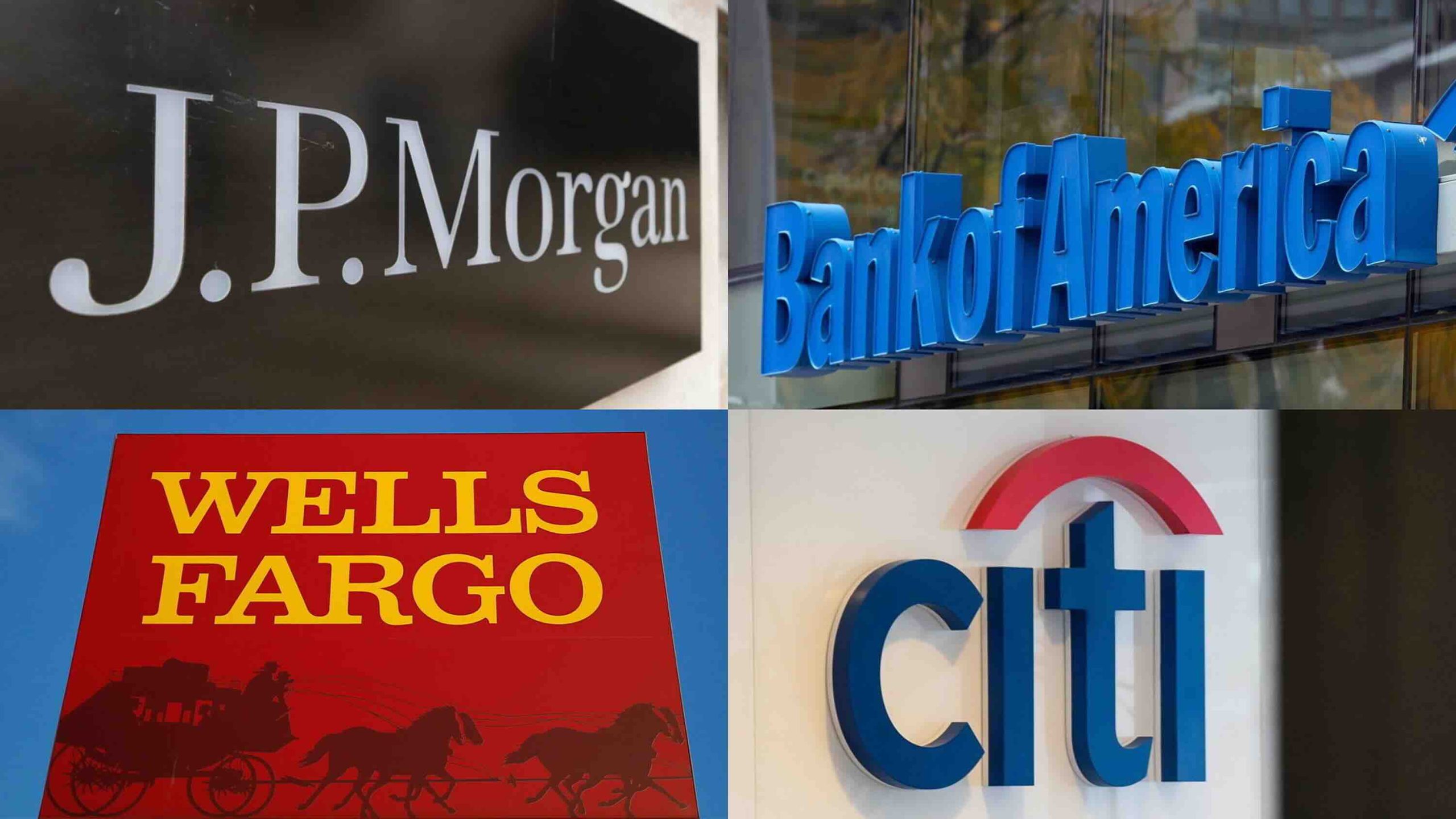
Photo: The Banker
In the United States, you are statistically more likely to walk past a bank branch than a McDonald's, a Starbucks, or a Walmart. In fact, according to recent data, there are more individual banking companies (4,278) than there are Costco warehouses (600) by a factor of seven. But the disparity gets even more staggering when you look at physical branches. With roughly 78,000 bank branches spread across the country, the U.S. banking network has more locations than McDonald's, Walmart, Starbucks, and Costco combined—more than twice as many, to be precise. While a handful of "mega-banks" dominate the news, the sheer volume of financial institutions ensures that local communities retain a powerful stake in the American economy.
This unique landscape is not an accident of the free market. It is a direct result of a century of U.S. laws specifically designed to prevent the concentration of financial power. While countries like Canada and the U.K. consolidated into a handful of massive banks, America's "dual banking system" and anti-monopoly laws ensured that power remained fragmented and local. This structure has created a consumer environment that is fundamentally more competitive, responsive, and equitable than the oligopolies seen elsewhere.
While the big names—JPMorgan Chase, Bank of America, Wells Fargo, and Citibank—control a significant portion of the nation's deposits, they represent only a fraction of the total number of institutions. The remaining landscape is composed of over 4,000 community banks and more than 4,700 credit unions. These smaller entities make up over 90% of the individual bank count and are often the financial lifelines of their hometowns. This abundance of options means that consumers are not beholden to faceless, distant corporations; they can choose an institution that knows their name and understands their local market.
The "Small Bank" Advantage
The benefits of this highly fragmented system are tangible for the average American. Community banks operate on what economists call "relationship banking." Instead of relying on rigid algorithms, local managers can use personal knowledge to approve loans, often saving small businesses and families from financial roadblocks. Federal Reserve data consistently shows that small business owners report higher satisfaction rates when dealing with community banks (81%) compared to mega-banks (68%).
- Easier Loan Approvals: A local bank manager can override a credit score if they know your history, while algorithms at big banks often deliver automatic rejections.
- Lower Fees & Better Rates: Smaller institutions generally charge lower maintenance fees and often offer higher interest rates on savings accounts, passing savings directly to consumers.
- Keeping Money Local: Deposits stay in the community, funding local businesses and home purchases, rather than being siphoned off to global financial markets.
This decentralized system provides a crucial hedge against economic downturns. While a single shock could cripple a consolidated system like Canada's (where five banks control 85% of assets), the U.S. spreads the risk across thousands of independent balance sheets. This isn't just a quirk of history; it's a legal mandate. The 10% National Deposit Cap prohibits any single bank from controlling more than 10% of all U.S. deposits, ensuring no single CEO can dictate the terms of the entire American economy.
A Lifeline for Minority Communities
The historical and modern importance of this fragmented system is perhaps most visible in the role of Black-owned banks. During the era of segregation and "redlining," Black communities were shut out of mainstream finance. Because America's laws allowed for easy local chartering and prevented national banks from crossing state lines, Black leaders were able to establish their own financial institutions like Carver Federal Savings Bank and Citizens Trust Bank. These banks provided crucial capital to families and businesses that were otherwise rejected, building wealth and stability in underserved neighborhoods.
While the number of Black-owned banks has shrunk due to modern consolidation pressures and stringent post-2008 regulations, they remain critical. Even today, they approve mortgages and business loans for minority applicants at significantly higher rates than mainstream institutions. Their survival, however fragile, is a testament to the enduring value of a banking system that is legally prevented from achieving "true scale." The recent banking crises have only underscored the importance of these community anchors.
The American banking system isn't perfect. It is occasionally inefficient and technologically lagging compared to some sleek international competitors. However, its vast fragmentation is a feature, not a bug. By ensuring that the nation is dotted with thousands of independent banks, the U.S. has maintained a system where local voices are heard, consumer choice is abundant, and financial power is inherently decentralized. In a world of consolidation, the American consumer benefits from an abundance of choices—a phenomenon that no other country, and no fast-food chain, can replicate.
No Ads. By Us. For Us.
This article was made possible by readers like you. We hope it inspired you to support Emerald Book, so we can continue producing content like this.
We will never show you ads, sell your data, or require a subscription to consume our content. Your gift helps us keep the truth accessible.
Click the Support button to give a gift of any amount today.
Thank you for making this work possible.