

Emerald Pages
◆
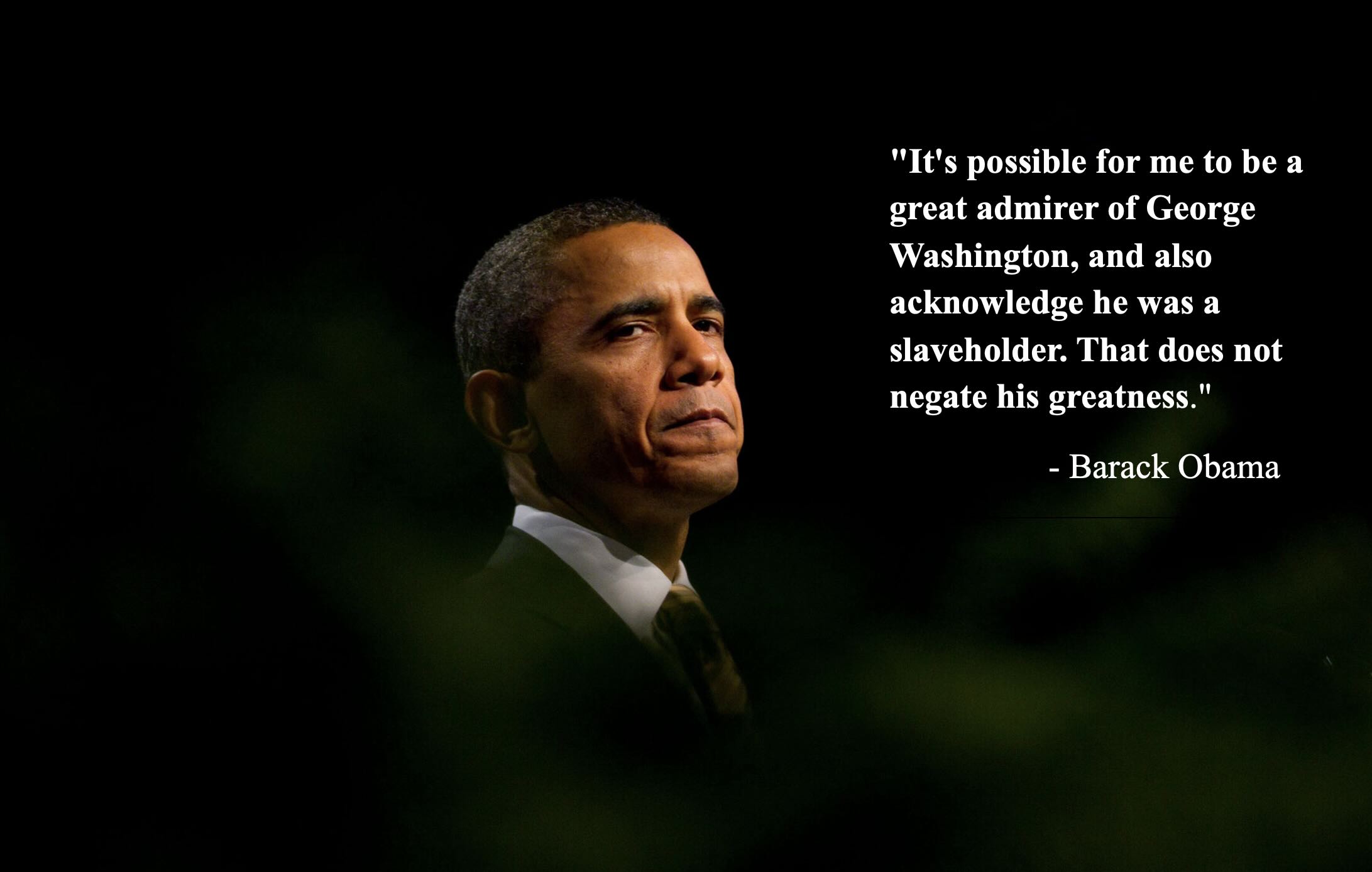
Photo: Emerald Book Image
In a recent interview ahead of America’s 250th birthday, former President Barack Obama reiterated his admiration for George Washington, stating, “It's possible for me to be a great admirer of George Washington, and also acknowledge he was a slaveholder. That does not negate his greatness.” While framed as a mature, nuanced take on history, this perspective is not just flawed—it is deeply concerning. To separate the "genius" of the Founding Fathers from the atrocities they committed is to willfully ignore the foundational violence upon which the United States was built.
Obama’s argument rests on the idea that the Founders created a flexible framework that future generations could use to fix their mistakes. He points to the 13th, 14th, and 19th Amendments as evidence that the system works. However, this line of thinking conveniently ignores the reality that expecting a system to fix the inequalities it was designed to protect is a fool's errand. After nearly 400 years since the first enslaved Africans arrived in Virginia, the system has not delivered equality—it has merely refined the mechanisms of oppression.
To understand why Obama's admiration is concerning, we must look not just at Washington’s personal atrocities, but at the system he helped create. Washington wasn't merely a passive slaveholder; he was an active tyrant on his plantation. He ordered whippings, legally tracked down runaways like Ona Judge, and even pulled teeth from enslaved people to make his dentures. These weren't just "flaws"—they were active, violent abuses of human life. To praise the mind that committed these acts is to minimize the trauma of the people he owned.
The System Was Built to Fail
The U.S. legal system is fundamentally incapable of dismantling systemic racism because it was designed to be "colorblind" in a world that is not. The legal doctrine of colorblindness requires proof of individual malice to rule a law discriminatory. However, systemic racism is embedded in institutional practices—like housing policies, school funding tied to property taxes, and the school-to-prison pipeline. The law fails to see these inequalities because they occur without a single "bad actor."
Furthermore, the political architecture established by the Founders deliberately slows down change. The Senate, the Electoral College, and the filibuster are mechanisms that give disproportionate power to minority groups who have historically used them to block civil rights reforms. A system built to protect the wealthy elite from the "tyranny of the majority" is the same system that fights tooth and nail against policies like universal healthcare, wealth redistribution, and police reform. When Obama says, "Work within the system," he is essentially asking marginalized groups to play a game that was rigged before they were even born.
- Legal Blindness: The system ignores historical wealth gaps created by slavery and redlining, treating all citizens as equal while overlooking generational inequalities.
- Built-In Vetoes: Structures like the Senate and Electoral College allow a minority of voters to overrule the majority, often blocking racial justice legislation.
- Protection of Property: For centuries, the system prioritized the property rights of slaveholders over the human rights of Black people—a priority that still manifests in mass incarceration and police violence.
The Danger of "Reformism"
Obama’s philosophy represents the reformist view—that the system is hypocritical but salvageable. He aligns himself with Frederick Douglass and Dr. Martin Luther King Jr., who saw the Constitution as a "promissory note." This is a powerful rhetorical tool, but it is also a trap. By channeling anger into slow, peaceful processes like voting and court cases, the system neutralizes the threat of true radical change. As critics argue, this is exactly what the system wants: it accepts progress at a glacial pace while real people suffer under systemic injustice.
To see the Constitution as a "promise" made by slaveholders is to ignore the possibility that the promise was never intended to be fulfilled. The Founders actively compromised on human rights to keep the Southern states in the union. They built a government that guaranteed their own wealth and power, not a machine for liberation. Suggesting otherwise is a comforting myth that allows white Americans to feel good about a dark history while ignoring the present-day consequences.
The timeline of progress proves this point. After the Civil War and Reconstruction came Jim Crow. After the Civil Rights Movement came mass incarceration. Every step forward is met with a violent backlash designed to claw that power back. This is not a system that is slowly achieving perfection; it is a system that is fulfilling its original design by protecting a racial and economic hierarchy. Until we acknowledge that the foundation itself is toxic, we will continue to build a house on sand.
No Ads. By Us. For Us.
This article was made possible by readers like you. We hope it inspired you to support Emerald Book, so we can continue producing content like this.
We will never show you ads, sell your data, or require a subscription to consume our content. Your gift helps us keep the truth accessible.
Click the Support button to give a gift of any amount today.
Thank you for making this work possible.