

Emerald Pages
◆
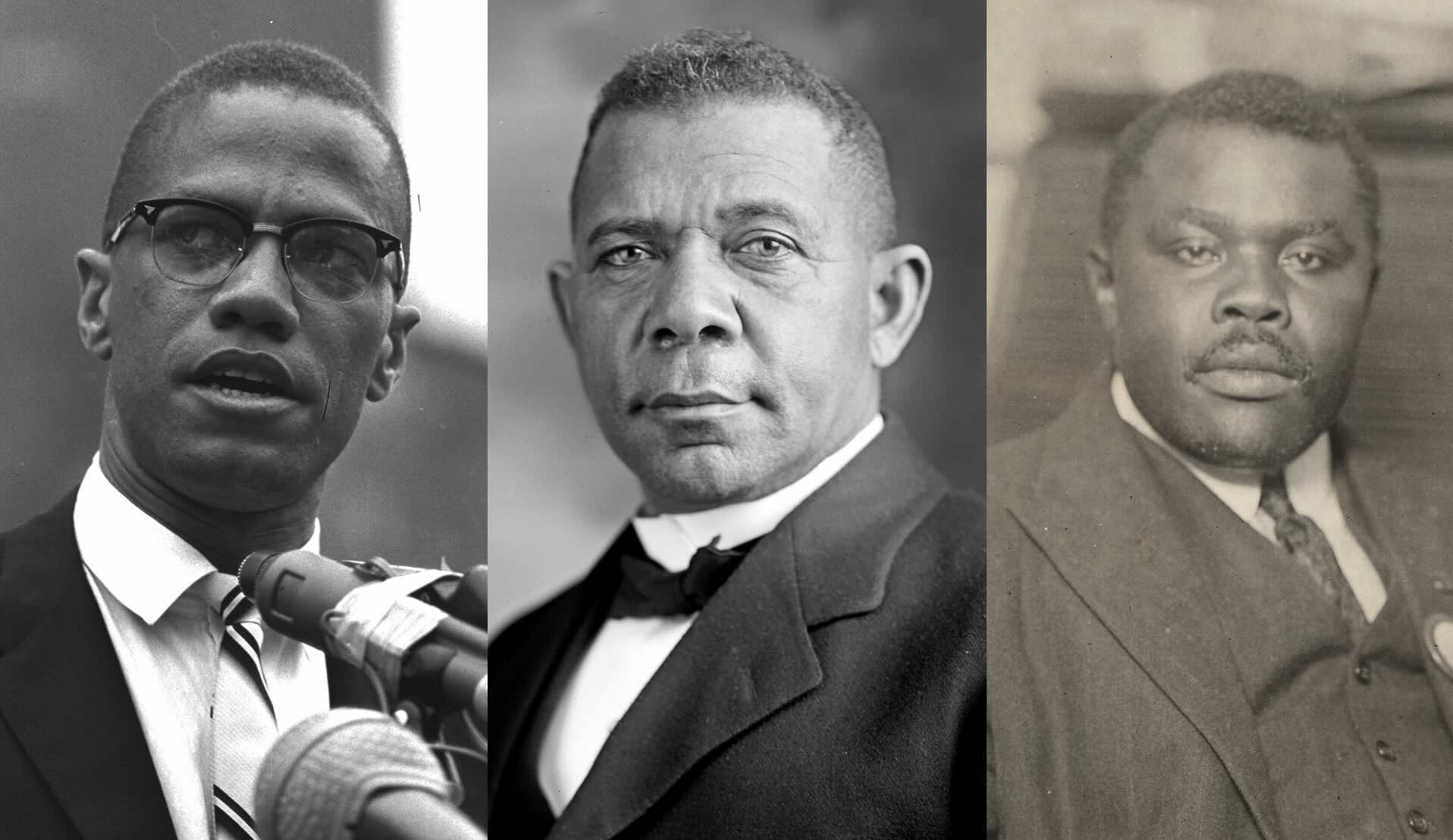
Photo: Emerald Book Image
For decades, the dominant narrative has pitted the integrationist philosophy of Martin Luther King Jr. and W.E.B. Du Bois against the self-reliance doctrines of Malcolm X, Marcus Garvey, and Booker T. Washington. History has largely favored the former, celebrating the monumental legal victories of the Civil Rights Movement. However, a growing body of modern economic, sociological, and historical data is forcing a difficult reassessment. The empirical evidence does not show a clear winner, but rather reveals a complex trade-off. While integration provided massive, measurable gains in education and lifetime earnings, it fundamentally crippled Black-owned institutions, businesses, and community ecosystems in ways that validate the warnings of Malcolm X, Marcus Garvey, and Booker T. Washington.
The core argument of these three leaders was not a rejection of equality, but a strategic insistence on power. They believed that social equality and political rights were hollow without a solid, independent economic foundation. Booker T. Washington advocated for vocational skills and entrepreneurship to build wealth from the ground up. Marcus Garvey preached global Black Nationalism and the necessity of independent Black-owned businesses. Malcolm X championed the "Buy Black" philosophy and complete community control over local economics. They all fiercely distrusted top-down integration, arguing that entering a white-dominated society as dependent consumers and laborers would lead to financial subjugation. The data available today proves they were not just ideologues; they were astute analysts of power dynamics.
The primary evidence for this validation comes from what economists call the "Destruction of the 'Black Dollar' Ecosystem." Studies on ethnic economies demonstrate that before integration, structural segregation forced Black communities to look inward. This dynamic unintentionally created highly prosperous, self-sustaining enclaves like "Black Wall Street" in Tulsa, Oklahoma, or the Hayti district in Durham, North Carolina. Legal integration paradoxically dismantled Black economic self-reliance. When integration occurred, Black consumers gained access to white-owned downtown stores, but white consumers did not reciprocate. Capital immediately bled out of the Black community, triggering the collapse of Black-owned banks, insurance companies, hotels, and grocery stores. This collapse directly mirrors Garvey's warnings that integration without independent economic power would result in financial dependency.
The Asymmetric Nature of Institutional Loss
A major pillar of Black nationalist philosophy was that Black institutions must be governed by Black people to protect their psychological and social well-being. Modern data on school desegregation heavily supports this. Studies reviewing the aftermath of the Brown v. Board of Education decision show that desegregation was executed in a deeply asymmetric manner. Instead of merging systems equally, thousands of historically Black schools were summarily shut down. Research indicates that over 38,000 Black teachers and principals lost their jobs between 1954 and the 1970s because white school boards refused to allow Black educators to teach white children.
This systemic displacement aligns with Malcolm X's critique that integration was often just a euphemism for assimilation into white-dominated, hostile environments. The integration of students into well-funded white schools came at the cost of destroying an entire generation of middle-class role models, protective advocates, and community leadership. It represents a "brain drain" and a loss of institutional power that the Black community has never fully recovered from. While individual students gained access to better resources, the community as a whole lost its structural leadership class, a blow that validated the fears of Washington and Garvey about the fragility of a community without its own institutional base.
This is not to say the integrationist approach was a total failure. Comprehensive economic data shows that political integration delivered massive material advancements that self-reliance under Jim Crow simply could not achieve. Studies mapping the life trajectories of Black children who attended legally integrated schools show they experienced significantly higher graduation rates, higher adult earnings, and lower incarceration rates. Access to better-funded, white-dominated spaces provided the raw resources and legal protections necessary for upward mobility. Dr. King's fight for legal rights was essential; it provided the baseline protection under the law and access to capital that was previously denied.
Modern Validation: The Trump Administration's Policies
The second Trump administration's policies directly illustrate the dangers of asymmetric integration and a lack of economic self-sufficiency. Because the Black community integrated into the broader American economy as dependent participants—relying heavily on white-dominated federal employment, corporate supply chains, and outside capital—abrupt shifts in federal policy have triggered swift economic pain. During his first term, President Trump introduced Opportunity Zones (OZs) via the 2017 tax cuts, framing them as a massive economic boom for distressed Black communities. However, the program relied on outside capital rather than building internal self-sufficiency. Extensive data from the National Community Reinvestment Coalition (NCRC) revealed that 85% of OZ investors were individuals averaging $4.9 million in annual income. Instead of funding Black-owned enterprises or affordable housing, the tax breaks primarily subsidized luxury real estate and outside developers. Because local communities lacked the self-sufficient capital to drive these projects themselves, integration into the tax code simply allowed outside investors to extract massive wealth from their neighborhoods under the guise of revitalization.
The administration's aggressive use of sweeping tariffs and "America First" protectionist trade policies has disproportionately squeezed Black-owned small businesses. The Yale Budget Lab noted that everyday goods, clothing, and construction materials rose sharply. Larger, mainstream corporations have the capital reserves and institutional leverage to absorb supply chain shocks or pass costs to consumers. However, because Black small businesses are largely integrated into corporate distributors without owning their own raw supply chains, they face a severe squeeze. Lacking independent financial reserves, they bear the brunt of inflation while struggling to access mainstream bank credit lines. For decades following the Civil Rights movement, the Black middle class heavily relied on integration into the federal government and mainstream corporate structures for economic stability. The Trump administration's sweeping policy shifts proved how fragile that dependency is—systematically defunding the Minority Business Development Agency (MBDA), freezing federal small business mentoring networks (SBDCs), and executing sharp cuts to the federal workforce.
Executive orders restricting Diversity, Equity, and Inclusion (DEI) policies in federal procurement have sharply derailed Black-owned firms trying to secure highly lucrative government contracts. Because these businesses and professionals relied on the legal rules of inclusion rather than possessing their own independent market infrastructure, a single pen stroke at the federal level stripped away their competitive access. This perfectly validates Malcolm X's warning: if your economic survival depends entirely on the goodwill or policy priorities of a system you do not own, you remain perpetually vulnerable. The administration's actions underscore that legal access to spaces means very little without ownership of those spaces. True resilience requires independent wealth ecosystems that federal policy shifts cannot easily dismantle—a lesson that continues to validate the philosophies of Malcolm X, Garvey, and Washington.
No Ads. By Us. For Us.
This article was made possible by readers like you. We hope it inspired you to support Emerald Book, so we can continue producing content like this.
We will never show you ads, sell your data, or require a subscription to consume our content. Your gift helps us keep the truth accessible.
Click the Support button to give a gift of any amount today.
Thank you for making this work possible.