

Emerald Pages
◆
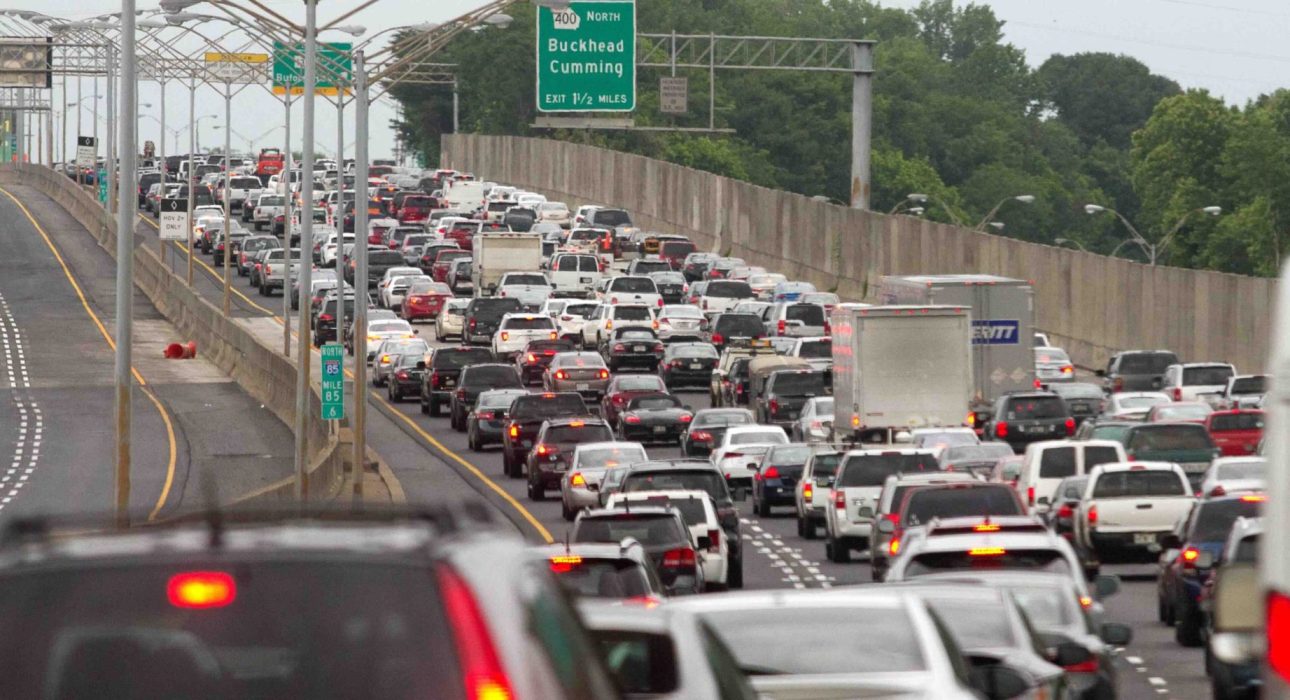
Photo: The Atlanta Journal-Constitution
For decades, the common explanation for Atlanta's soul-crushing traffic has been simple: the city is just too full. Too many people moved south, too many cars hit the highway, and the infrastructure simply couldn't keep up. It is a narrative of inevitability, suggesting that the city is a victim of its own success. But this explanation is not just incomplete—it is dangerously wrong.
The gridlock that paralyzes Atlanta today is not the result of unfortunate population growth. It is the direct, intended consequence of a century-long effort to racially segregate the city. The highways were weaponized, the transit system was deliberately crippled, and the street grid was intentionally fragmented to keep Black and white communities apart. The ultimate irony of this infrastructure built on bigotry is that systemic racism eventually harms everyone. Today, every driver in Atlanta—regardless of race, neighborhood, or background—pays a steep price for those historic decisions.
The trap was intentionally set. In the 1950s and 1960s, white city planners and politicians made a deliberate choice. They prioritized segregation over efficiency. Instead of following logical geographic routes, Atlanta's highway system was designed to create physical barriers.
How Highways Became Racial Barriers
The Downtown Connector (I-75/I-85) was constructed to gut thriving Black commercial and residential centers, like the historic Auburn Avenue. It displaced roughly 70,000 people—95% of whom were Black—and cut Black businesses off from their customer base. Similarly, Interstate 20 was deliberately plotted along a winding path to serve as a formal boundary. Mayor Bill Hartsfield explicitly stated the goal was to establish a buffer, keeping Black communities hemmed in to the south and protecting white neighborhoods to the north. These politically motivated, circuitous highway designs left behind an awkward road system that naturally funnels immense amounts of traffic into the severe bottlenecks we see today.
The 'White Flight' That Sprawled the City
As Black residents fought for equal rights, white residents responded with massive "white flight" to outlying northern counties. Because federal urban renewal and housing policies heavily subsidized suburban mortgages for white families, the population decentralized rapidly. White commuters relocated dozens of miles away from the central business district but still commuted downtown for work. This created an unsustainable daily "exodus" that overwhelmed regional roads and forced the region into extreme car dependency.
Crippling Transit to Keep the Races Apart
The most critical bottleneck in solving Atlanta's traffic is the limited reach of MARTA. When it was approved in 1965, it was envisioned as a comprehensive five-county regional system. However, suburban voters in overwhelmingly white counties (such as Gwinnett and Cobb) repeatedly voted down referendums to join the system. White suburbanites and local politicians feared that mass transit would allow Black urban residents to enter their counties and access suburban jobs. Because suburban counties refused rail lines, MARTA became a localized, underfunded city service. This forced hundreds of thousands of suburban commuters into absolute car dependency, meaning nearly every single regional commuter must drive a personal vehicle to get to work.
- Intentional Roadblocks: White neighborhoods successfully petitioned to dead-end streets that crossed into Black neighborhoods, ruining the city's grid system.
- The 'Atlanta Wall': In 1962, a literal wooden roadblock was erected across Peyton Road to keep Black homebuyers from crossing into a white section of Cascade Heights.
- Fragmented Streets: Many streets changed names as they crossed racial boundaries so white residents wouldn't share addresses with Black neighborhoods, forcing almost all traffic onto overloaded freeways.
Everyone Suffers: The Universal Toll of Racism
While the system was originally designed to disadvantage Black communities, the resulting gridlock does not discriminate on the highway.
The Universal Time and Financial Tax: The average Atlanta driver wastes dozens of hours stuck in gridlock every year—time taken away from family and rest. Car dependency forces families to spend thousands of dollars annually on gas, maintenance, and insurance just to participate in the local economy.
Economic Stagnation: A city paralyzed by traffic is less competitive. Major corporations look at infrastructure when deciding where to open headquarters. Chronic gridlock makes it harder to attract top talent and slows down freight trucks, raising shipping costs for everyone.
Public Health and Environment: The decision to prioritize cars over electric mass transit has severe environmental consequences. The volume of bumper-to-bumper traffic creates massive plumes of vehicle emissions, leading to high rates of childhood asthma. The massive concrete highways trap heat, making Atlanta's summers significantly hotter and raising energy bills for everyone.
A Trap That Is Hard to Escape
When people say "Atlanta is full" or "transit is too expensive," they are looking at the surface-level reality of today. But the only reason Atlanta is "full" is because its infrastructure was intentionally crippled by racism from the very beginning. Building a transit system now is incredibly complex due to the physical math of sprawl and the high cost of retroactive construction. However, the region is changing. As suburbs become more racially diverse, resistance to transit is weakening. The Atlanta BeltLine is attempting to reconnect the neighborhoods that the highways tore apart.
The legacy of "short-sighted" decisions is a textbook example of how policies rooted in racism will ultimately sabotage the collective good. By designing a city to keep people apart rather than move them together, past leaders guaranteed a frustrating, expensive, and stressful daily reality for future generations. The traffic is not a natural disaster; it is a man-made one, born of racism, and its effects are felt by everyone who tries to move through the city today.
No Ads. By Us. For Us.
This article was made possible by readers like you. We hope it inspired you to support Emerald Book, so we can continue producing content like this.
We will never show you ads, sell your data, or require a subscription to consume our content. Your gift helps us keep the truth accessible.
Click the Support button to give a gift of any amount today.
Thank you for making this work possible.