

Emerald Pages
◆
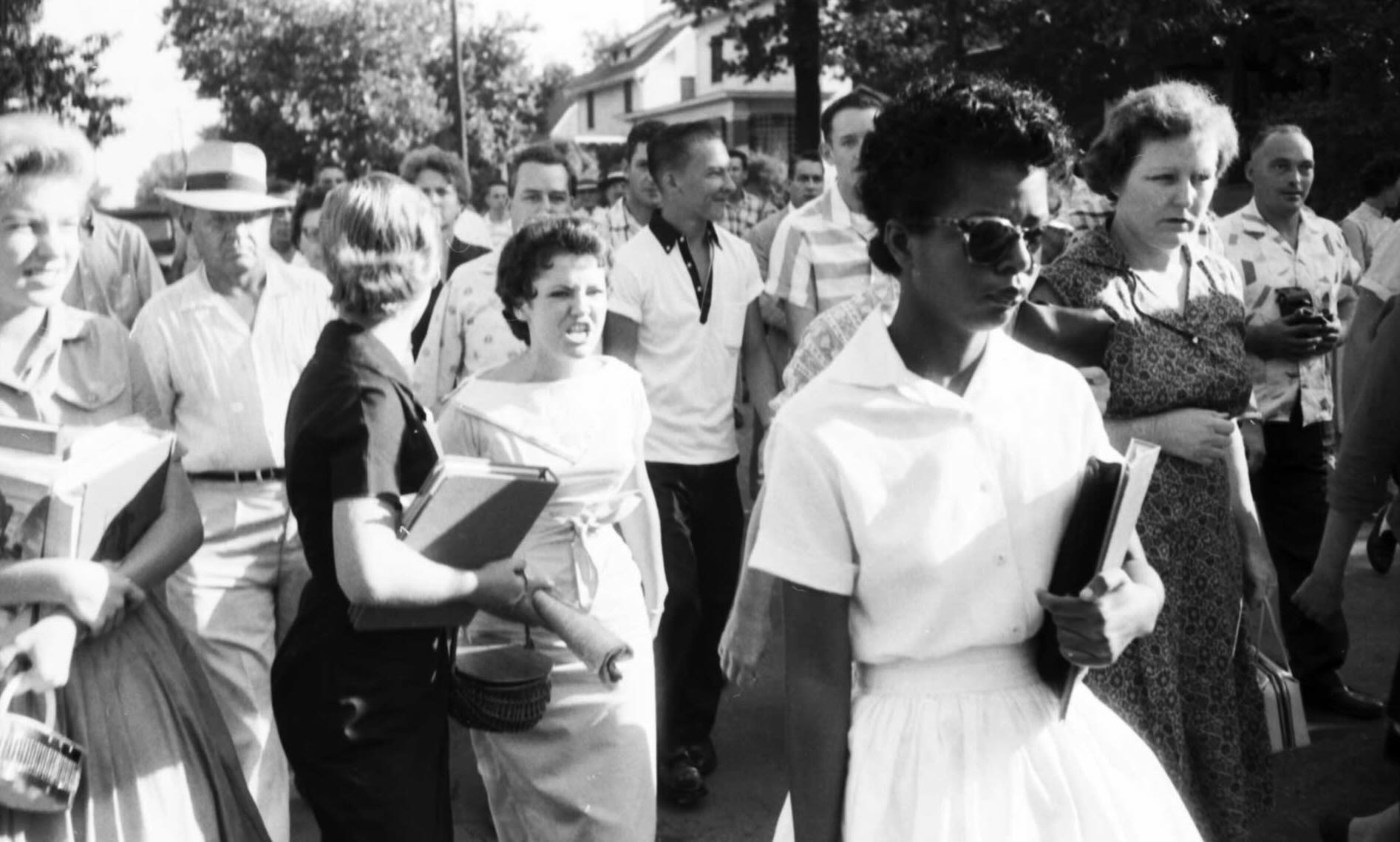
Photo: Will Counts | AP Photo
The pursuit of integration was the defining social and legal struggle of the 20th century for Black Americans. It was a fight for the right to sit at the lunch counter, attend a quality school, and cast a ballot free from terror. Yet, while the Civil Rights Movement achieved monumental legal victories, it inadvertently triggered a structural economic collapse. The integration that dismantled the legal architecture of Jim Crow also dismantled the parallel economic infrastructure that had allowed Black communities to build and retain wealth in the face of systemic oppression. This is the story of a one-way street: Black capital flowing out of the community, while white capital never flowed in.
During the era of legal segregation, Black Americans were forced to build their own independent economic ecosystems. These were not just businesses; they were life-sustaining networks of banks, insurance companies, grocery stores, and hotels. Because Black consumers were barred from white-owned establishments, a single "Black dollar" would circulate within the community multiple times—paying the Black doctor, who shopped at the Black grocer, who deposited money in the Black bank. This closed economic loop, born from the oppression of Jim Crow, inadvertently created a system of capital retention that was the bedrock of the Black middle class.
The "burning house" metaphor that Dr. King used in his final months was a prescient warning. When desegregation occurred, it functioned as a one-way domestic market expansion. Major white-owned corporations and mainstream retailers gained access to millions of new Black consumers. Black consumers, seeking the convenience, variety, and prestige of larger stores, began spending their money in the white economy. The closed economic loop shattered. Because white consumers did not reciprocate—they did not start shopping at Black-owned grocery stores or banking at Black-owned banks—capital left the Black neighborhood immediately and never returned. This asymmetrical shift triggered a massive, systemic capital drain that starved local Black enterprises of the revenue required to survive.
The Systematic Dismantling of the Black Middle Class
The decimation was not limited to small businesses. Integration also eliminated the "whole economic skeleton" of the Black community, as commentator Manning Marable described it. Thriving Black-owned insurance companies, bus lines, hotels, and theaters collapsed almost overnight. White corporations had the scale, supply chains, and capital to offer lower prices and larger inventories, which under-capitalized Black businesses could not match. The fight for integration had won the right to sit at the table, but it resulted in the loss of ownership of the table itself.
One of the most devastating structural blows came in the realm of education. Following the landmark Brown v. Board of Education ruling, the expectation was a merging of two equal school systems. Instead, Black schools were systematically closed, and Black students were sent to white schools. White school boards overwhelmingly refused to put white children under the authority of Black professionals. The result was a purge: an estimated 38,000 Black principals and teachers lost their jobs across the South. This single act destroyed the primary anchor of the Black middle class in a generation, stripping the community of its most stable, educated professionals.
The Geography of Capital Drain
The economic damage was further compounded by geography and the "brain drain." Fair housing laws, while vital for freedom of movement, also allowed upwardly mobile Black families to leave historically segregated neighborhoods. As wealthier, college-educated Black professionals moved to the suburbs, urban Black centers were stripped of their local tax base, civic leadership, and prime consumer power. The neighborhoods left behind were starved of resources, transforming thriving cultural and commercial hubs into economic deserts vulnerable to predatory lending and municipal neglect.
- The Vanishing Dollar: During segregation, a dollar circulated in a Black community for weeks. Today, due to the absence of local investment and white patronage, that same dollar leaves the community in roughly 6 hours.
- The Funding Gap: Black founders receive less than 1% of venture capital funding, largely due to a venture capital industry that is overwhelmingly white and relies on tight, exclusionary networks for investment decisions.
- Institutional Bias: Black entrepreneurs are rejected for business loans at twice the rate of white applicants, and when they are approved, they face significantly higher interest rates.
The legacy of redlining and segregation ensures that many Black-owned businesses are physically isolated in predominantly Black neighborhoods. While Black residents commute into white neighborhoods for work and shopping, white consumers rarely cross the invisible lines to spend money in Black communities. This foot-traffic penalty restricts Black businesses to a smaller, lower-income customer base, preventing them from scaling and competing in the broader regional economy.
The Unlearned Lesson
The failure of integration as an economic strategy is rooted in a profound asymmetry. Black Americans were forced to master "whiteness"—learning its cultural codes, language, and history—to survive and navigate the United States. Conversely, white Americans have rarely faced any social or economic pressure to understand Black history or integrate into Black spaces. Studies of American history textbooks show that Black history is frequently reduced to a brief mention of slavery and a heavily sanitized version of Martin Luther King Jr., treated as a sidebar to the main narrative.
This "luxury of ignorance" has direct economic consequences. Because the dominant system does not require white Americans to learn Black history, they view current wealth disparities as personal or cultural failures rather than systemic legacies. Consequently, they see no urgent need to patronize Black banks, fund Black startups, or support economic equity policies. The responsibility to bridge the gap continues to fall entirely on Black communities, a burden that perpetuates the cycle of economic extraction.
In the decades since the Civil Rights Act, Black economic movements have pivoted. Recognizing that waiting for white capital to come to them is a losing strategy, modern movements emphasize "Buy Black" campaigns, community land trusts, and the support of Minority Depository Institutions (Black-owned banks). These strategies are not a rejection of coalition but a pragmatic realization that true economic power comes from asset ownership and localized wealth retention. Every resource needed to achieve economic independence can be found here. The infrastructure exist. The fight for civil rights was won, but the fight for economic justice—a fight to rebuild what integration accidentally tore down—remains the paramount struggle of the 21st century.
No Ads. By Us. For Us.
This article was made possible by readers like you. We hope it inspired you to support Emerald Book, so we can continue producing content like this.
We will never show you ads, sell your data, or require a subscription to consume our content. Your gift helps us keep the truth accessible.
Click the Support button to give a gift of any amount today.
Thank you for making this work possible.