

Emerald Pages
◆
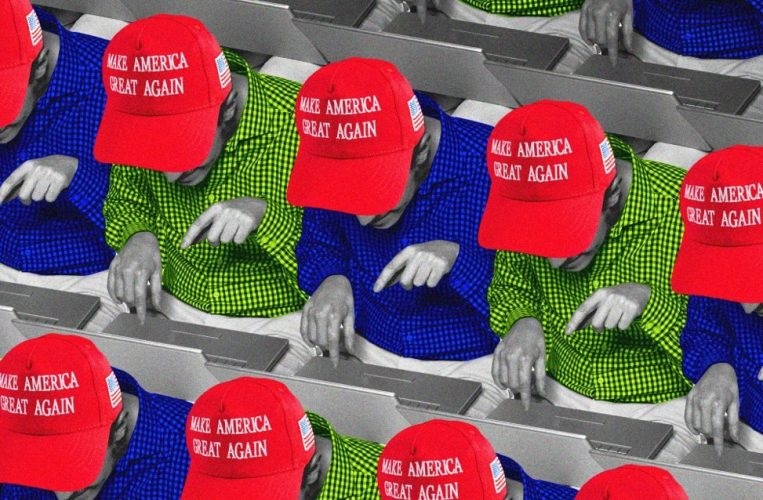
Photo: Tilde Oyster | NBC News; Getty Images
For Black influencers, content creators, and cultural commentators, the comment section was once the heartbeat of community—a space for real-time feedback, inside jokes, and genuine connection. Now, many describe it as a war zone. Over the past eighteen months, an invisible, AI-driven army has systematically invaded these digital neighborhoods, not to engage, but to conquer. What feels to creators like a "creepy infestation" is, according to new threat intelligence reports, a highly coordinated disinformation campaign designed to manufacture political consensus, stoke racial division, and silence authentic Black voices online.
Digital threat researchers and disinformation watchdogs have documented a significant and alarming increase in MAGA-affiliated bot activity targeted directly at Black social media spaces. These aren't the clumsy, misspelled trolls of elections past. Today’s operators deploy sophisticated, generative AI-driven networks strategically placed in comment sections to simulate widespread political shifts, exploit cultural flashpoints, and manipulate platform algorithms. For influencers who built their careers on trust and authenticity, the result is a profound sense of violation and a creeping fear that their digital home is no longer their own.
The Great Hijacking: Nicki Minaj and the 18,000 Bot Army
One of the most clear-cut examples of this tactical infiltration was exposed in February 2026. An investigative analysis published by POLITICO, conducted in partnership with the disinformation-tracking firm Cyabra, uncovered a massive network of over 18,000 coordinated bot accounts. Their target? The comment sections of prominent Black cultural figures who had touched upon conservative or polarizing topics.
The flagship case study was global superstar Nicki Minaj. Researchers found that when Minaj made statements critical of the Democratic party, thousands of inauthentic accounts flooded her feed not with fandom, but with unconditional praise for her "bravery" and surgically inserted MAGA talking points. The goal wasn't just to convince Minaj's followers. By artificially inflating her engagement metrics, the bots gamed the platform’s algorithms, forcing her content into wider feeds and creating an artificial aura of political momentum. What looked like a groundswell of support was, in large part, a synthetic ghost army.
Synthetic Influencers and Digital Blackface
The tactics have evolved beyond simple comment flooding. A joint investigation in April 2026 by The New York Times, Purdue University’s Governance and Responsible AI Lab (GRAIL), and threat mitigation firm Alethea tracked something far more insidious: hundreds of AI-generated "personas" acting as everyday influencers. These fake accounts, complete with realistic profile pictures and culturally fluent bios, cross-post across TikTok, Instagram, and Facebook, sliding seamlessly into organic comment feeds.
This practice, which researchers call digital impersonation or astroturfing, often relies on stolen profile pictures or AI-generated imagery to pose as everyday Black citizens. The bots uniformly push a "WalkAway" narrative, falsely pretending to be "lifelong Black Democrats" who are abandoning the party. The intention is psychological warfare: to make real users believe a massive, sudden cultural shift is occurring within their own community, demoralizing opposition and exhausting genuine participants.
Where the Bots Are Coming From
While these profiles display American flags and claim residency in Atlanta or Houston, platform transparency updates have unmasked a surprising reality. A significant share of these pro-MAGA accounts are not operated by domestic political operatives alone. Instead, they are run by foreign commercial click farms located in Eastern Europe, Nigeria, Thailand, and South Asia. These are digital sweatshops where operators manage thousands of fake profiles, rented out to political PACs or third-party brokers for as little as $1 to $3 per avatar.
- Domestic Political Operatives: They mask spending under "digital consulting" invoices, paying tech vendors for AI-generated reply bots to artificially inflate support.
- Foreign State Actors (Russia/Eastern Europe): Disinformation watchdogs have linked infrastructure to Russian state-sponsored actors, mirroring the Internet Research Agency’s playbook of targeting Black Americans to depress voter turnout.
- Commercial Click Farms (Nigeria, Vietnam, Thailand): These businesses sell bulk interactions to anyone willing to pay, turning political manipulation into a globalized commodity.
The Algorithmic Punishment of Creators
For the Black creators caught in the crossfire, the damage is tangible. When bot networks flood a page, they fundamentally alter the space the creator built. Authentic comments from real followers get buried under thousands of scripted talking points, leading to a "loss of community control." Many creators report that the hostile, aggressive language used by these automated accounts drives their real audience away. Faced with an unmanageable digital riot, many influencers simply turn off their comments entirely—cutting off their primary revenue stream and line of communication.
Worse, the high bot engagement tricks platform algorithms. A feed artificially spiked with controversial political spam may cause the creator's account to be flagged for "unusual engagement patterns," leading to shadowbanning and a drastic drop in reach. Sponsors, who scrutinize comment sentiment, suddenly view the creator as "toxic" or too political, leading to lost brand deals. Creators who post about music, fashion, or comedy find themselves unwillingly framed as political symbols, their names tied to hashtags they never endorsed.
Why Now? The Perfect Storm of AI and Deregulation
While bot networks existed during Trump’s first term, the current surge is tied directly to a perfect storm of technological and structural factors. The widespread availability of advanced Large Language Models (LLMs) after 2024 allowed bot creators to generate highly unique, fluid, and culturally nuanced text. Instead of one phrase copied 10,000 times, a single network can now generate 10,000 completely different, authentic-sounding comments in seconds.
Simultaneously, major tech platforms drastically cut back their trust and safety teams. A June 2026 report by the Center for Countering Digital Hate (CCDH) confirmed that after Meta and X rolled back key safeguards, abusive, coordinated, and automated spam comments immediately quadrupled. Disinformation experts state the goal isn't just persuading voters; it is to flood comment sections with intense, hostile hyper-polarization until users can no longer distinguish real community sentiment from automated propaganda.
The Only Solution That Works: Do Not Engage
After reading all of this, the natural reaction is to fight back—to type out a scathing reply, to fact-check the nonsense, to defend your digital home. But here is the hard truth that disinformation researchers and veteran creators have learned the hard way: engagement is the fuel. These bots do not have feelings. They do not change their minds. They are not real people. Every reply you write, every angry emoji you drop, every second you spend arguing with a synthetic avatar is exactly what the operators want.
The social media companies are not coming to save you. They have laid off their trust and safety teams, outsourced fact-checking, and designed algorithms that reward controversy, not truth. Reporting the bots often does nothing—new ones are spun up by the thousands before your ticket is even reviewed. Waiting for platforms to act is like waiting for a landlord to fix a leak while the building burns down around you.
The most powerful tool a Black creator has right now is strategic silence. When you see a comment that smells like a bot—stiff language, sudden political pivot, a profile that was created last week with three stock photos—do not reply. Do not quote-tweet it. Do not cry it out on your story. Let it sit there in the void, unanswered. Bots thrive on amplification. If you starve them of engagement, they become invisible noise rather than a trending topic.
Remember: they are not real. The person who wrote that inflammatory paragraph does not exist. The profile picture was generated by a model trained on stolen art. The angry reply was spun up by a click-farm worker in Southeast Asia who does not speak English and does not care about American politics. When you internalize that truth, the comments lose their sting. You stop bleeding energy into a void that will never bleed back.
The infestation is real. The frustration is valid. But your power lies in where you direct your attention. Starve the bots. Protect your peace. And keep creating for the real people who actually showed up to see you.
No Ads. By Us. For Us.
This article was made possible by readers like you. We hope it inspired you to support Emerald Book, so we can continue producing content like this.
We will never show you ads, sell your data, or require a subscription to consume our content. Your gift helps us keep the truth accessible.
Click the Support button to give a gift of any amount today.
Thank you for making this work possible.