

Emerald Pages
◆
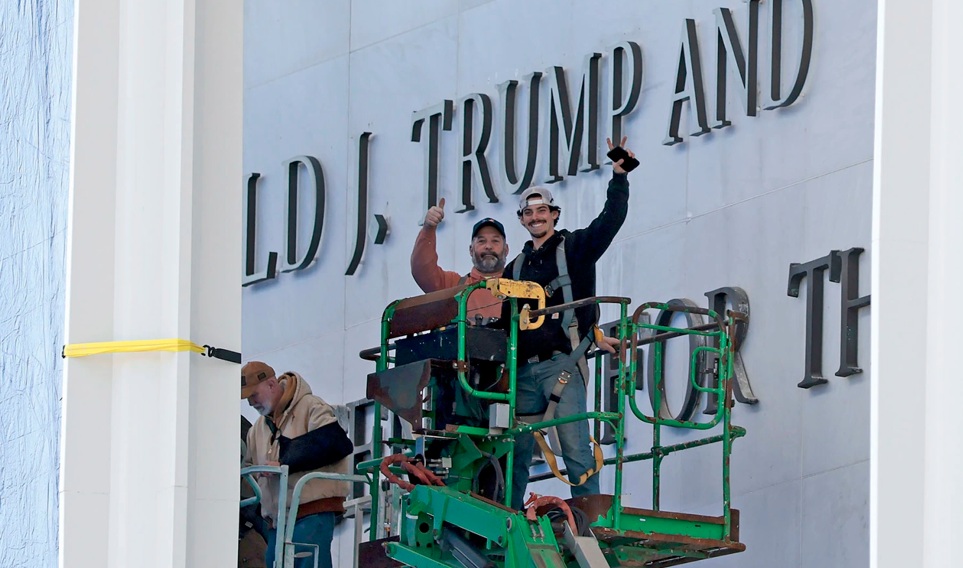
Photo: Heather Diehl | Getty Images
In the span of a single fiscal year, the U.S. government managed to lose track of $6 billion in Army communications gear, pay $11.5 million to guard an empty detention center for two weeks, and spend millions scrubbing the name "Defense" from military software to replace it with "War." Yet, when the conversation turns to repairing the generational wealth gap caused by slavery, Jim Crow, and systemic redlining, the federal treasury suddenly appears impenetrably empty.
This is the paradox of modern American budgeting. Through a combination of reporting from the Government Accountability Office (GAO), congressional oversight committees, and court filings related to recent branding battles, a clear pattern emerges: the state can find hundreds of billions for administrative churn, clerical errors, and symbolic rebrands, but it cannot architect a funding mechanism for Black reparations. The math isn't a matter of scarcity; it is a matter of will.
Consider the recent saga of the John F. Kennedy Center for the Performing Arts. According to financial disclosures and court rulings, the Trump administration secured $257 million in federal funding for a "revitalization project" tied to adding the president's name to the venue. Another $150 million in private fundraising was pledged for the effort. When a federal judge ordered the name removed—ruling that only Congress has the authority to alter a living memorial to JFK—the entire financial structure collapsed. Renovations stalled. The center is now seeking $1 million in damages from a single musician who canceled a performance over the controversy.
That $257 million alone is more than the federal government has allocated to the pending reparations study bill (H.R. 40) in its entire legislative history. The irony is lost on no one watching the appropriations committees.
The $2 Billion Typo: Rebranding the Pentagon
If the Kennedy Center fight was a skirmish, the effort to rename the Department of Defense (DOD) is a full-scale war on logic. Following an executive order to revert the agency's name to the "Department of War," the Congressional Budget Office (CBO) released a staggering cost analysis. Depending on the speed of implementation, taxpayers are looking at a bill between $10 million and a jaw-dropping $2 billion.
As of April 2026, the Pentagon has already logged $50 million in internal rebranding expenses. Where does the money go? Not to troops or veterans, but to information technology. The majority of that $44.6 million went to scrubbing "DOD" from enterprise software, rewriting digital code, and administrative support. The physical costs—changing signage on 4,800 military bases globally, updating uniforms, replacing letterhead—could push the final tally into the hundreds of millions. In a damning detail, the CBO noted that renaming a single military base costs taxpayers upwards of $5 million.
- The Kennedy Center: $257 million federal + $150 million private for a name add/removal cycle.
- The Pentagon: Up to $2 billion to change the word "Defense" to "War" on buildings and computers.
- The Baseline Waste: $186 billion lost annually to improper payments (GAO FY 2025).
The $186 Billion Leak vs. The $14 Trillion Mountain
To be clear, the government is hemorrhaging cash. The GAO’s 2025 report found that 15 federal agencies lost an estimated $186 billion to "improper payments"—money sent to the wrong person or in the wrong amount. When you factor in systemic fraud (identity theft, fake businesses draining grants), the watchdog numbers jump to between $233 billion and $521 billion annually.
Compare this to the leading economic models for reparations. Researchers like William Darity Jr. estimate that closing the racial wealth gap would cost roughly $10 trillion to $14 trillion. It is a massive number. But it is also a number that the U.S. could absorb easily if it stopped the leaks.
If the government redirected the $500 billion lost annually to fraud and error into a dedicated reparations trust fund, it would accumulate $10 trillion in exactly 20 years—without raising a single dollar in new taxes, without cutting a single service, and without adding to the national debt. The money is literally vanishing into the bureaucratic ether right now. The question is why it cannot be caught and repurposed.
The Ghost Money and the Legal Wall
Proponents of the status quo argue that waste is "ghost money"—you can't simply grab it because it's lost in real-time transactions. Saving that $500 billion requires passing aggressive new laws, hiring thousands of auditors, and rewriting complex Medicare and defense codes. That is technically true. But it is also a confession of incompetence. We are being told the government is too inefficient to stop wasting money, but efficient enough to deny a multi-trillion dollar moral obligation.
Furthermore, even if the money were recovered, the legal hurdles are steep. Following Supreme Court rulings ending affirmative action, any race-conscious program like reparations faces "strict scrutiny" under the Fourteenth Amendment. To survive a legal challenge, a payout would likely have to be tied to "documented lineage to enslaved individuals" rather than broad racial identity. This creates a bureaucratic nightmare of verifying genealogy for millions of applicants—a complexity that lawmakers cite as a reason to do nothing at all.
The Arithmetic of Priority
In 2025, the federal government spent $1.22 trillion simply on interest payments for the national debt—more than the entire defense budget. It found $8 trillion over 20 years for the wars in Iraq and Afghanistan. It is currently debating $52 million to legally codify the "Department of War" moniker.
The argument that we cannot afford reparations is not an economic argument; it is a political confession. The money exists. It flows daily through faulty Medicare pumps, overpaid defense contracts, and vanity rebranding projects. The refusal to build the administrative infrastructure to capture that waste and redirect it toward Black descendants of slaves is a choice. It is a choice to prioritize a sign on a building over a foundation for a people.
No Ads. By Us. For Us.
This article was made possible by readers like you. We hope it inspired you to support Emerald Book, so we can continue producing content like this.
We will never show you ads, sell your data, or require a subscription to consume our content. Your gift helps us keep the truth accessible.
Click the Support button to give a gift of any amount today.
Thank you for making this work possible.