

Emerald Pages
◆
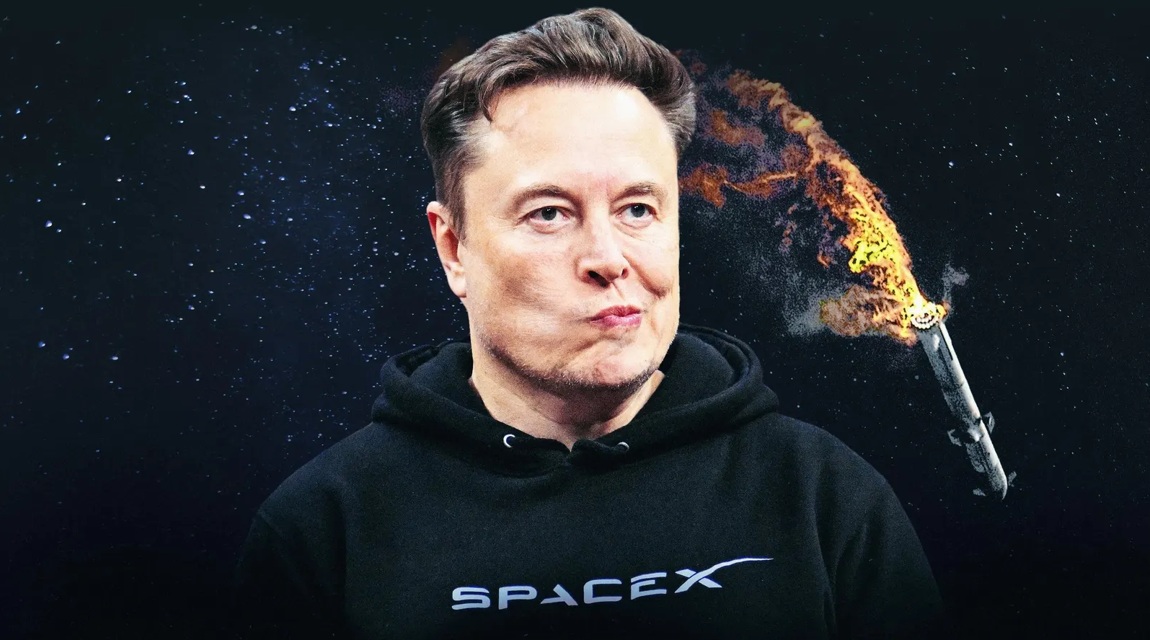
Photo: Illustration by Emily Sherer for Forbes
It is being hailed as the "IPO of the Century." On Friday, June 12, 2026, SpaceX will debut on the Nasdaq under the ticker SPCX, seeking to raise $75 billion at a fixed price of $135 per share. The implied valuation? A mind-boggling $1.77 trillion. But beneath the hype, the glowing roadshow presentations, and the 30% retail allocation designed to lure in the masses, a structural disaster is quietly taking shape. This is not a story of a company failing; it is a story of a financial trap engineered to spring.
For over two decades, everyday investors were locked out of SpaceX, watching from the sidelines as Elon Musk built a monopoly over space. Now, suddenly, the gates are flung open—but only after the company merged with xAI, posted a $4.9 billion net loss, and achieved a valuation nearly 95 times its annual sales. Market critics, including "The Big Short" investor Steve Eisman and analysts at Morningstar, are sounding the alarm. This isn't a public offering; it is a carefully orchestrated transfer of wealth from retail bag holders to early insiders. Here is our timeline of how the SpaceX IPO will eventually flop.
Phase 1: The Illusion (June 12 - July 15, 2026)
Contrary to popular belief, the stock will not crash on day one. In fact, it will likely soar. With a tiny "free float" of only 4% of shares available to the public and a staggering $250 billion in orders from institutions, the law of supply and demand dictates an initial pop. The Nasdaq has also altered its rules to fast-track SpaceX into the Nasdaq-100 within 15 days. This forces passive index funds—like the massive QQQ ETF—to purchase hundreds of billions in shares, regardless of price. For the first month, retail investors who got their $135 allocation will feel like geniuses as the stock touches $180. This is the "pump." The media will declare Musk a king.
Phase 2: The Lock-Up Loophole (Late July 2026)
In a traditional IPO, early investors and employees face a 180-day lock-up period to prevent an immediate sell-off. SpaceX, however, has successfully lobbied for a staggered or entirely eliminated lock-up. By late July, the real sell-off begins. Early wealthy backers, venture capital firms, and even employees who have been waiting for liquidity for two decades will begin cashing out. Because the company's underlying fundamentals ($18.7 billion in revenue against a $4.9 billion loss) cannot support a $1.77 trillion valuation, there is no natural buyer for this volume of stock except the retail traders who were told to "hold long term." The price begins to slide below $150.
- The Insider Exit: Over $40 billion in insider selling is projected within the first 90 days.
- The Index Trap: Passive funds are now forced to rebalance, buying more of a falling stock, dragging down entire retirement portfolios.
- The Retail Bag: The 30% retail allocation—$22.5 billion—becomes "exit liquidity" for the insiders.
Phase 3: The Math Reasserts (August - October 2026)
By late summer, the hype narrative collides with economic reality. The company's merger with xAI begins to look less like a visionary AI play and more like a desperate attempt to justify a broken valuation. Institutional analysts at Morningstar, who pegged SpaceX's real value at roughly $780 billion, will issue a wave of downgrades. As the stock breaks below the $135 IPO price, margin calls trigger. The "wealth effect" reverses. Millions of everyday investors who bought the hype on Robinhood and Fidelity see their accounts bleed red. The Nasdaq, dragged down by the forced index buying of a failing giant, enters correction territory.
Phase 4: The Contagion (November 2026 - March 2027)
The SpaceX flop acts as a circuit breaker for the entire tech sector. The IPO market, which was counting on SpaceX to pave the way for giants like OpenAI and Anthropic, freezes completely. Investment banks pull filings. Worse, the circular spending that fueled the AI boom collapses. Big tech giants like Microsoft and Alphabet, which hold massive exposure to these private tech valuations, are forced to write down tens of billions in losses. Capital expenditures for data centers are slashed. The global semiconductor supply chain, already fragile, takes a direct hit. Layoffs, which had been contained to the tech sector, begin spreading to logistics and manufacturing.
Phase 5: The Reckoning (2027 and Beyond)
While the financial system avoids a full 2008-style meltdown due to the relatively small "free float" (only 4% of the company was ever truly public), the psychological damage is done. The "Elon Premium" is dead. A class-action lawsuit from retail investors alleging fraudulent IPO hype is almost certain. The SEC faces intense scrutiny for allowing the altered lock-up and index inclusion rules. For the broader economy, consumer confidence takes a permanent hit. The $22.5 billion in retail wealth destroyed, combined with the drop in 401(k) statements, leads to a recession in consumer spending. The Federal Reserve, which had been planning rate cuts, is forced to hold steady, prolonging the economic stagnation.
Ultimately, the SpaceX IPO will be remembered not as the day Main Street got access to the stars, but as the day the house of cards finally fell. It is a story as old as financial markets: a massive overvaluation, a structural loophole for insiders, and an army of retail investors left holding the bag. The only thing left to determine is not if the stock will flop, but how fast the regulators will change the rules to try and prevent the next one.
No Ads. By Us. For Us.
This article was made possible by readers like you. We hope it inspired you to support Emerald Book, so we can continue producing content like this.
We will never show you ads, sell your data, or require a subscription to consume our content. Your gift helps us keep the truth accessible.
Click the Support button to give a gift of any amount today.
Thank you for making this work possible.