

Emerald Pages
◆
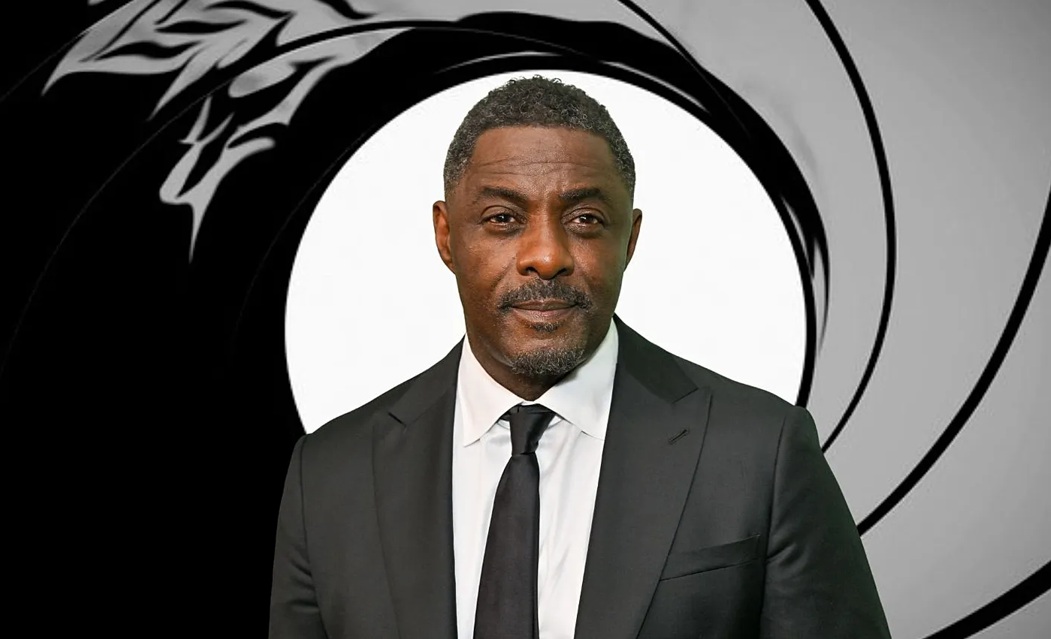
Photo: MGM - AP Photo
In a June 2026 interview with British GQ, Idris Elba did something unexpected: he looked at a door that had been cracked open for him—the role of James Bond—and instead of pushing it wide open for those behind him, he chose to lock it, citing "global cultural preferences" as an immovable obstacle. His comments, while framed as pragmatic realism, reveal something far more troubling: an internalization of the very racist gatekeeping that has kept the film industry stagnant for nearly a century.
Elba explicitly dismissed the long-running casting rumors as "not a realistic thing," explaining that certain global markets would reject a Black actor as 007. "Bond is big all over the world," he stated, arguing that some audiences won't accept a Black male playing Bond because "that's not what they like in their culture. Period." He further warned against making the character "woke," suggesting the franchise should remain "pure escapism" rather than bending to modern social pressures. For a fictional character—a spy who doesn't exist—this defense of "purity" is not pragmatism. It is a quiet surrender to prejudice.
The most stunning aspect of Elba’s argument is his weaponization of the word "woke." Originally emerging from African American Vernacular English (AAVE) to signify an awareness of systemic racism, "woke" has been co-opted by conservative commentators as a slur against inclusivity. By using it negatively to describe casting a Black actor in a fictional role, Elba has aligned himself with the very racists who turned his own casting rumors "disgusting and off-putting." He is treating racism as an unchangeable "cultural preference" rather than a barrier to be dismantled.
The Myth of the Unchangeable Canon
The argument that Bond must remain true to Ian Fleming’s original conception collapses under the slightest scrutiny. James Bond has already changed dramatically. The sexist, colonialist, chain-smoking Bond of the 1950s has given way to Daniel Craig’s emotionally scarred, blond, brutalist interpretation. The character has evolved with the times because movies are products of their era. To draw the line at race—to claim that skin color is the one immutable trait—is not a defense of canon; it is an act of racial gatekeeping.
Furthermore, the suggestion that a Black Bond would hurt the franchise's bottom line ignores the massive elephant in the room: Black Panther. For decades, Hollywood used the excuse that "international markets won't accept Black leads" to avoid diverse casting. Then Ryan Coogler’s Black Panther grossed over $1.3 billion globally, becoming a cultural phenomenon that transcended borders. The argument that markets like East Asia or the Middle East reject Black leads was always a myth used to justify cowardice. Elba’s repetition of this myth doesn’t make him a savvy businessman; it makes him a mouthpiece for an obsolete industry bias.
Perhaps the most galling oversight in Elba's logic is the simple math of global cinema. The "certain audiences" he is so desperate not to offend—the hypothetical bigots who would allegedly reject a Black James Bond—represent a vanishingly small fraction of the global box office. We are talking about a fringe demographic of vocal online trolls and entrenched cultural outliers. The vast, silent majority of the planet's moviegoers—the billions of people in North America, South America, Europe, Africa, and across Asia—either actively support diverse casting or, more commonly, simply do not care about the race of a fictional character as long as the movie is entertaining. By distorting the preference of a microscopic minority into an insurmountable "global reality," Elba is doing the work of the oppressor for them. He is taking a pebble of prejudice and calling it a mountain too tall to climb.
- The "Black Panther" Proof: A nearly all-Black cast shattered global box office records, proving that "cultural preferences" are not static.
- The Fictional Fallacy: Bond is not a historical figure. Changing his race does not rewrite history; it updates a fantasy.
- The Silent Majority: Most global audiences care about story and charisma, not the skin color of the actor embodying a character who has already been played by multiple white actors with different hair colors and builds.
- The History of Erasure: Studios have long altered international posters to minimize Black actors (e.g., Get Out, Passing), but this is a scandal to be fixed, not a reality to be catered to.
Perhaps the most frustrating element of Elba’s stance is his stated preference for "creating original Black heroes" like John Luther instead of "altering an old one." On its surface, this sounds noble—a desire for authenticity. However, it ignores a fundamental truth: original Black heroes rarely receive the marketing budgets or global distribution of legacy IP like James Bond. Building new heroes is essential, but it cannot be the only path. There is no reason we cannot do both. By ceding the highest-profile role in cinema to the "traditionalists," Elba ensures that the next generation of Black actors will still have to fight this same battle a decade from now.
The Price of Personal Peace
Defenders of Elba argue that he is simply exhausted. Having faced intense, racist backlash for over a decade just for being rumored for the role, his decision to step away is an act of self-preservation. He has stated that the conversation became "disgusting," and he did not want to become a political lightning rod. This is a valid, human concern. The vitriol he received online was abhorrent, and no actor should be forced to endure that.
However, personal exhaustion does not justify public capitulation. By stating that a Black Bond is "unrealistic" due to "cultural preferences," Elba has given a clinical, logical gloss to bigotry. He has told the world that the racists are right—that their prejudice is a permanent force of nature, like gravity, rather than a social ill to be overcome. This is the definition of a lack of audacity. True courage would be saying, "I don't want the role because of the hate I would receive." Instead, he said, "The world isn't ready."
Ultimately, Idris Elba’s comments are problematic because they move the goalposts. For years, the argument was that no Black actor was "suave" or "gritty" enough. Then Elba proved he was. Then the argument shifted to "box office risk." Then Black Panther disproved that. Now, even Elba himself is arguing that perhaps the racists have a point—that perhaps Bond should be "pure." This is not wisdom. It is internalized defeat. A fictional character cannot be hurt by becoming Black. But real progress is hurt when one of our most talented actors tells the world that standing up to cultural prejudice is "unrealistic."
No Ads. By Us. For Us.
This article was made possible by readers like you. We hope it inspired you to support Emerald Book, so we can continue producing content like this.
We will never show you ads, sell your data, or require a subscription to consume our content. Your gift helps us keep the truth accessible.
Click the Support button to give a gift of any amount today.
Thank you for making this work possible.