

Emerald Pages
◆
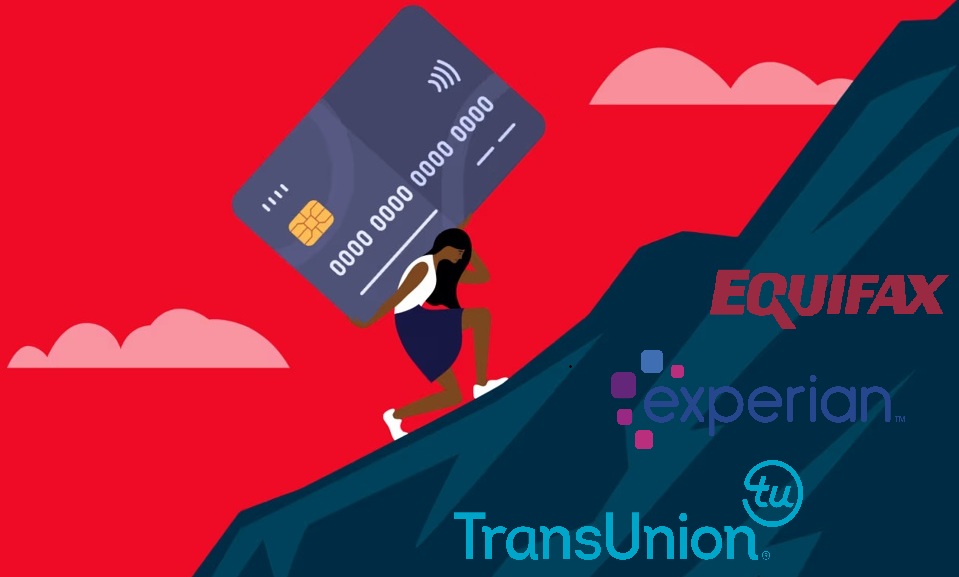
Photo: Emerald Book Image
Your credit score was never supposed to know how often you let your phone battery die. It wasn't designed to track whether you copy and paste your address or type it out letter by letter. And yet, in the rush to serve the "credit invisible" and automate underwriting, the nation's largest credit bureaus have quietly built a parallel system—one that uses your lifestyle habits to predict your financial trustworthiness.
At its core, a traditional credit score is simple: a statistical prediction of whether you will fail to repay a debt in the next 24 months. It looks at five pillars—payment history, debt-to-limit ratio, credit longevity, diversity, and recent inquiries—and is legally blind to your income, job title, race, or bank account balances. But that simplicity has created blind spots. Over 25 million Americans have no traditional credit score at all. And in response, the industry has gone searching for new signals.
What they have found is unsettling. According to a growing body of research—including a 2026 LexisNexis Risk Solutions report and studies from Stanford and UC Berkeley—the major credit bureaus (Equifax, Experian, TransUnion) and specialty data brokers (LexisNexis, Clarity Services, NCTUE) now routinely collect what the industry calls "alternative credit data." This includes everything from your utility and rent payments to your mobile phone number longevity, your educational pedigree, and even how fast you scroll through a loan application.
The Two Drawers: How Bureaus Separate Your Data
The major bureaus keep two completely distinct files on you. The first is your traditional credit report—regulated, familiar, and used to generate your FICO score. The second is a shadow dossier of lifestyle data, legally separated from your core credit file but sold freely to lenders, landlords, and even employers.
- Equifax owns The Work Number, tracking your weekly income, job titles, and employment changes, plus DataX for subprime and rent-to-own histories.
- Experian runs Boost, which encourages you to voluntarily hand over your utility, telecom, and streaming bills in exchange for a potential score bump.
- TransUnion has aggressively acquired rental housing data, eviction records, and subprime consumer tracking.
- LexisNexis Risk Solutions operates as perhaps the largest lifestyle aggregator, tracking court records, professional licenses, vehicle registrations, and address stability.
When you apply for a loan through a traditional bank, the lender looks primarily at Drawer One. But when you apply through a modern fintech app, a Buy Now, Pay Later service, or an online auto lender, their algorithms often purchase access to both drawers—merging your financial history with your behavioral profile to make a decision.
What Lifestyle Data Actually Looks Like
The term "lifestyle data" sounds abstract. But in practice, it is hyper-specific—and deeply invasive. According to reports from the Consumer Financial Protection Bureau (CFPB) and academic studies on algorithmic underwriting, lenders and bureaus now track four major categories of non-financial behavior:
- Digital Footprints: How long you have owned your current phone number and email address. Whether you type your name in lowercase or uppercase. How fast you scroll through terms and conditions. Even your phone's battery habits—letting it die frequently is interpreted as a sign of chaos.
- Physical Stability: How many times you have moved in the last 36 months. Whether your daily geolocation shows a consistent commute. Utility payment timing for electricity, water, and gas.
- Consumption Habits: Whether you maintain uninterrupted gym, streaming, or meal kit subscriptions. Where you shop (discount stores vs. premium grocers). Frequent transactions at online casinos or gaming platforms can flag "impulsive" tendencies.
- Professional & Educational Pedigree: The ranking of your university, your degree level, and your college major. Holding an active professional license (nursing, teaching, real estate) signals institutional accountability.
The logic is statistical. Algorithms look for patterns that correlate with default risk. But as researchers have documented, those patterns often function as proxies for race, class, and systemic disadvantage.
The Racial Bias Problem: Studies Show Systemic Harm
On paper, lifestyle-based scoring is supposed to be "race-blind." But a landmark study from Stanford University's Human-Centered AI (HAI) found that credit scoring algorithms are 5% to 10% less accurate at predicting default risk for Black, Latino, and lower-income borrowers. Because communities of color have historically been excluded from traditional banking, their data contains more "noise"—and algorithms interpret that noise as risk.
Meanwhile, an economic study from UC Berkeley's Haas School of Business, titled Consumer-Lending Discrimination in the FinTech Era, analyzed millions of algorithmic mortgage applications. The finding was stark: while automated systems eliminated face-to-face discrimination at the approval stage, they still charged Latinx and Black borrowers 6 to 9 basis points higher interest rates for identical loans. The algorithms weaponized digital shopping behavior and lifestyle indicators, extracting an estimated $750 million to $765 million in extra interest annually from minority homeowners.
The Greenlining Institute's 2025 report, FCRA and Find Out, adds another layer: digital "steering." Algorithms read unconventional lifestyle patterns common to gig workers or minority neighborhoods and respond by hiding low-cost financial products in banking apps, steering those users toward higher-interest, subprime offers. What looks like objective math is, in practice, a high-tech engine for inequality.
The Pricing Flaw: Safe Borrowers Pay More
Even if you set aside the bias concerns, lifestyle data doesn't seem to work as advertised. A major study published in FinTech analyzed 30-year residential mortgages. They found that fintech lenders using alternative algorithms did not demonstrate superior predictive accuracy compared to traditional banks. Instead, because the behavioral algorithms struggled to properly sort risk, they accidentally charged higher interest rates to their safest borrowers—a "convenience premium"—while giving implicit discounts to higher-risk borrowers.
The LexisNexis 2025 Alternative Credit Data Impact Report confirms that what was once experimental is now mainstream: alternative data is considered "essential and central" to credit lifecycle management. But essential does not mean fair. And it certainly does not mean accurate.
Your Rights: How to Fight Back
Under the Fair Credit Reporting Act (FCRA), every single one of these companies—whether Equifax or LexisNexis—is legally considered a "Consumer Reporting Agency." That means they must provide you a free copy of your file once every 12 months upon request. And you have the right to dispute inaccurate information.
To see what lifestyle data has been collected on you, you need to request reports from specialty bureaus: LexisNexis Risk Solutions, ChexSystems, NCTUE (for utilities), and The Work Number (for employment data). You can also opt out of certain data sharing under the Gramm-Leach-Bliley Act by notifying your banks and credit issuers that you do not want your non-public personal information shared with outside marketing companies.
The system is not going away. But knowledge—and organized demand for transparency—remains a powerful tool. The question is not whether lenders will use your lifestyle to judge you. The question is whether you will know they are doing it.
No Ads. By Us. For Us.
This article was only made possible by readers like you. We hope it inspired you to support Emerald Book, so we can continue producing content like this.
We will never show you ads, sell your data, or require a subscription to consume our content. Your gift helps us keep the truth accessible.
Click the Support button to give a gift of any amount today.
Thank you for making this work possible.