

Emerald Pages
◆
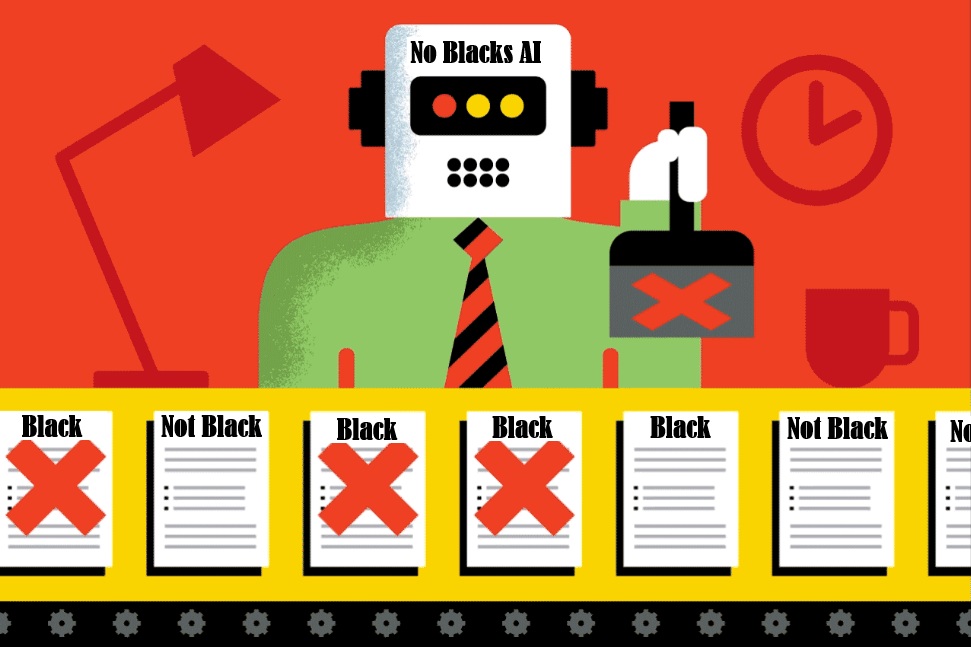
Photo: Emerald Book Image
In May 2026, researchers at the Stanford Institute for Human-Centered Artificial Intelligence (HAI) released a bombshell study titled "Algorithmic Monocultures in Hiring." By analyzing over 4 million job applications submitted to roughly 150 large employers (mostly Fortune 500 companies with revenues exceeding $5 billion), they provided the first real-world empirical proof of "algorithmic monoculture" and "systemic rejection." The finding is stark: being rejected by one company's AI tool now directly pre-determines your rejection at entirely different companies that use the same software vendor.
This isn't about individual bad hires or unconscious bias from a single recruiter. This is about structural, automated, and invisible gatekeeping. The Stanford team discovered that if an applicant submitted multiple applications across different companies using the same third-party vendor (primarily analyzing data from Pymetrics), they often faced a systemic rejection loop. In the most striking finding, 10% of applicants who submitted four applications to different companies were automatically rejected from every single job — not because of their qualifications, but because a shared algorithm had already stamped them as undesirable.
The mechanics, detailed by Stanford, are insidious. When you apply to "Company A," you are not just submitting a resume. You are directed to the vendor's portal (such as Pymetrics or HireVue) to complete mandatory assessments — behavioral games, cognitive puzzles, or automated video interviews. The AI compiles your micro-behaviors (click patterns, reaction speeds, vocabulary, tone) into a single numeric score. Crucially, the vendor retains ownership of your assessment data and locks that score for up to 330 days. When you later apply to "Company B" (a completely different business that licenses the same software), the system doesn't generate a new evaluation. It pulls your old score and triggers an automatic rejection before a human ever looks at your application — sometimes within 15 minutes.
The Racial Toll: 26% of Black Applicants Affected
The abstract data becomes devastatingly clear when broken down by race. Race was a primary, explicit focus of the Stanford paper. Before this study, AI vendors published aggregated internal audits claiming their algorithms were unbiased. The Stanford team disaggregated the data to look at individual job postings (the way U.S. employment discrimination law actually operates) and discovered that the aggregate data was masking massive, per-position discrimination.
Because the shared algorithms pass the same systemic biases across client companies, the impact is heavily amplified for minorities. The study found that 26% of Black applicants and 15% of Asian applicants were pushed toward positions where the AI algorithm actively disadvantaged their demographic group. Applying the EEOC’s "four-fifths rule" (the legal standard for disparate impact), researchers calculated that over 10% of all job positions analyzed showed severe, active automated bias against Black candidates. This translated to an estimated 40,000 unfairly missed opportunities — applications that were instantly rejected but would have advanced to the next round if the AI selected them at the same rate as white applicants. The study also calculated that a Black applicant must now submit an average of 25 separate applications before receiving a single algorithmic recommendation to advance.
- 40,000+ Black and Asian applications were instantly rejected but would have advanced if rated like white peers.
- 26% of Black applicants were routed into positions where the AI algorithm actively disadvantaged their demographic group.
- 330 days How long a biased score remains locked to your identity across multiple employers.
- 10% of candidates applying to 4 jobs using the same vendor were universally blocked from all of them.
The researchers noted that while the AI didn't explicitly ask for an applicant's race, the models were trained to match the traits of a company's existing top employees. Because those corporate workforces were historically not diverse, the AI flagged subtle, cultural variations in how minorities played the games or answered questions as "low performance" traits — creating structural lockouts via demographic proxies.
How Black Applicants Can Fight Back: The Four Pillars of Resistance
Forewarned is forearmed. While the study painted a dire picture, the researchers and legal advocates have developed a concrete playbook for fighting back against algorithmic blackballing. Because these systems rely on predictable, automated behavior (what Stanford calls "deterministic replicability"), changing your method of engagement can break the loop entirely. Here are the four most effective strategies emerging from this new landscape.
1. Exercise Your Legal Right to Opt Out
A growing patchwork of state and local laws gives applicants the explicit right to decline AI screening. Under NYC Local Law 144, employers hiring for New York-based positions must notify you that an Automated Employment Decision Tool (AEDT) is being used. Crucially, you have the legal right to request an alternative selection process or a manual human review. Similarly, new California Civil Rights Council regulations and New Jersey enforcement rules mandate meaningful human oversight if an AI creates a disparate impact.
The Action Step: When an application redirects to a vendor page (look for URLs containing pymetrics.com, hirevue.com, or harver.com), scroll to the bottom. Look for "Request Accommodation," "Opt-Out," or "Alternative Assessment" language. Formally request a human recruiter review your resume instead of taking the automated assessment. Document every request. This single act transforms you from a passive data point into an active legal agent.
2. Force Variation Into Your Application Portfolio
The Stanford study's core discovery was "deterministic replicability" — identical data yields identical rejections across different employers. Therefore, you must become unpredictable. Do not submit the exact same resume file or text to different companies using the same applicant tracking software. Change verbs, reorder sections, and alter sentence structures. A different data footprint forces the algorithm to parse your background fresh rather than filing you into an existing low-score category.
Additionally, use secondary email addresses and phone numbers for dedicated job hunting. Algorithmic monoculture relies heavily on matching unique identifiers (like your primary email address or phone number) to pull up the 330-day locked-in assessment score. A new digital identity can prevent systems from instantly linking you to a past rejection profile from six months ago. Think of it as resetting your cookie cache for the job market.
3. Bypass the Gateway Through Backchannel Networking
The most effective way to beat an algorithm is to avoid entering its ecosystem entirely. Human-to-human hiring tracks completely skip vendor screening pipelines. Target "AI-Free" advocacy groups and job boards — platforms like Tech Is Hiring, Black Professionals in Tech, and various civil rights-focused career networks specifically designed to bypass corporate AI screens.
Master the direct LinkedIn or cold email pipeline: instead of clicking "Apply Now," find the team lead, division manager, or internal corporate recruiter for that specific role. Craft a concise, direct message offering your resume and a brief insight into their team's work. If a human manager manually pulls your resume into the candidate tracking system, it frequently bypasses the initial third-party automated "blackball" games. The algorithm cannot reject what it never sees.
4. Document Everything for Future Accountability
As litigation against major HR software companies moves forward (firms like Sanford Heisler Sharp McKnight actively track algorithmic bias), documentation is your weapon for civil rights enforcement. Keep digital receipts. If you receive a rejection notice within 5 to 15 minutes of submitting an application (a clear sign of an automated, score-based rejection), screenshot the timeline. Save the job descriptions, the disclosure notices, and the vendor privacy policies.
Report violations directly: If a company refuses to provide an alternative human review or fails to post its annual mandatory bias audit summary online, file a complaint with local labor departments or consumer protection bureaus. Each report adds to the body of evidence needed for class-action lawsuits that can force systemic change. Remember: the vendor ecosystem includes major players like Pymetrics (now Harver), HireVue, Eightfold AI, and Phenom, used by corporations such as Unilever, JPMorgan Chase, Hilton, Goldman Sachs, Microsoft, and Chevron.
No Ads. By Us. For Us.
This article was only made possible by readers like you. We hope it inspired you to support Emerald Book, so we can continue producing content like this.
We will never show you ads, never sell your data, and never require a subscription to consume our content. Your gift helps us keep the truth accessible.
Click the Support button to give a gift of any amount today.
Thank you for making this work possible.