

Emerald Pages
◆
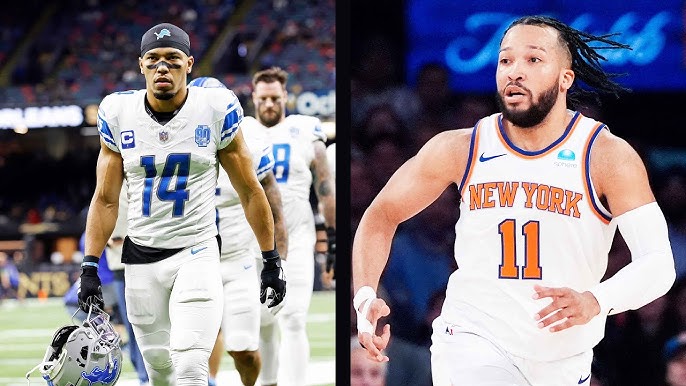
Photo: YouTube | NFL
The word "cartel" conjures images of secretive drug lords or oil executives rigging global markets. But the most successful and legally protected cartels in American life operate every Sunday and Tuesday night. They broadcast themselves in high definition, and their product is human beings.
By the classic economic definition—an alliance of independent businesses formed to regulate prices, limit competition, and control a market—the National Football League (NFL) and National Basketball Association (NBA) fit the description perfectly. They are cartels. What makes them unique is their legal exemption to operate as such, and the deeply uncomfortable demographic reality that underpins their wealth: a collection of predominantly older white billionaires controlling, trading, and profiting from a workforce that is roughly 70% to 80% Black.
The numbers are stark. In the NFL, 30 out of 32 majority owners are white—93.75% of the league's controlling power. Meanwhile, Black players account for roughly 54% of rosters, and players of color nearly 70%. The NBA is even more lopsided: 90% to 93% of principal owners are white, while over 70% of players are Black. This isn't just a statistic; it's a power structure. A cartel's purpose is to maximize profit for its members, and in this case, the members are overwhelmingly white, and the labor they control is overwhelmingly Black.
The Legal Cartel: Price Fixing and Labor Control
In any other industry, the NFL and NBA's behaviors would be prosecuted under the Sherman Anti-Trust Act. They engage in explicit output restrictions (limiting the number of teams and games), territorial allocation (granting teams regional monopolies), and wage suppression (salary caps and rookie wage scales). The rookie draft is perhaps the most overt example: a college player cannot choose their employer. Instead, the cartel assigns them to a team, destroying their open-market bargaining power before they earn a dime.
This system of trading players—waking up to find your life uprooted to a new city because two owners signed a document—treats human assets like commodities. Players are discussed in the language of inventory: "market value," "assets," "packaged with future picks." It is a system players have reluctantly accepted in exchange for one thing: roughly 50% of league revenues, negotiated through collective bargaining. The cartel takes the other half, and the owners take the lion's share of that.
- The Rookie Monopsony: A market with only one buyer. The draft eliminates player choice and suppresses rookie contracts by billions.
- The Franchise Tag: A mechanism that allows teams to prevent their best players from leaving for the open market, unilaterally extending control.
- The Trade Deadline: The day when human beings are transferred like warehouse inventory, often with no input from the worker themselves.
The Real Money Isn't the Sport
Here is the critical revelation that most fans miss: the games themselves are becoming a loss leader. The NFL and NBA are not primarily sports entertainment companies anymore. They are real estate empires, media arbitrage platforms, and data-mining gambling operations that happen to film athletic competition.
The single biggest financial shift in modern sports is the "mixed-use district." Owners no longer just demand a stadium; they demand 50 to 300 acres of surrounding land to build luxury apartments, office towers, and trendy restaurants. The Milwaukee Bucks built the Deer District. The Golden State Warriors anchor a massive office complex leased to Uber. The Atlanta Falcons are building a $5 billion real estate project called Centennial Yards. And here is the kicker: revenue from condos and office buildings doesn't have to be shared with players or other teams. It belongs 100% to the owner.
Meanwhile, the leagues have become media companies. They sell the rights to their "content" (games) to networks and streaming giants for astronomical sums—the NBA recently signed a $76 billion media deal. They then layer on top of that the legal sports gambling market, selling real-time data feeds to companies like Genius Sports and taking equity stakes in the very platforms processing the bets. The league makes money on the game, the data of the game, and the bets placed on the game.
Why the Scoreboard Doesn't Matter to the Owners
From a purely financial standpoint for the billionaire owners, it barely matters at all who wins the championship or who finishes in dead last. Because these leagues operate as highly protected cartels, they have engineered a system that entirely separates winning from financial survival. The cartel structure guarantees that even the worst, most mismanaged teams in the league remain wildly profitable and continue to skyrocket in value every year.
The massive multi-billion-dollar national media contracts from TV networks and streaming platforms are divided 100% equally among every team. It does not matter if a team goes undefeated and wins the Super Bowl, or goes 0-17 and finishes in last place—both teams receive the exact same equal check from the league office, over $433 million per team in the NFL. This base payout alone covers almost all of a team's core operational costs and player salaries, ensuring profitability before a single ticket is even sold locally.
The Dream Factory: Chasing a Rigged Game
The entire multi-billion-dollar apparatus—the historic trophies, the championship rings, the prime-time lights, and the hyper-dramatic media coverage—is a finely tuned marketing engine designed by the cartel. To keep the system running, the cartel relies on a steady supply of world-class labor. They secure this labor by selling a dream of ultimate glory, status, and generational wealth.
For a player, winning a championship is the culmination of a lifetime of sacrifice, broken bodies, and singular focus. For the owner, that championship trophy is a highly effective marketing asset that re-engages fans, raises local ticket prices, and increases the valuation of the franchise. The cartel pays the workers handsomely, but it treats them as highly expendable fuel for the machine. The average NFL career lasts just 3.3 years, and the average NBA career lasts about 4.5 years. Players often leave the sport with permanent physical disabilities, while the owners hold onto their appreciating assets for decades.
The system allows a handful of superstars to become global icons and extraordinarily wealthy. This is intentional. The massive success of the top 1% of players serves as the ultimate advertisement, keeping millions of kids around the world chasing the dream and filling the talent pipeline for the next generation. Because players have begun to realize they are the engine driving a billionaire's machine, the modern generation of athletes is actively changing how they approach their careers. Players are increasingly stripping away the corporate-mandated narrative of "team loyalty," leaning into free agency, short-term contracts, and forcing trades to control their own destiny. Superstars like LeBron James and Kevin Durant have explicitly stopped viewing the sport as their ultimate destination, instead building independent media companies, venture capital funds, and real estate portfolios—transitioning from the role of the "commodity" to the role of the "owner."
The Crash: Why Most Players Lose in the End
For the vast majority of professional athletes, the financial dream ends in a swift, devastating crash. While the public sees the 1% of superstar athletes signing $200 million contracts, the reality for the average player is a brutal financial paradox: they earn a lifetime of income in a highly compressed 3-to-4-year window, often before their 26th birthday, and are then cut off from the system with no sustainable safety net.
Historic data from Sports Illustrated shows that roughly 78% of NFL players face bankruptcy or severe financial distress within just two years of retirement. Approximately 60% of NBA players go broke within five years of stepping off the court. Because the average career is so short (3.3 years for the NFL, 4.5 years for the NBA), a player's earning power completely evaporates at an age when regular corporate workers are just beginning to climb the career ladder.
The system is structurally designed to make it difficult for young athletes to retain their wealth. If an NFL rookie signs a contract for $1 million, their actual take-home pay after federal taxes, state taxes, "jock taxes" (fees levied by every city they play an away game in), agent fees, and union dues is closer to $500,000. Young, wealthy athletes are prime targets for predatory financial advisors and failed business schemes. Players are thrust into a culture of extreme luxury, buying expensive homes and supporting extended families based on the assumption that the money will keep rolling in. When they are suddenly cut due to injury or performance decline, the income stops but the bills remain.
Players sacrifice their long-term health for the owner's profit. Once they retire, they face a lifetime of chronic pain, surgeries, and cognitive issues such as CTE in football. While the NFL and NBA provide post-career health insurance for a limited window (typically 5 years), players are often left to cover massive, lifelong medical bills completely out of pocket. When a player goes broke or suffers from long-term injuries, the owner's bottom line is completely unaffected. The cartel has a built-in, infinite supply of cheap labor. Every single year, the college draft injects hundreds of hungry, eager rookies into the league who are desperate to chase the exact same dream. The league simply swaps out the broken, older player for a younger, cheaper asset.
Taxpayers: The Silent Partners
The final piece of the cartel's wealth machine is the public subsidy. Because the leagues strictly limit the supply of teams, owners can threaten to relocate to any city willing to write a larger check. State and local politicians, terrified of losing their beloved franchise, have handed over approximately $33 billion in public funds to build stadiums over the past three decades.
The Kansas City Chiefs received up to $1.8 billion in public financing. The Tennessee Titans got $1.2 billion from Nashville. The Buffalo Bills took $850 million from New York. These subsidies are hidden through tax-exempt municipal bonds, hotel and rental car taxes (which fall hardest on tourists and low-income residents), and direct land giveaways. The economic consensus among researchers is clear: stadium subsidies are terrible investments. They don't create long-term jobs or growth. They simply transfer hundreds of millions of dollars from average taxpayers—many of them Black and brown—directly into the pockets of the white billionaire owners of the cartel.
The Infinite Appreciation Machine
Ultimately, the owners don't even need the annual profit. The primary goal of owning a sports franchise is asset appreciation. Because the cartel restricts supply—there will never be a 33rd NFL team without the existing owners' permission—franchise values skyrocket regardless of on-field performance. The average NBA franchise is now worth $4.4 billion, trading at 10 to 11 times revenue. Owners can now sell tiny passive stakes to private equity firms, pulling out hundreds of millions in liquid cash while keeping total control.
This is the modern cartel. It is a closed loop of white economic power: control the labor (predominantly Black men), control the supply (limit the number of teams), socialize the costs (taxpayer subsidies), privatize the profits (real estate and media deals), and watch your asset appreciate into the billions. The sport is just the excuse. The real business is the extraction of wealth from players, fans, and taxpayers, and its concentration into the hands of a tiny, homogenous ownership class.
The scoreboard doesn't just show points. It shows the final tally of who holds the power, who generates the labor, and who walks away with the stadium-sized bag.
No Ads. By Us. For Us.
This article was only made possible by readers like you. We hope it inspired you to support Emerald Book, so we can continue producing content like this.
We will never show you ads, never sell your data, and never require a subscription to consume our content. Your gift helps us keep the truth accessible.
Please click the Support button on the bottom right of your screen to make a gift of any amount today.
Thank you for making this work possible.