

Emerald Pages
◆
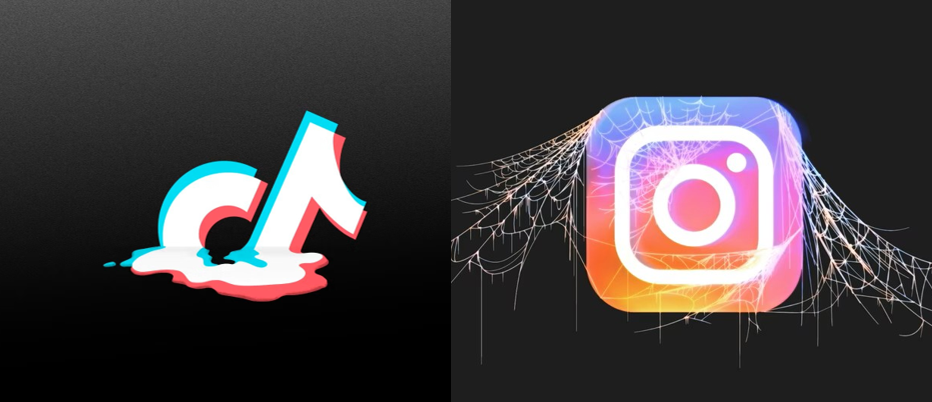
Photo: Emerald Book Image
If you have scrolled through your For You page recently and felt a distinct sense of ennui—or found yourself closing Instagram after three swipes—you are not alone. As we settle into the second quarter of 2026, a palpable shift has occurred. The "golden era" of social media, defined by viral authenticity and organic reach, appears to be officially dead. In its place, we are witnessing the maturation (or perhaps, the monetization) of TikTok and Instagram, leaving users nostalgic for the apps they downloaded just 18 months ago.
Data from early 2026 confirms what millions are feeling: these platforms are not necessarily dying in terms of raw user counts, but they are suffering a severe crisis of sentiment. Instagram recently announced a record 3 billion monthly active users, yet simultaneously reported a sharp 26% year-over-year decline in engagement. Similarly, while TikTok spiked to 100 million daily users in late 2025, it has since dipped to the 90+ million mark, plagued by uninstalls and a reported 79% of Gen Z users actively missing the app's earlier, less commercialized, "raw" content.
So, what happened? The short answer is the "TikTokification" of everything has finally backfired. In an attempt to compete with ByteDance's algorithm, Instagram turned Reels into a clone of its rival. By 2026, short-form video now accounts for over 50% of all time spent on Instagram. But this pivot has come at a devastating cost: organic reach for standard photo posts has reportedly fallen by 31%, while Reels organic reach is down by as much as 35%. The result is a platform where creators feel like they are screaming into a void.
The Algorithm Fatigue & The Pay-to-Play Era
For creators, 2026 has been a rude awakening. On TikTok, average engagement rates have fallen from 2.65% in 2023 to under 2.3% today. High-production content that once went viral is now "flopping," as one Reddit user with 900k followers noted, citing the platform as feeling "ruined" since the US data merge. Creators report that the algorithm is increasingly recycling repetitive content, while the pressure to feed the beast leads to severe burnout. The shift toward passive consumption is stark: while video views on Instagram have actually increased by 29%, public comments have dropped by 16%—meaning people are watching but no longer participating.
Perhaps the biggest driver of this discontent is the explosion of ads. Both platforms have entered a hyper-monetization phase. TikTok's global ad revenue is forecasted to hit $23.6 billion in 2026 (a 35% increase), while Instagram is projected to pull in $42.5 billion in the US alone. Users are now encountering "consecutive ads" in Stories and Reels—a practice widely tested in late 2025. With over 50% of all Instagram ads now appearing in Reels, and TikTok pushing shoppable TikTok Shop ads directly into the "For You" feed, the line between creator and commercial has been obliterated.
- Ad Load is Up: Instagram Reels ad impressions grew nearly 26% YoY in early 2026. TikTok now expects social commerce sales to exceed $60 billion this year.
- CPM is Rising: Average costs per thousand impressions (CPMs) have jumped 14–18%, meaning brands pay more while users see more ads.
- Authenticity is Faked: Brands are pivoting to "human" lo-fi UGC-style ads to trick users into not scrolling, further muddying the waters.
The Ghost of Feeds Past
The irony is that while users flee to private spaces (DMs and private Stories on Instagram are booming), the platforms are desperately trying to hold attention through volume rather than value. Creators on Reddit sum it up best: "Reach in 2026 is dead on Instagram. It's not a content issue anymore... I'm considering putting my skills to work for a business instead of gambling with an algorithm that seems completely broken."
For TikTok, the existential threat isn't just algorithm fatigue—it's legal instability. Uncertainty surrounding the platform's future in the US due to ownership changes has created a lack of trust. Why invest in building a following if the app might vanish or change fundamentally? As a result, users are distributing their attention to YouTube Shorts and, surprisingly, closed platforms.
So, are they dying? Not in the financial sense. Both Meta and ByteDance are making more money than ever. But the "community" feeling—the raw, unpredictable, low-budget magic of 2024 and early 2025—is fading. In its place is a highly optimized, ad-heavy, pay-to-play entertainment complex. The apps haven't disappeared; they've just stopped feeling like ours.
No Ads. By Us. For Us.
This article was only made possible by readers like you. We hope it inspired you to support Emerald Book, so we can continue producing content like this.
We will never show you ads, never sell your data, and never require a subscription to consume our content. Your gift helps us keep the truth accessible.
Please click the Support button on the bottom right of your screen to make a gift of any amount today.
Thank you for making this work possible.