

Emerald Pages
◆
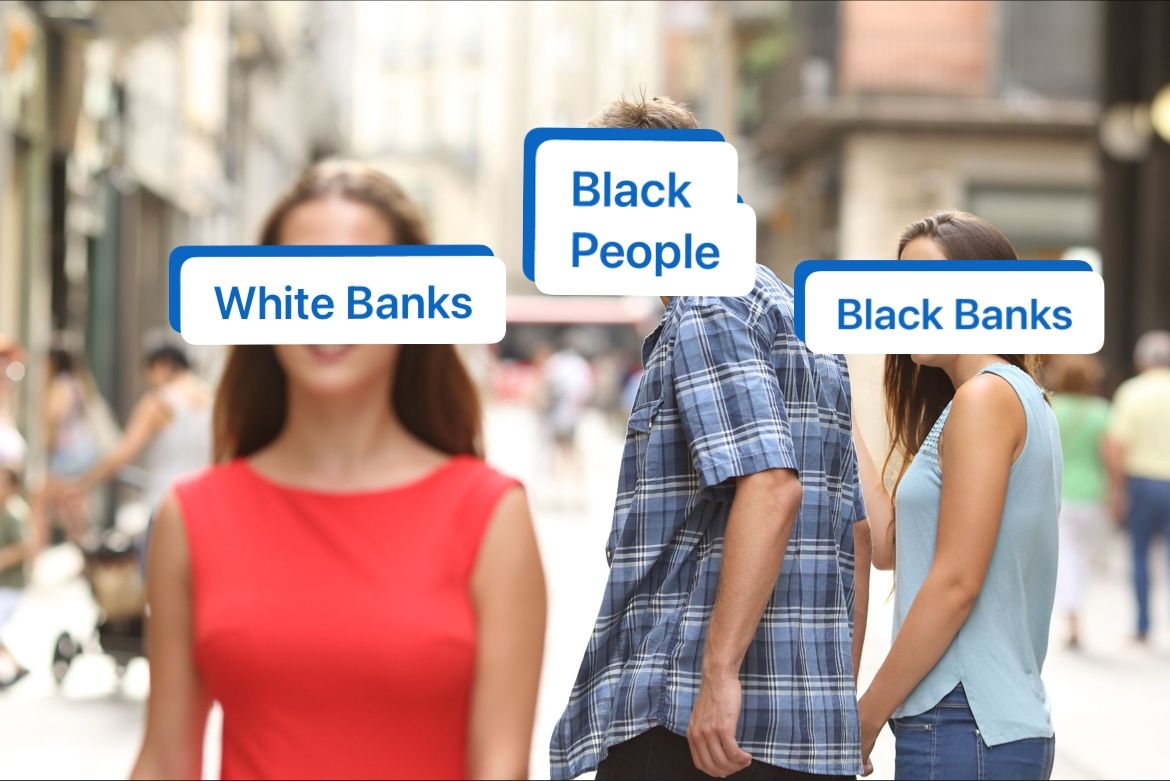
Photo: Emerald Book Graphic.
In recent months, social media timelines and news headlines have been ablaze with calls to boycott Target. The catalyst was the retail giant’s quiet rollback of Diversity, Equity, and Inclusion (DEI) initiatives—a decision that many in the Black community interpreted as a betrayal during a time when corporate accountability is paramount. Black Twitter mobilized, influencers called for the removal of the red bullseye from shopping lists, and within days, the narrative was set: Target is the enemy.
This swift, collective action is a testament to the power of Black economic leverage. When we move together, we are capable of shaking the foundations of corporate America. But amidst the righteous anger aimed at a retailer for pulling back on performative inclusivity, a much larger, more destructive elephant sits quietly in the room, untouched by the same scrutiny. Where is the smoke for white-owned banks?
The damage inflicted upon the Black community by mainstream financial institutions dwarfs any harm Target could ever conceive. While a retailer might decide to stop promoting Black-owned brands, banks have a centuries-long history of actively preventing Black people from building wealth in the first place. The energy we are currently pouring into a retail boycott—energy that is righteous and valid—stands in stark contrast to the eerie silence that meets the predatory practices of institutions like Wells Fargo, Chase, and Bank of America.
The Numbers Don’t Lie: A History of Extraction
To understand the disparity in our activism, we must look at the numbers. The Brookings Institution reports that the racial wealth gap is currently a chasm of over $2.4 trillion. While retail discrimination is inconvenient and insulting, banking discrimination has been lethal to Black economic mobility. Consider the practice of redlining, the federal government-sanctioned practice where banks refused to issue mortgages to Black people in predominantly Black neighborhoods. Though technically outlawed by the Fair Housing Act of 1968, modern investigations reveal that "reverse redlining" and discriminatory lending practices continue to this day.
In 2012, Wells Fargo paid a historic $175 million settlement to the Department of Justice for systematically steering Black and Hispanic borrowers into predatory subprime mortgages while giving white borrowers with similar credit profiles standard, prime loans. This wasn't a slip-up; it was a business strategy. These predatory loans led directly to the foreclosure crisis of 2008, which erased nearly half of the Black community’s accumulated wealth in a single generation. Target refusing to highlight Black history month displays is an insult; Wells Fargo actively stealing generational wealth is a crime.
- Wealth Extraction: From 2000 to 2020, the median Black family saw their wealth increase by only 2%, while white family wealth grew by 43%. Much of this disparity is tied to banking and lending discrimination.
- Underbanking: Even today, Black individuals are more likely to rely on predatory alternative financial services (check cashing, payday loans) because mainstream banks often locate branches in white suburbs while closing them in Black urban centers.
- The Settlements: Major banks have paid billions in settlements for discriminatory practices over the last two decades, yet Black consumers continue to deposit trillions into these same institutions without demanding systemic change.
The Psychology of the Boycott
There is a psychological reason why we protest Target but not the bank. Retail boycotts offer immediate gratification. When we stop buying a product, we feel the power instantly. We see empty shelves in viral videos. We feel a sense of agency. Conversely, the relationship with a bank feels like a necessary evil. We are told we need a bank to survive—to cash a check, to get a loan, to buy a home. We view banks as utilities rather than businesses we can influence. This is a fallacy.
The truth is, the Black community holds significant deposits. According to McKinsey, Black consumers spend over $1.6 trillion annually. While a portion of that goes to retail, a massive percentage flows directly into the vaults of these white-owned financial institutions. This money, which we deposit in good faith, is then loaned out to others—often to gentrify our neighborhoods, fund companies that exploit us, or invest in the very criminal justice system that incarcerates us. We are funding our own oppression by staying loyal to banks that have proven, time and time again, that they view us as marks rather than clients.
This isn't to say that boycotting Target is wrong. Holding corporations accountable for abandoning DEI is necessary. However, the intensity of the response must be proportional to the damage caused. If we are willing to inconvenience ourselves by driving an extra ten minutes to shop at a competitor, why are we not willing to inconvenience ourselves by moving our checking accounts from a predatory mega-bank to a Black-owned bank or a community development financial institution (CDFI)?
A Call for Strategic Alignment
The Black community has a long and storied history of economic warfare. The Montgomery Bus Boycott wasn't just about a seat; it was about dismantling the infrastructure of segregation. Today, the infrastructure of economic segregation is the banking system. We must apply the same strategic lens.
The "smoke" we are looking for shouldn't just be trending hashtags. It should be the sound of accounts being closed at institutions that have harmed us. It should be the quiet, powerful migration of capital to Black-owned banks like OneUnited, Carver Federal Savings Bank, or the growing network of CDFIs that have a proven track record of lending to Black businesses and homeowners at higher rates than their mainstream counterparts.
We have proven we can move markets when we are united. We made Target flinch. Imagine the earthquake we could create if we moved even 10% of our collective deposits from the banks that redlined our grandparents to the institutions that are designed to uplift our grandchildren. That would be a boycott that actually builds something, rather than just taking something away.
So, the next time you see the call to action to boycott a retailer, ask yourself: why is the smoke only for the store, and not for the vault? Until we redirect our economic fury toward the financial architecture that has done more damage to the Black community than any retailer ever could, we will continue to win battles while losing the war for economic freedom.
No Ads. By Us. For Us.
This article was only made possible by readers like you. We hope it inspired you to support Emerald Book, so we can continue producing content like this.
We will never show you ads, never sell your data, and never require a subscription to consume our content. Your gift helps us keep the truth accessible.
Please click the Support button on the bottom right of your screen to make a gift of any amount today.
Thank you for making this work possible.