

Emerald Pages
◆
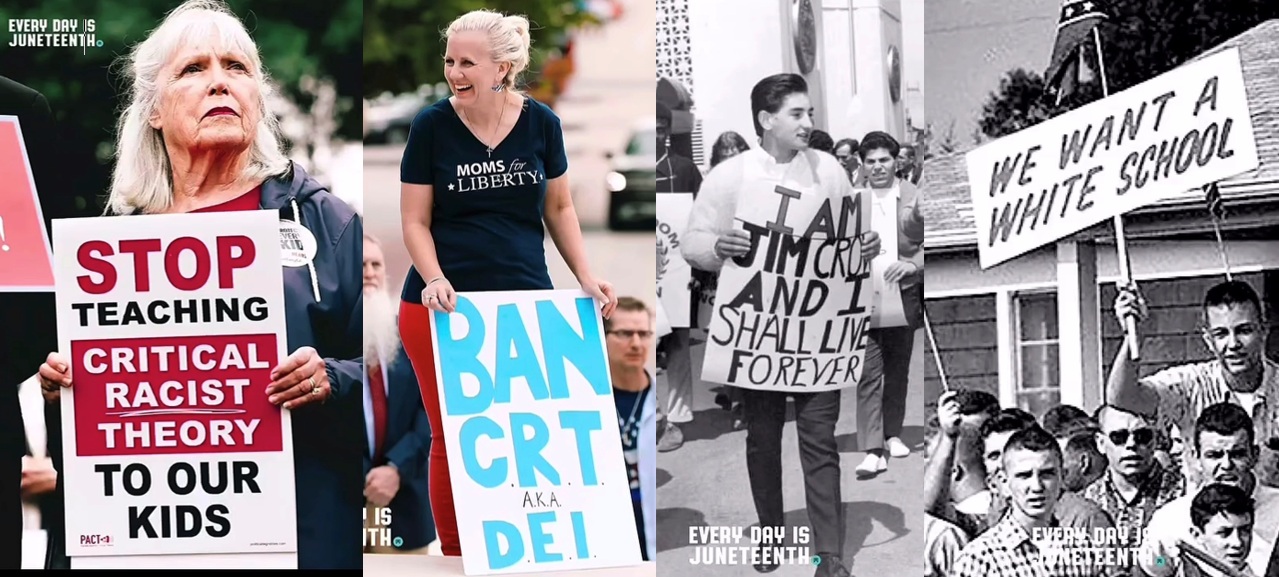
Photo: Instagram | Every Day is Juneteenth
In the spring of 1921, the Greenwood District of Tulsa, Oklahoma, was a monument to Black excellence. Known as "Black Wall Street," it was home to over 300 Black-owned businesses, two newspapers, a hospital, a post office, a school system, and an unparalleled concentration of generational wealth. It was proof that when unshackled from the chains of racial terrorism, Black Americans could build economic engines as powerful as any in the nation. Within 24 hours, a white mob—supported by local law enforcement and armed with airplane fuel and firebombs—erased it from the map. Over 35 city blocks were incinerated. An estimated 300 people were killed. And 10,000 Black Americans were left homeless. The insurance companies denied claims. The city government outlawed rebuilding. The wealth that took a generation to accumulate was annihilated in a single night.
This was not an isolated riot. It was not chaos. It was a calculated, paramilitary act of economic warfare driven by a single ideology: white supremacy. And the greatest fallacy of our modern political discourse is the belief that this threat is a historical anomaly. The uncomfortable, urgent truth is that white supremacy remains the single greatest obstacle to Black economic progress in America today. It does not always wear a hood; sometimes, it wears a suit and sits on a corporate board. Sometimes, it carries a state law. And often, it hides behind the insidious lie of "reverse racism." To ignore this is to willfully misunderstand the mechanics of American capitalism.
The massacre in Tulsa is the archetype, but the pattern repeats across the 20th century. Rosewood, Florida (1923) — burned to the ground. The Arkansas Delta (1919) — Black sharecroppers displaced. The destruction of "Hayti" in Durham, North Carolina, via urban renewal and highway construction. Each time Black Americans approached a threshold of economic self-sufficiency, white terror or state-sanctioned policy intervened to reset the clock. This is the original sin of the American economy: a nation that built wealth for whites through land grants, the G.I. Bill, and federally subsidized suburbs simultaneously destroyed Black wealth through redlining, contract selling, and mob violence.
The Quiet Dismissal: How 600,000 Black Women Were Sidelined
Fast forward to the last twelve months. If the burning of Greenwood was the blunt instrument of the past, the dismantling of Diversity, Equity, and Inclusion (DEI) programs is the precision scalpel of the present. Following the coordinated backlash against the racial justice uprisings of 2020, state legislatures and corporate boardrooms launched a ruthless campaign to dismantle the only infrastructure that was beginning to chip away at systemic hiring bias.
The numbers are staggering. According to labor analyses released in March and April 2026 by the Joint Center for Political and Economic Studies and the Bureau of Labor Statistics, up to 600,000 Black women have been economically sidelined or pushed out of the workforce since early 2025. This includes roughly 300,000 who exited the labor force in early 2025 alone. Experts attribute this to a combination of mass federal layoffs and the systematic dismantling of corporate DEI initiatives. Let that sink in. Six hundred thousand Black women—a demographic group that, while context-dependent, earns college degrees at higher rates than Black men (64.1% of bachelor's degrees and 71.5% of master's degrees awarded to Black students go to Black women)—have been pushed out of professional, managerial, and technical roles. These were not "quotas." These were pipeline programs, mentorship initiatives, and anti-bias hiring protocols. Without them, the corporate default has returned: networks that favor the already privileged, subjective performance reviews, and the re-segregation of the modern office.
- Loss of economic output: Reports from late 2025 and early 2026 estimate the cost to GDP from these job losses at approximately $37.2 billion in lost economic output.
- Career decimation: According to the Institute for Women's Policy Research (IWPR), Black women lost more than three times (over 300%) as many jobs in professional and service occupations compared to women overall.
- Sharpest decline among the educated: College-educated Black women saw the sharpest decline in employment in 2025, with their employment rate falling by 3.5 percentage points—a clear signal that these were not low-wage layoffs but targeted professional displacements.
This is white supremacy functioning at its most efficient: a coordinated legal and social campaign to roll back the fragile gains of the civil rights era, disguised as a defense of "meritocracy." The architects of this movement know precisely what they are doing. They are applying the same logic as the mob in Tulsa: when a marginalized group begins to accumulate power, you sever the funding and remove the supports.
The Rewriting of History: The Lie of Reverse Racism
To justify this ongoing economic cleansing, a parallel project has been underway for decades: the whitewashing of history. Across the United States, state legislatures have passed laws prohibiting the teaching of "critical race theory"—a graduate-level legal framework—while simultaneously banning honest discussions about slavery, Jim Crow, and the Tulsa massacre. In Florida, Texas, and Oklahoma, textbooks have been revised to suggest that enslaved people benefited from "industrial training." The term "white supremacy" has been banned from Advanced Placement history courses.
This is not about "protecting children." This is a deliberate strategy to manufacture a false narrative of "reverse racism." The argument is seductive in its simplicity: that efforts to help Black Americans (DEI, affirmative action, reparations) are now the real racism because they supposedly discriminate against white people. This fallacy relies on a profound ignorance of history. To claim that a DEI fellowship for a Black woman is the moral equivalent of the Tulsa massacre is not just incorrect; it is obscene. White supremacy requires ahistorical amnesia to survive. If you do not know that Black Wall Street existed, you cannot comprehend why Black people are "behind" economically. If you are taught that racism ended with Martin Luther King Jr., you will believe that any race-conscious policy today is unfair.
This lie has devastating material consequences. Polling shows that a majority of white Americans now believe that anti-white discrimination is as big a problem as anti-Black discrimination. This belief is not data-driven; it is narrative-driven. And it is the fuel that powers the dismantling of DEI, the defunding of Black colleges, and the opposition to baby bonds and child tax credits that would lift Black children out of poverty.
The Graveyard of Patience: Why Waiting Won't Work
Faced with these grim realities, a common refrain emerges from the comfortable sidelines: "Just wait. The old, racist generation is dying out. Gen Z is more diverse. Time is on our side." This is the most dangerous fallacy of all. It is a counsel of passivity that confuses demographic change with ideological change. White supremacy is not a biological condition that dies with the elderly; it is a cultural and political virus that is actively transmitted to each new generation.
Consider the data. White supremacist recruitment has surged among Gen Z and young Millennial men. The whitewashing of history in K-12 education means that these young people are entering voting booths believing that the Civil War was about "states' rights" and that Martin Luther King Jr. was a moderate who would oppose Black Lives Matter. Far from dying out, a new, more digitally literate, more organized wave of white nationalism is rising. They are not wearing sheets; they are posting memes on TikTok, running for school boards to ban books, and filing lawsuits to end all race-conscious policies.
To wait is to concede. To wait is to allow the 600,000 displaced Black women to remain unemployed. To wait is to let the ruins of Black Wall Street remain a parking lot (which they were until very recently). To wait is to assume that the arc of the moral universe bends toward justice without the application of immense, organized, militant pressure. It does not.
The Only Way Out: Strategic Economic Separation
So what is the solution? The answer is uncomfortable but unavoidable: Black America must begin the long, difficult process of strategic economic separation from the white economy. Integration, as it has been practiced, has failed. It has failed because it was built on a lie—that if Black people could just get a seat at the table, the table would treat them fairly. But the table was built by white supremacy, and the people sitting around it have no intention of sharing the meal.
The most immediate, simplest action Black people can take is to stop banking at white-owned banks. Today, Black Americans hold over $1.8 trillion in annual spending power, yet less than 2% of that money circulates within Black-owned financial institutions. The rest flows directly into the coffers of banks like Chase, Wells Fargo, and Bank of America—institutions that have been caught redlining Black neighborhoods, denying mortgage applications at disproportionately high rates, and financing private prisons that incarcerate Black bodies for profit. Every dollar deposited in a white-owned bank is a dollar loaned out to a system designed to keep Black people economically subordinate.
The alternative is Black-owned banks and credit unions and the growing network of Black-led community development financial institutions (CDFIs). These institutions understand the community because they are the community. They lend to Black entrepreneurs when white banks say no. They finance Black churches, Black nonprofits, and Black homeowners. Moving your money is free. It takes twenty minutes. And it is the single most powerful act of economic resistance available to ordinary Black people right now.
But here is the hard truth that must be said aloud: Black people must be willing to support Black institutions even when they are not "the best." For decades, we have been conditioned to believe that we must only patronize Black businesses that meet white standards of excellence. This is a trap. White people do not demand perfection from their own institutions. They support them because they are theirs. Black people must adopt the same ethic. If a Black-owned restaurant has slow service, eat there anyway and give constructive feedback. If a Black-owned bank has a clunky app, use it anyway and demand better. Volume creates capital, capital creates improvement, and improvement creates excellence. But excellence cannot be built without the initial investment of community loyalty.
The goal is not autarky—complete economic isolation. The goal is leverage. When Black Americans control their own capital, they cannot be dismissed. When our money circulates seven to ten times within our own communities instead of leaving after one transaction, we build generational wealth. When we own our own banks, we control the terms of lending. When we own our own media, we control our own narrative. This is what the mob understood in Tulsa. They did not burn down Black Wall Street because they feared Black poverty. They burned it down because they feared Black power. The same fear drives the dismantling of DEI today. The same fear drives the whitewashing of history. The same fear drives the lie of reverse racism.
Some will call this separatism. Call it what you want. The reality is that integration into a system that despises you is not liberation—it is a hostage situation. The only real safety is the safety of self-sufficiency. Until Black America controls the means of its own economic production, we will always feel the pain of white supremacy's whims. A system that can sideline 600,000 Black women in a single year without consequence is a system that does not respect you. You do not negotiate with that system. You build a parallel system.
The biggest threat to Black economic progress is not "poverty," not "culture," and not "lack of education." It is white supremacy. It always has been. The fires of Greenwood have been replaced by the quiet firing of Black women, the burning of books, and the lie that equality is unfair. But the response must be the same as it was in 1921: rebuild, but this time, build on our own land, with our own bricks, and our own security. Stop waiting for permission. Stop waiting for them to die. Move your money. Support your people. Build the wall of economic independence. It is the only wall that has ever protected us.
No Ads. By Us. For Us.
This article was only made possible by readers like you. We hope it inspired you to support Emerald Book, so we can continue producing content like this.
We will never show you ads, never sell your data, and never require a subscription to consume our content. Your gift helps us keep the truth accessible.
Please click the Support button on the bottom right of your screen to make a gift of any amount today.
Thank you for making this work possible.