

Emerald Pages
◆
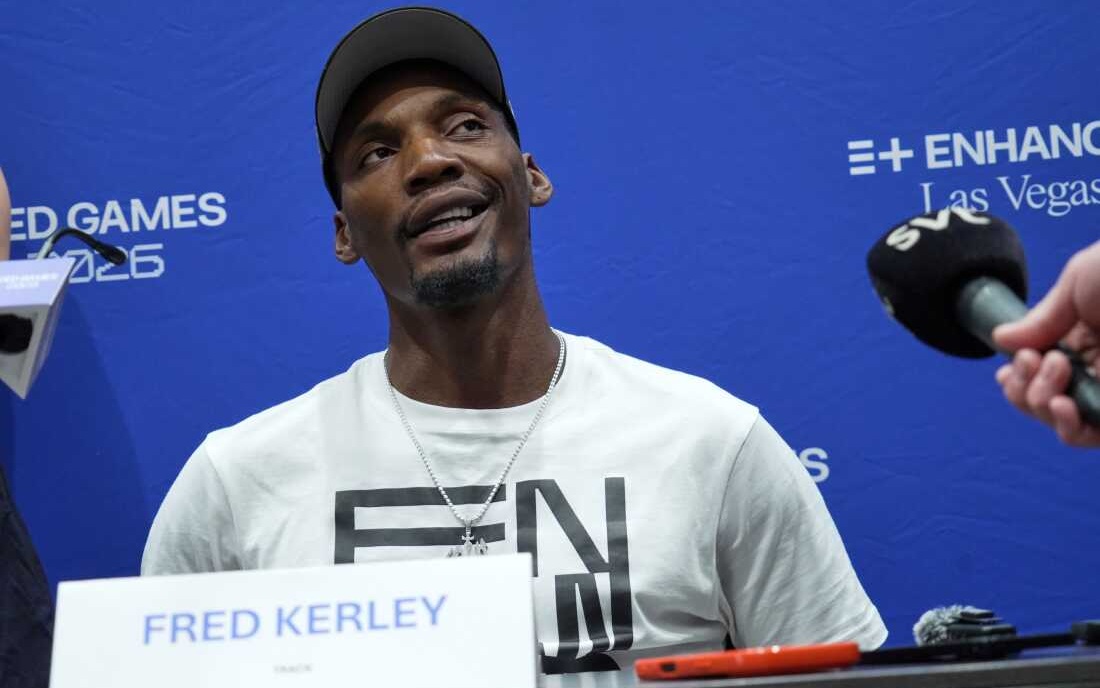
Photo: Ty ONeil | AP
The inaugural Enhanced Games in Las Vegas were supposed to shatter sport. Organizers promised a steroid-fueled orgy of world records that would leave the clean Olympics in the dust. Instead, the five-hour event delivered a whimper: just one world record mark beaten across 22 events. Greek swimmer Kristian Gkolomeev touched the wall in 20.81 seconds for the men's 50m freestyle — 0.07 seconds faster than Cameron McEvoy's official mark. That was it. No weightlifting demolition. No sprinting apocalypse. Just a single, disputed swim.
For the event's billionaire backers, it was a humiliation. For those who have long suspected that elite sport is built on a foundation of sophisticated cheating, however, the results offered something else entirely: a smoking gun. If legally maxed-out athletes on pharmaceutical-grade enhancements could barely scratch the existing record books, there is only one logical explanation. The records we revere today — the ones set by our heroes in gold medals — were likely achieved by athletes who were already chemically optimized, just hidden behind a clean urine sample.
The One Record That Fell (And Why It Proves the Rule)
Let's examine the only "success" of the night. Gkolomeev's swim required far more than just permission to dope. He wore a polyurethane "super-suit" — a full-body technological cheat code that has been banned from international swimming since 2010 for artificially increasing buoyancy and reducing drag. Even with unlimited performance-enhancing drugs (PEDs) flowing through his system, the Greek swimmer could not beat McEvoy's record without illegal textile technology wrapped around his torso. Strip away the suit, and his doped time likely falls back below the existing standard.
The broader field was even more damning. Star sprinter Fred Kerley won the men's 100m with a time of 9.97 seconds — entirely drug-free. Tristan Evelyn and Hunter Armstrong also took their marquee events without touching a single banned substance. Clean athletes, competing for prize money, easily outpaced rivals who had consumed everything the black market and gray-market clinics could provide. The famous strongman Thor Björnsson ("The Mountain" from Game of Thrones) could not even complete his deadlift attempt at the 510kg world record.
- Total events contested: 22
- World records broken: 1 (men's 50m freestyle, using a banned super-suit)
- Clean athletes who won major events: 3 (Kerley, Evelyn, Armstrong)
- Expected records by organizers: "Multiple" — zero delivered
The 44% Problem: What the Enhanced Games CEO Already Knew
Enhanced Games CEO Max Martin has never been subtle. He openly argues that up to 44% of Olympic athletes are using banned substances, with only about 1% ever facing consequences. In his telling, the Olympics are not a clean competition — they are a dishonest system where athletes micro-dose unregulated designer drugs to beat the test, rather than optimizing their health openly. The Enhanced Games were supposed to be the honest alternative: a lab where we could finally see what the human body could truly do without the cat-and-mouse game of anti-doping authorities.
Instead, the results confirmed Martin's premise while destroying his conclusion. If a substantial portion of current Olympic medalists are already operating at the ragged edge of what chemistry and genetics can achieve, then adding more drugs — especially in untalented or aging bodies — produces nothing but diminishing returns. The ceiling is already reached. It was just reached behind closed doors, with syringes and alibis.
Micro-Dosing Versus Megadosing: Why More Isn't Faster
To understand why the Enhanced Games flopped, you have to understand how modern doping actually works. To avoid detection, elite cheaters practice "micro-dosing" — taking tiny amounts of hormones or steroids that clear the system within hours. They gain a small, almost invisible edge: one or two percentage points in power, recovery, or endurance. It is enough to turn a bronze medal into gold, but not enough to trigger a lab's alarm bells.
The Enhanced Games allowed athletes to megadose — taking massive, conspicuous quantities of testosterone, EPO, growth hormone, and whatever else they could source. Sports scientists watching the event were not surprised by the mediocre results. Heavy doping often causes muscle tightness, coordination problems, and severe fatigue. The body has natural limits that pharmacology cannot simply override with more milligrams. A 35-year-old former champion on steroids is still 35 years old. A second-tier sprinter on EPO still has second-tier form.
Of the 30 fastest 100-meter sprints in recorded history, only 9 were achieved without any taint of doping — and every single one of those 9 belongs to Usain Bolt.
— Canadian Running Magazine analysis
The Doping Hall of Fame: Looking at the Sprinting Elite
The strongest evidence for widespread elite doping is not theoretical — it is historical. Look at the men's 100m dash, the blue-ribbon event of any athletics competition. Of the 30 fastest times ever recorded, only nine were run by a clean athlete. And those nine clean times? All belong to one man: Usain Bolt. The rest of the legends read like a disciplinary register. Tyson Gay (9.69) — caught, banned. Yohan Blake (9.69) — caught, served a three-month ban. Asafa Powell (9.72) — caught, banned in 2013. Justin Gatlin (9.74) — caught twice, including a four-year ban for extra testosterone. Christian Coleman (9.76) — banned for missing three drug tests.
This is not an argument about a few bad apples. This is a pattern. When almost every sprinter in the top 10 has served a suspension, the working assumption must shift: the "clean" times we celebrate at the Olympics are probably the product of athletes who are simply better at cheating, not athletes who are refusing to cheat. The Enhanced Games proved that if you take an older or less naturally gifted competitor and give them legal access to everything, they still cannot touch Bolt's 9.58 peak years.
If You Can't Beat the Record, Join the Lab
The most damning conclusion from Las Vegas is also the simplest: the Olympic record book already reflects the absolute ceiling of human performance — including doping. Whether that doping was done in secret with micro-doses or in plain sight with a doctor's prescription, the numbers do not lie. Current champions like Fred Kerley (who won the Enhanced Games cleanly) are so genetically gifted that even chemically supercharged has-beens cannot touch them. But many of the records Kerley is chasing were set by athletes who were not clean at all.
The Enhanced Games did not fail because doping does not work. It failed because doping already works — and the results are already hanging in the record books, next to names that have been quietly scrubbed from some official listings but never from memory. The only way to beat those marks is to combine elite genetics, perfect technique, and pharmaceutical assistance in a way that no one at the Las Vegas event could manage. In other words, you need exactly what the top Olympic nations have been perfecting for decades: a doping program that never gets caught.
The real legacy of the Enhanced Games may not be its $1 million bonuses or its billionaire backers. It is the uncomfortable mirror it holds up to the entire sports establishment. Either elite athletes are already so chemically augmented that unlimited PEDs make no difference — or the clean human body has already maxed out its potential, and we have been watching the same finite limits for a generation. Neither option is comfortable. But after Las Vegas, only one remains plausible.
No Ads. By Us. For Us.
This article was only made possible by readers like you. We hope it inspired you to support Emerald Book, so we can continue producing content like this.
We will never show you ads, never sell your data, and never require a subscription to consume our content. Your gift helps us keep the truth accessible.
Please click the Support button on the bottom right of your screen to make a gift of any amount today.
Thank you for making this work possible.