

Emerald Pages
◆
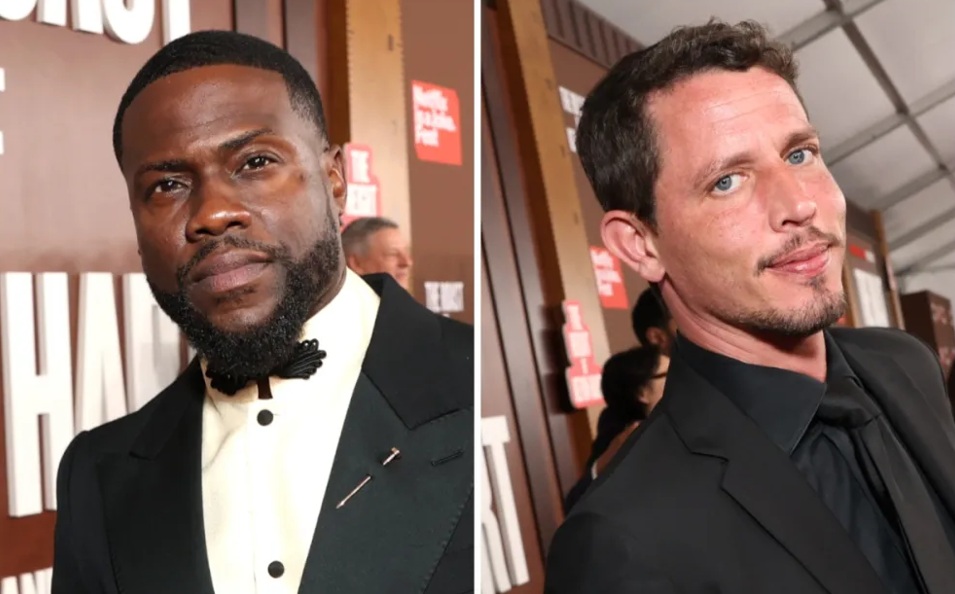
Photo: Getty
The literal definition of pro‑Black is supporting, celebrating, or advocating for Black people. But because it is an ideology and a practice rather than a static dictionary term, its meaning shifts depending on social, economic, and political contexts. For some, pro‑Blackness focuses on dismantling systemic racism and building power for Black communities. For others, it emphasizes economic support, psychological wellness, and cultural continuity — purposely buying from Black‑owned businesses, fostering deep self‑love, and protecting Black youth and institutions. And for a growing number of critics, it is a label too easily worn by celebrities whose actions ultimately serve profit over principle. Enter Kevin Hart — one of the richest comedians in the world, a man whose career embodies this very tension.
On one hand, Hart has given $700,000 in scholarships to help students attend HBCUs, produced a Netflix special celebrating Black inventors and explorers, and married a Black woman. On the other, he has been the host and producer of a live roast where white comedians made jokes about George Floyd’s death and slavery — jokes he defended as part of the “spirit of comedy.” So which is it? The answer, as uncomfortable as it may be, is both. But when we scratch the surface, a clearer picture emerges: Kevin Hart is pro‑Black in the way that a comedian and businessman can be — sporadically, transactionally, and almost always with one eye on his mainstream audience and his bank account.
The Anti‑Black Accusations: When Comedy Hurts the Culture
The most damning evidence against Kevin Hart’s pro‑Black credentials came in May 2026, during the Netflix live special The Roast of Kevin Hart. In an event he produced and starred in, comedian Tony Hinchcliffe told a joke about George Floyd — specifically that Floyd was looking up and laughing so hard “he can’t breathe.” The audience gasped. Hart laughed along. Later, when the backlash erupted, Hart defended the joke as part of “roast culture,” admitting it was “not tasteful to our culture” but refusing to condemn it.
For many in the Black community, this was not edgy comedy. It was a betrayal. Dr. Umar Johnson and Pastor Jamal Bryant were among the prominent voices who called Hart out, arguing that he had allowed white comedians to mock Black trauma for streaming revenue. Even more troubling was the pattern: other jokes during the roast referenced Hart’s ancestors arriving on a slave ship, and one comic joked that Hart’s short stature meant he would have to be lynched from a bonsai tree. Hart’s mostly white writers’ room, critics noted, had packaged Black pain for mass consumption.
The Colorism Blind Spot
This was not Hart’s first run‑in with accusations of anti‑Black behavior. Long before the roast, he faced heavy criticism for old tweets and routines that mocked dark‑skinned Black women — calling them “ugly” and making fun of their features. While Hart has since dismissed those comments as him “just being silly,” critics point out that his marriage to Eniko Hart, a light‑skinned Afro‑Caribbean woman, does not erase a career pattern of colorist jokes. Critics note that when Hart made disparaging remarks about dark‑skinned Black women early in his career, he contrasted them by praising lighter‑skinned women. During the 2026 roast, dark‑skinned Black women in the audience were again the target of jokes mocking their skin tone and weight — and Hart, the man in charge, let it happen.
As one commentator on social media put it, marrying a light‑skinned or racially ambiguous Black woman does not automatically mean a person is free from colorist biases against dark‑skinned Black women. The distinction matters within pro‑Black frameworks that prioritize defending all Black lives, especially the most marginalized.
- George Floyd joke: Hart laughed, then defended it as “roast culture,” admitting it was “not tasteful to our culture.”
- History of colorism: Mocked dark‑skinned Black women; married a lighter‑skinned Black woman.
- White writers’ room: Comedian Michael Che pointed out that Hart’s roast featured a mostly white group of writers.
- Catering to white gaze: Rarely speaks on police brutality or systemic racism in serious terms, preferring to stay palatable to white corporate Hollywood.
The Pro‑Black Case: Scholarships, History, and Black Love
To ignore Hart’s pro‑Black actions, however, would be dishonest. Through his Help From The Hart Charity, Hart teamed up with the United Negro College Fund (UNCF) and KIPP Public Schools. In 2015, he gave his first major gift of $100,000 through UNCF to fund scholarships for four college students. Then in 2018, he launched a massive scholarship fund: Hart personally contributed $300,000 of his own money, which was matched with another $300,000 from KIPP Public Schools, totaling $600,000 to help 18 students attend 11 different HBCUs, including Morehouse College and Spelman College. That brings his total recorded financial support for HBCU students to $700,000.
He has also teamed up with rapper Meek Mill to donate $7 million to schools in Philadelphia to fund scholarships and supplies for low‑income students in their hometown. His production company, Hartbeat, executive produced Right to Offend: The Black Comedy Revolution, a documentary highlighting how Black comedians have historically used humor to fight social injustice and drive change. And he created Kevin Hart’s Guide to Black History on Netflix — a comedy‑infused tribute to Black scientists, explorers, and historical figures.
By the economic and cultural upliftment definitions of pro‑Blackness — economic support, psychological wellness, cultural continuity — Hart scores points. He invests in Black education, celebrates Black history, and employs Black actors, writers, and directors through his media company. His wife, Eniko Hart, is of Afro‑Caribbean heritage with parents from Jamaica, meaning she is a Black woman. Together, they frequently appear at major Black cultural events like the BET Awards and use their platforms to showcase Black family life. For many fans, this is enough.
The Verdict: Why We Shouldn’t Look to Hart as a Leader
So where does this leave us? Kevin Hart is not a revolutionary, nor does he claim to be. He is a comedian — and more precisely, a businessman. His primary loyalty is to what he thinks is funny and what will make him money. When those two align with pro‑Black actions (scholarships, history specials), he looks like a hero. When they clash (roast jokes, colorist humor), he defaults to the “it’s just comedy” defense. That inconsistency is not hypocrisy; it is the logic of entertainment capitalism.
The problem arises only when we confuse celebrity philanthropy with leadership. Hart is not a community organizer. He is not a professor of Africana studies. He is not a civil rights lawyer. He is a man who made a fortune telling jokes, and he will do or say almost anything — including laughing at George Floyd jokes — if he believes it serves the “spirit of comedy” and his bottom line. That is not malice. It is simply the performative boundary of mainstream stardom.
The deeper lesson is this: we should not look to Kevin Hart — or most celebrities — as standard‑bearers for a pro‑Black agenda. Their job is to entertain, not to liberate. When Hart donates to HBCUs, applaud the act. When he laughs at a joke about police murder, criticize the act. But do not be surprised. And above all, do not hand him the keys to the movement. Pro‑Blackness, in its most meaningful form — rooted in systemic change, self‑determination, and defending all Black lives — is built by organizers, educators, and everyday people who show up every day, not by comedians who show up when the camera is rolling and the paycheck is big enough.
No Ads. By Us. For Us.
This article was only made possible by readers like you. We hope it inspired you to support Emerald Book, so we can continue producing content like this.
We will never show you ads, never sell your data, and never require a subscription to consume our content. Your gift helps us keep the truth accessible.
Please click the Support button on the bottom right of your screen to make a gift of any amount today.
Thank you for making this work possible.