

Emerald Pages
◆
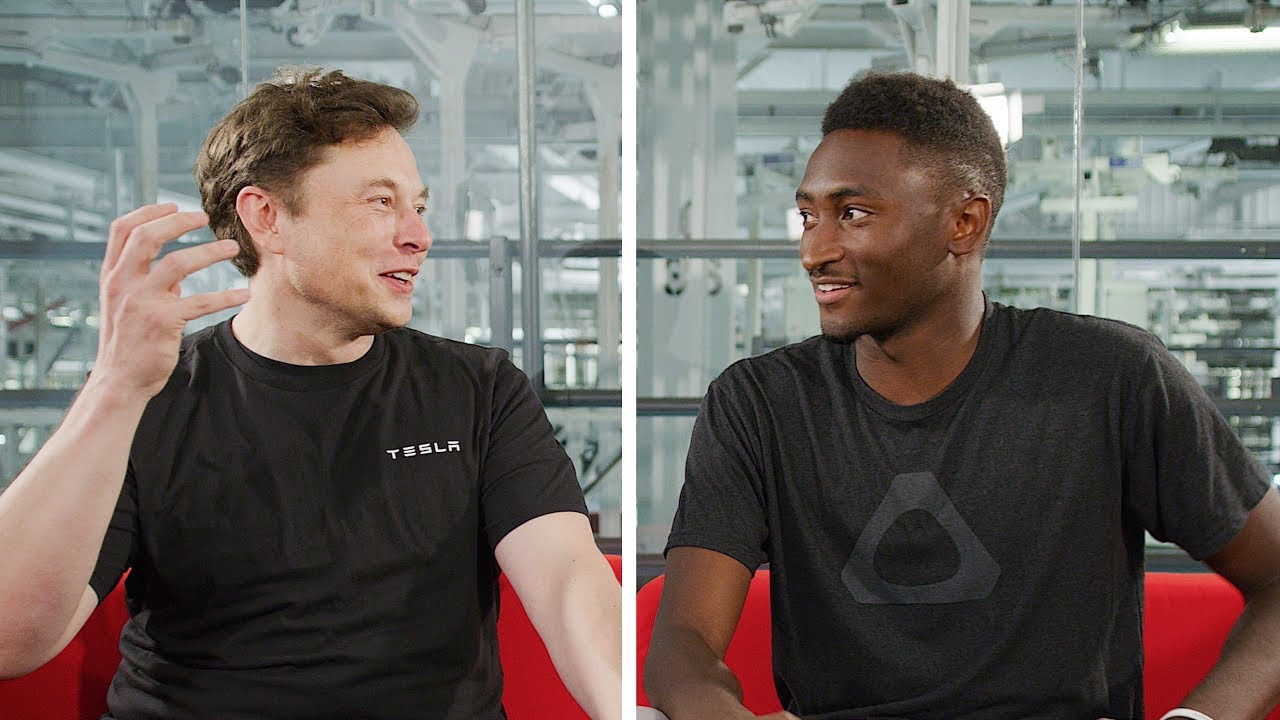
Photo: YouTube | Marques Brownlee
When SpaceX filed its S-1 prospectus for what is being called the most anticipated IPO in a generation, Wall Street expected audacity. What it got instead was something closer to financial fan fiction. The company, which lost nearly $5 billion in 2025 and followed that with another $4.28 billion loss in the first quarter of 2026 alone, is reportedly seeking a valuation between $1.75 trillion and $2 trillion. That is not a typo. For context, that is roughly the same as the entire market capitalization of every European bank combined, or about 20% of the annual GDP of the United States.
The numbers are staggering enough to provoke laughter in boardrooms across Manhattan. At roughly 88 to 93 times trailing sales, SpaceX is pricing itself as if it has already conquered every market on Earth and several off of it. But beneath the spreadsheet insanity lies a more uncomfortable question that few analysts are willing to ask aloud: Who gets to fail this spectacularly in public without facing consequences? The answer, according to a growing chorus of Black financial professionals, entrepreneurs, and legal scholars, is that the runway for "visionary hype" is not remotely level.
1. The Absurdity on Paper: A $28.5 Trillion TAM
Let us first document the sheer scale of what SpaceX is attempting, because the numbers border on the surreal. In its S-1 filing, the company claims a Total Addressable Market (TAM) of $28.5 trillion. That is not a rounding error. That is approximately the size of the entire United States economy. To construct this number, SpaceX did not merely count satellite launches or even Starlink subscriptions. It essentially absorbed Elon Musk's xAI division and then claimed that Grok—an AI model whose primary use case is answering tweets—will capture over $26 trillion in enterprise software, data center infrastructure, and consumer subscriptions.
The breakdown, buried in the prospectus, reads like a wish list written by a very optimistic child: $22.7 trillion in enterprise AI software applications, $2.4 trillion in AI hardware, $760 billion in consumer AI subscriptions, and $600 billion in digital advertising. The actual rocket business—the only thing SpaceX has ever successfully done—is valued at a "measly" $370 billion, or just over 1% of the total fantasy. Financial analysts at Seeking Alpha and Bloomberg have noted that even under a fantasy scenario of 100% net profit margins and 20% annual growth, an investor would need 17 years just to break even on the IPO price.
2. The Losses, The Subsidy, and The Governance Trap
The financial contradictions multiply from there. For years, the narrative was that SpaceX would spin off its profitable Starlink division into a clean IPO. Instead, the company folded massive losses into the parent entity, using Starlink—which generated $3.26 billion in Q1 revenue—as a life raft for the bleeding xAI division and the capital-intensive rocket business. This is not a spin-off; it is a bailout disguised as a growth story.
Then there is the governance structure, which financial watchdogs have labeled one of the most investor-hostile frameworks in modern history. Public investors will receive Class A shares with one vote each, while Musk will hold Class B shares with ten votes each, leaving him with 85.1% of total voting power. After re-incorporating in Texas, SpaceX modified its bylaws to ban any shareholder owning less than 3% of total shares from suing directors for mismanagement. At a $1.75 trillion valuation, a shareholder would need to own a $45 billion block of stock just to have the legal standing to file a derivative lawsuit. That is not a governance structure; it is a legal fortress against accountability.
- Valuation insanity: 88–93x trailing sales while losing billions per quarter.
- The AI subsidy: Rocket company absorbs unprofitable AI division, then prices itself as an AI monopoly.
- Zero accountability: 85.1% voting control and a $45 billion lawsuit threshold for shareholders.
3. The Unspoken Question: Who Gets Away With This?
This brings us to the uncomfortable racial dimension that hovers over the entire proceeding. In Silicon Valley and on Wall Street, the ability to present wildly speculative, loss-making projections as "visionary" is not evenly distributed. Data on venture capital funding tells a brutal story: Black founders routinely receive less than 1% of all VC dollars despite founding a disproportionate share of new businesses. They are asked for revenue. They are asked for profitability. They are asked for market validation. They are rarely, if ever, given the latitude to present a $28.5 trillion TAM based on a chatbot and a satellite mesh that does not yet exist in orbit.
Legal scholars point to the concept of "pattern matching" in financial regulation. When a certain archetype of founder—white, male, eccentric, previously successful—pushes the boundaries of forward-looking statements in a prospectus, it is framed as boldness. The SEC tends to look the other way. But when Black executives or founders engage in similar aggressive marketing, the scrutiny intensifies dramatically. Comparisons are already being drawn to the swift and severe legal consequences faced by minority executives in past financial restructurings, while the architects of far larger hype cycles walk away with their reputations intact.
4. The Media Narrative and The Index Fund Trap
The media's role in this disparity cannot be overstated. Unorthodox corporate behavior, such as stripping public shareholders of voting rights or banning derivative lawsuits, is often framed as a "genius protecting his long-term vision" when done by established insiders. The same behaviors, exhibited by a Black executive, would almost certainly be framed as evidence of instability, ego run amok, or outright malfeasance. This is not speculation; it is the observable pattern of how corporate governance scandals are narrated along racial lines.
Finally, there is the passive investing trap. Reports indicate that Nasdaq adjusted its listing rules to fast-track SpaceX into the Nasdaq-100 index shortly after launch. That means hundreds of billions of dollars in retirement accounts, 401(k)s, and index funds will be forced to buy this stock at its peak IPO price, regardless of whether they believe in the $28.5 trillion TAM or not. Fund managers who would never touch this prospectus with a ten-foot pole will be legally obligated to liquidate stable positions and buy into the fever dream. It is a form of financial coercion, and it is entirely legal.
The contrast is sharp and deeply revealing. No Black founder could walk into a room of institutional investors, present a company losing $5 billion annually, claim a TAM equal to the entire US economy based on an unproven AI model and orbital data centers that do not yet exist, demand a $2 trillion valuation, and expect to be taken seriously. They would be laughed out of the room at best and investigated at worst. The fact that this IPO is proceeding not only unchallenged but accelerated by exchange rule changes speaks to a double standard so glaring it has become visible to anyone paying attention.
The SpaceX IPO may yet succeed. Millions of retail investors might pour their savings into a stock trading at 90 times sales for a rocket company that loses money on every launch not subsidized by Starlink. But the success or failure of this offering is no longer just a financial story. It is a story about who gets to dream with other people's money, who gets protected when those dreams turn to ash, and who never gets the chance to dream at all.
No Ads. By Us. For Us.
This article was only made possible by readers like you. We hope it inspired you to support Emerald Book, so we can continue producing content like this.
We will never show you ads, never sell your data, and never require a subscription to consume our content. Your gift helps us keep the truth accessible.
Please click the Support button on the bottom right of your screen to make a gift of any amount today.
Thank you for making this work possible.