

Emerald Pages
◆
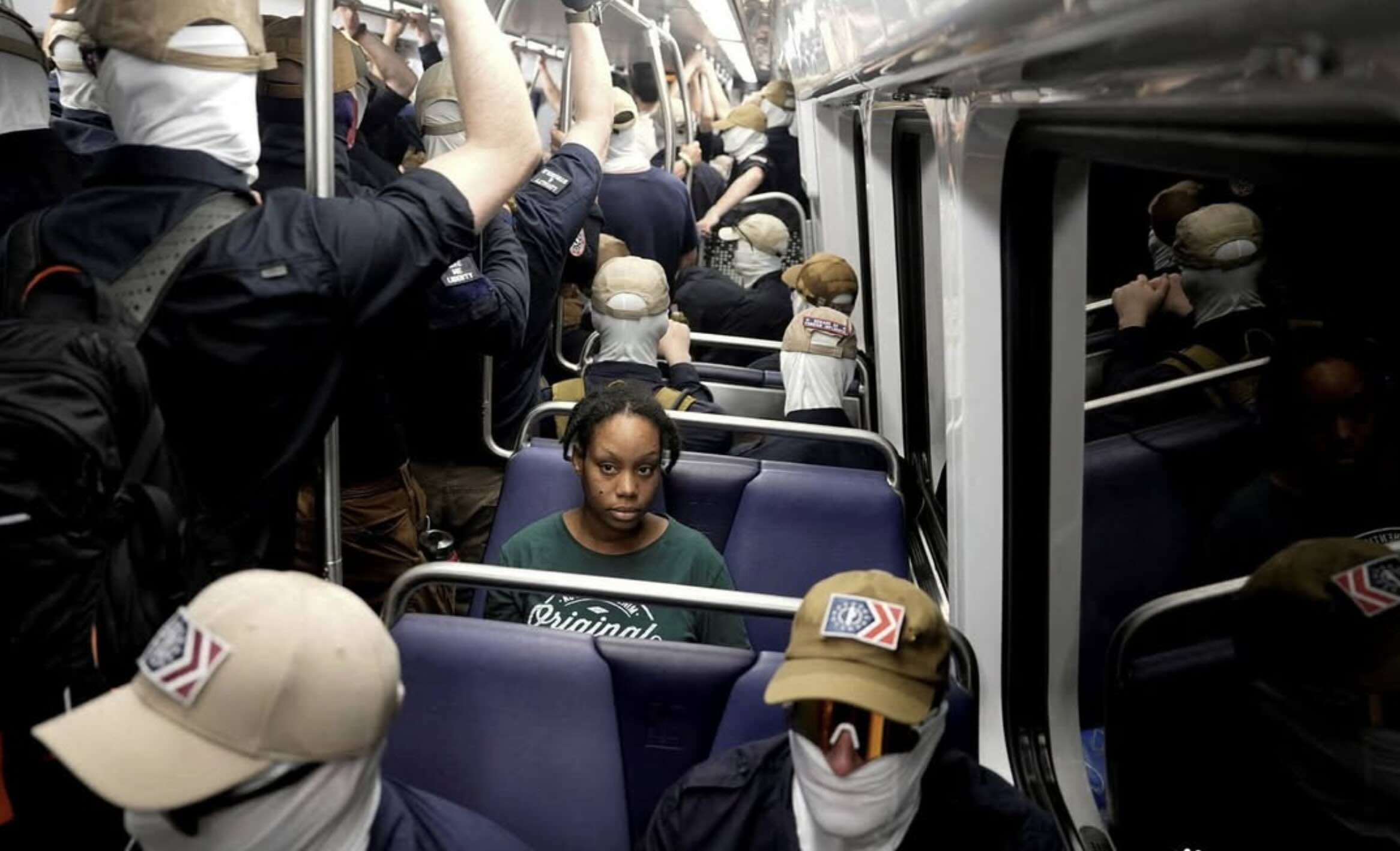
Photo: Reuters
The stain is not a rumor. It is not a conspiracy theory whispered in academic corridors. Historians, sociologists, and legal scholars have reached a rare consensus: no major foundational, political, or social institution in America can be said to have never been touched, influenced, or infiltrated by white supremacy. From the drafting of the Constitution to the construction of the interstate highway system, from the earliest banks to the most modern technology firms, the architecture of American power was built with racial hierarchy as a load-bearing wall.
This is not an accusation of individual malice. It is a structural observation. Because white supremacy was legally, socially, and economically institutionalized throughout much of American history—from the era of chattel slavery through the Jim Crow period—the foundational structures of the country were either built with racial hierarchies in mind or actively targeted for infiltration by extremist groups over subsequent decades. The result is what researchers call "sticky inequality": patterns of harm that persist even after explicit laws are repealed, because they have been baked into the very logic of how institutions operate.
The good news—if it can be called that—is that this stickiness makes white supremacy predictable. It leaves traces. It follows patterns. And once you learn to read those patterns from a birds-eye view, you can spot it operating in real time, even when no one is wearing a hood or chanting a slogan. The same tools that reveal the problem also point toward the solution: structural insulation built through democratic ownership, radical transparency, and the deliberate choice of inefficiency over exploitation.
The Foundational Stain: Government and Law Enforcement
Early American governance explicitly codified racial hierarchies. The U.S. Constitution's Three-Fifths Compromise, the Naturalization Act of 1790 (which restricted citizenship exclusively to "free white persons"), and the 1857 Dred Scott Supreme Court decision all functioned as legal scaffolding for white supremacy. These were not bugs; they were features. The judiciary and legislatures spent generations upholding systemic exclusion, from the passage of segregationist Jim Crow laws to the routine denial of housing loans to Black veterans returning from World War II.
Law enforcement carries an even more direct lineage. Early policing institutions, particularly in the Southern states, grew directly out of slave patrols designed explicitly to enforce racial domination. This is not ancient history. In 2006, the FBI issued an Intelligence Assessment warning that white supremacist groups were actively encouraging members to infiltrate state, local, and federal law enforcement agencies. The Department of Defense and congressional subcommittees have continuously investigated similar infiltration of active-duty military personnel and veterans by far-right extremist groups. The badge does not erase the blueprint.
The New Face of an Old System: Environmental Racism in the Tech Sector
One might be tempted to believe that the technology sector—born in garages and dorm rooms in the late twentieth century—escaped this foundational inheritance. That temptation is precisely how white supremacy adapts and survives. While the tech industry did not inherit the exact legal architecture of chattel slavery or Jim Crow, it has successfully replicated systemic racial violence using a modern mechanism: digital redlining and environmental racism.
The explosive boom in artificial intelligence and cloud computing has revealed that tech is not an abstract, digital entity. It relies heavily on physical infrastructure that systematically exploits and pollutes communities of color. The massive data centers required to power AI and cloud services are disproportionately built in low-income, Black, Brown, and Indigenous communities. Civil rights organizations like the NAACP's Center for Environmental and Climate Justice explicitly track how Big Tech targets historically disenfranchised regions—such as the American South and tribal lands—banking on the fact that these areas have less political power to fight back.
- Sacrifice Zones: Tech giants build clean, sustainable facilities in majority-white areas while placing high-pollution data centers in minority neighborhoods. xAI's facility in South Memphis runs industrial gas turbines in a historically Black neighborhood where cancer and respiratory risks were already elevated.
- Grid Strain and Toxic Air: Data centers consume catastrophic amounts of electricity and water, relying on massive diesel backup generators that release nitrous oxides and particulate matter into communities like Bessemer, Alabama—majority-Black, majority poisoned.
- Digital Colonialism: The hardware requires lithium, cobalt, and rare-earth mineral mining that devastates ecosystems and exploits workers in the Global South, followed by e-waste dumping that poisons water tables with lead and mercury in developing nations.
This is white supremacy without the robe. It operates through corporate decisions that look purely economic on paper—optimizing for cheap land, tax breaks, and proximity to power grids—but consistently result in white communities receiving the economic benefits of tech while Black, Brown, and Indigenous communities get the environmental and medical fallout.
The Birds-Eye View: Four Hints That Reveal the Pattern
If you zoom out and look at any organization from above—stripping away its marketing, its diverse stock photos, and its public statements—four major "hints" will tell you immediately if white supremacy is still pulling the strings. These are not subjective feelings. They are measurable, structural indicators.
First, the geographic footprint of harm versus benefit. Map the organization's entire physical presence. Where are the headquarters, executive homes, and high-tech labs? Where are the data centers, warehouses, manufacturing plants, and e-waste disposal links? If the wealth and comfort concentrate in wealthy, majority-white areas while the waste and toxicity concentrate in low-income neighborhoods or the Global South, the foundation is unchanged. The birds-eye view shows a classic colonial map of extraction.
Second, the pyramid of power and compensation. Chart the workforce from cleaning staff to board of directors. A system still trapped in the old foundation will look like a racial hierarchy from the sky. The labor at the bottom—doing the heaviest physical work with the lowest pay—will be disproportionately Black, Brown, and immigrant. The leadership at the top—holding equity, stock options, and decision-making power—will remain overwhelmingly white.
Third, the flow of capital. Follow the money upstream. If a company claims to be revolutionary but is financed by Wall Street banks, venture capital funds, or tech conglomerates that profit from digital redlining, prison contracts, or fossil fuels, it cannot be insulated. A birds-eye view of capital flow proves that the group is legally bound to generate returns for the very systems it claims to oppose.
Fourth, the scale and pace of growth. White supremacy and capitalism are deeply linked through the demand for hyper-extraction and infinite growth. If a group is obsessed with rapid scaling, global market dominance, and maximizing efficiency at all costs, it will inevitably resort to exploitation to achieve those goals. True insulation looks smaller, slower, and more localized. It prioritizes stability and community health over viral growth.
Is Any Institution Untouched? The Closest Examples
Because white supremacy was foundational to the legal, social, and economic architecture of the United States, no legacy American institution has been completely untouched. However, institutions founded explicitly by and for marginalized communities as refuges from racism have structurally been the least influenced.
Historically Black Colleges and Universities (HBCUs) were founded during segregation when Black Americans were legally barred from higher education. Their foundational structures, curricula, and leadership were built entirely on principles of racial uplift and equality. The Black Church—denominations like the African Methodist Episcopal (AME) Church—was founded specifically to escape racial discrimination in white churches. Their theology, governance, and institutional goals are fundamentally antithetical to white supremacy.
In the academic world, Ethnic, Black, and Chicano Studies departments were created specifically to dismantle eurocentric biases. Because their core methodology is rooted in critical race theory and the deconstruction of systemic racism, they are structurally hostile to white supremacist infiltration. Among contemporary enterprises, worker cooperatives like Cooperation Jackson in Mississippi and Indigenous-owned tribal enterprises that prioritize land stewardship over quarterly profits have come closest to building genuine insulation.
How to Build Real Insulation: Structural, Not Symbolic
To truly insulate an organization from white supremacist structures and environmental racism, you cannot rely on passive neutrality or symbolic diversity hires. You must build insulation directly into the organization's legal, financial, and operational architecture.
Democratic ownership is the first pillar. Transition to a worker cooperative model with one-member, one-vote systems. When the people working the jobs own the company, they will not vote to poison their own neighborhoods. Community Land Trusts remove land from the speculative real estate market, preventing predatory companies from buying up land for toxic infrastructure.
Legal mission entrenchment is the second. Standard companies are legally required to maximize profit for shareholders. Benefit Corporation (B-Corp) certification alters your legal articles of incorporation to require a "triple bottom line": equal prioritization of people, planet, and profit. Perpetual Purpose Trusts put ownership into a legal trust bound to specific values that cannot be bought out by external venture capitalists.
Hyper-local supply chains and infrastructure autonomy complete the picture. Trace every material. Use refurbished, modular hardware and open-source software that requires low computing power. Build independent microgrids using local solar, wind, or battery storage. Decentralized energy stops your consumption from driving demand on fossil-fuel plants sited in sacrifice zones.
The deepest truth, however, is that you can never be 100% certain white supremacy has left any space. The most honest, insulated spaces openly admit: "We operate within a deeply racist global superstructure. Here is exactly how we are fighting it today. Here is our public data proving it." Certainty is an illusion. Rigorous, daily accountability is the only real shield.
The birds-eye view acts like an X-ray. It strips away the marketing, the mission statements, the diverse stock photography. It leaves behind a stark, mathematical picture of who is bearing the cost and who is reaping the rewards. That picture is not destiny. But ignoring it is a choice—and that choice has a history, a pattern, and a name.
No Ads. By Us. For Us.
This article was only made possible by readers like you. We hope it inspired you to support Emerald Book, so we can continue producing content like this.
We will never show you ads, never sell your data, and never require a subscription to consume our content. Your gift helps us keep the truth accessible.
Please click the Support button on the bottom right of your screen to make a gift of any amount today.
Thank you for making this work possible.