

Emerald Pages
◆
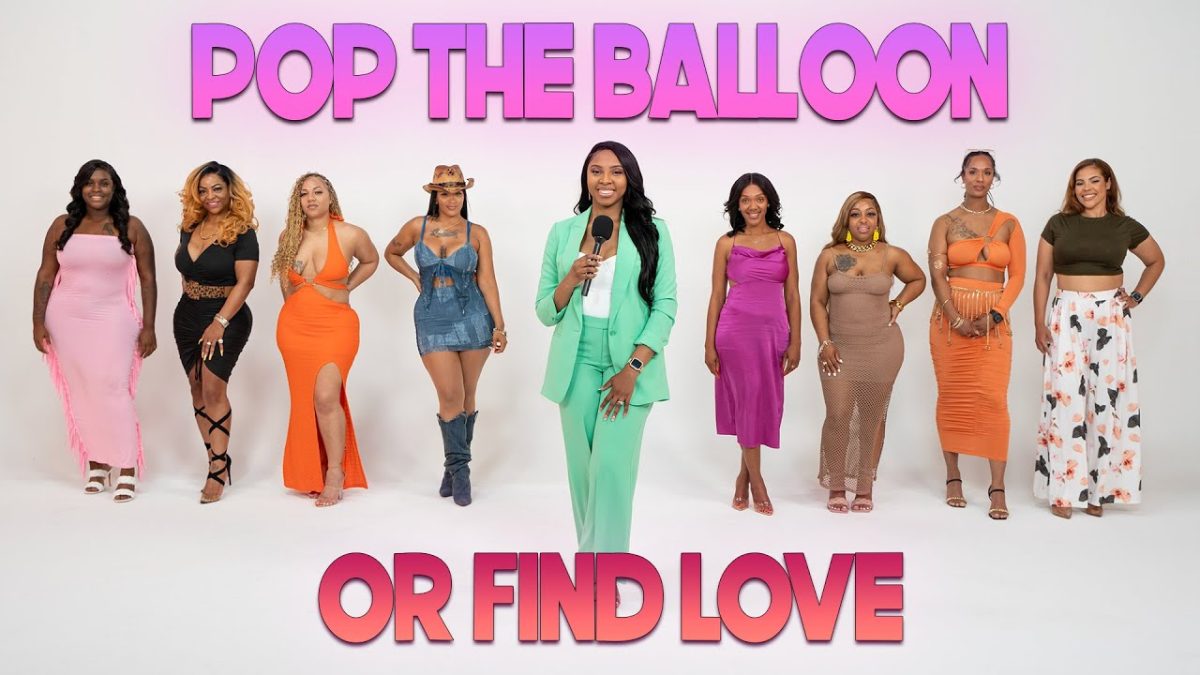
Photo: Pop the Balloon YouTube Channel
In an era where streaming giants throw billions at content acquisition, the most valuable intellectual property isn't coming from Hollywood boardrooms. It's emerging from YouTube studios, built by independent creators who understand something corporations keep failing to learn: authenticity cannot be manufactured. The viral dating series Pop the Balloon or Find Love, created and hosted by Arlette Amuli alongside her husband Bolia Matundu (BM), has become a masterclass in value creation and self-determination — proving that owning your culture and your community is worth more than any licensing deal.
The premise is deceptively simple. A lineup of singles holds balloons while one contestant introduces themselves. If someone isn't interested or hears a dealbreaker — they pop their balloon. What follows is brutally honest, unfiltered conversation about modern dating standards, lifestyle choices, and attraction. It's raw, it's messy, and it's completely authentic. That authenticity turned a low-budget web series into a cultural phenomenon, generating hundreds of millions of views and sparking countless imitators across social media.
When Netflix came calling with a live adaptation, it seemed like the logical next step. Pop the Balloon Live, hosted by Yvonne Orji, premiered in April 2025. It was canceled after one season. The premiere drew 3.5 million viewers, but by episode two, audience numbers plummeted 63% to 1.3 million, eventually bottoming out at just 700,000. The streaming adaptation failed for reasons that perfectly illustrate the limits of corporate replication.
Why the Netflix Version Flopped
The post-mortem on Netflix's failure is instructive for any creator considering selling their IP. First, the casting shifted from everyday, unfiltered people genuinely seeking connection to D-list reality veterans from shows like Too Hot to Handle who simply wanted screen time. Second, critics and fans accused Netflix of "gentrifying" the format by moving away from the primarily Black cast and specific cultural humor that made the original a community-driven hit. Third, the chaotic live broadcast format left no room for nuance, becoming a rushed, loud mess where contestants talked over one another. Most critically, the show replaced Arlette Amuli herself — whose specific interrogation style and comedic timing are the actual engine of the show.
- D-List Casting: Reality TV veterans replaced real singles seeking connection, stripping the show of its authenticity.
- Cultural Gentrification: The primarily Black cast and culturally specific humor were diluted for broader appeal.
- No Arlette: Yvonne Orji, while talented, couldn't duplicate the brutal chemistry and trust Amuli built with her community.
- Rushed Format: The live broadcast left no room for the organic, dramatic debates that made the original viral.
The failure was so significant it reportedly contributed to an unscripted executive shakeup at Netflix. Meanwhile, Arlette Amuli and Bolia Matundu's independent YouTube channel continued to thrive, dropping authentic new episodes weekly. The contrast couldn't be starker: Netflix bought the rules of the game — the balloons, the pins, the stage — but they couldn't buy the culture that makes people watch.
The Economics of Independence
While Netflix wrote off its failed experiment, BM and Arlette Amuli built an empire. Industry estimates place their annual ecosystem revenue between $2 million and $5 million, with profit margins that traditional studios can only dream of. Their revenue model is a blueprint for modern independent media.
YouTube AdSense alone generates an estimated $400,000 to $750,000 annually, with the main channel exceeding 1.56 million subscribers and individual episodes regularly pulling 1.5 to 4.5 million views. But the real genius lies in their reaction video revenue share program. Instead of aggressively banning popular creators from reacting to their content, Bolia Matundu and Arlette launched a proprietary 40% revenue share — meaning any commentary YouTuber who wants to react to Pop the Balloon legally pays them 40% of their ad revenue. They've effectively turned competitors into an outsourced sales team.
Even the failed Netflix adaptation was a financial victory for the independent creators. By licensing the format rather than selling the show outright — and signing on as executive producers — Arlette and BM secured a guaranteed seven-figure licensing fee regardless of the show's performance. That upfront payment, estimated between $1 million and $2 million, validated their ownership strategy. They took Netflix's money without surrendering control of their core YouTube property.
From Content to Platform: The Luv or Pop App
The most sophisticated move in the Pop the Balloon ecosystem is their latest: the launch of Luv or Pop, a dedicated dating app that translates the show's mechanics into a tech product. By moving beyond ad-supported content into a proprietary platform, the husband-and-wife team has created a moat that copycats cannot cross. Anyone can film a balloon-popping show in their basement, but replicating an integrated app ecosystem with real-world matching, user acquisition metrics, and daily active users is an entirely different challenge.
The app's success is measured by new KPIs entirely distinct from traditional media metrics: user acquisition costs, daily active users (DAUs), "Match Lock" feature engagement, and how many users collect or pop digital balloons. This pivot toward product ownership represents the final stage of independent media maturation — moving from being a content creator to being a platform owner.
The Imitation Paradox
Walking through any social media feed reveals dozens of copycats. Smaller channels have bought cheap backdrops and balloons. Variations have emerged in nightclubs, college campuses, and even featuring seniors over 60. On the surface, this looks like market dilution. In practice, the wave of imitation strengthens the original's moat. When hundreds of clones use keywords like "Pop the Balloon" in their metadata, search algorithms reward the original source. The knockoffs become free billboards directing curious viewers back to Arlette.
Most clones lack the production quality, casting authenticity, and host chemistry of the original. When audiences watch a low-budget copycat, it only highlights how polished the real show is. And with the Luv or Pop app, Arlette and Bolia created something no copycat can touch: a proprietary funnel connecting digital viewers to real-world dating experiences. It's the difference between owning a viral moment and owning a sustainable ecosystem.
The Self-Determination Thesis
The story of Pop the Balloon is fundamentally a story about self-determination. Arlette Amuli and her husband BM didn't wait for permission from traditional gatekeepers. They built an audience, refined their format, and retained ownership of their intellectual property. When a major streamer came calling, they structured a deal that paid them regardless of outcomes while preserving their independence. When imitators emerged, they built a product ecosystem that transcended imitation.
This model is becoming a case study in modern media economics. Traditional Hollywood struggles to replicate internet-native authenticity because authenticity is inherently anti-corporate. It cannot be focus-grouped, sanitized, or scaled without losing its essential character. The value of Pop the Balloon isn't the physical balloon or the toothpick — it's the unfiltered, culturally specific dialogue that Arlette facilitates. That's something no corporate budget can buy.
As streaming giants continue to chase viral formats, the lesson grows clearer: true value creation lies in ownership, community trust, and cultural specificity. The balloons may pop, but the culture endures — and that's something Netflix still hasn't figured out how to bottle.