

Emerald Pages
◆
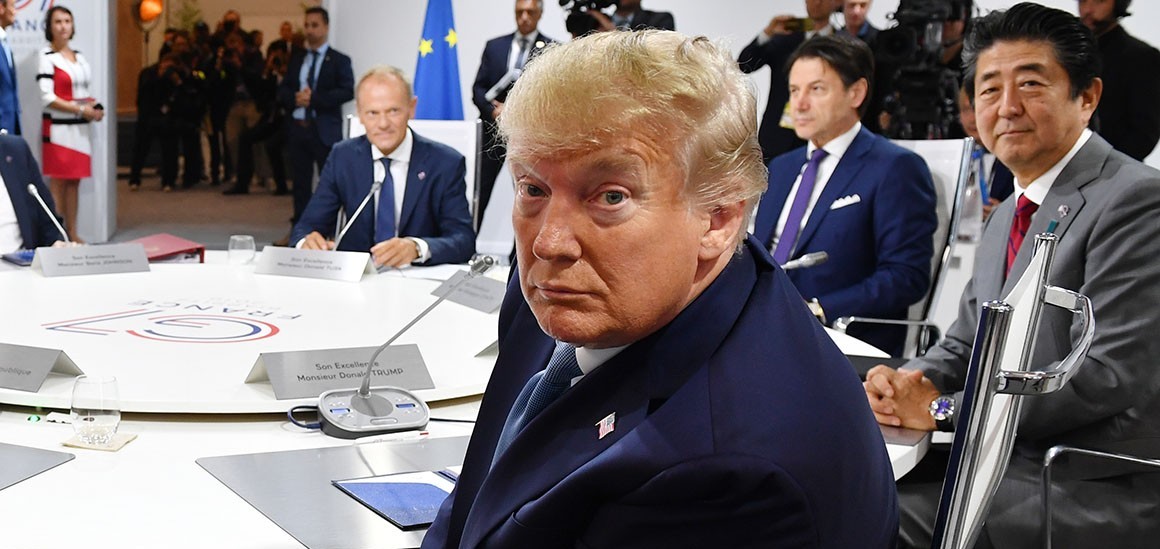
Photo: Politico
In a move that legal scholars are calling an unprecedented constitutional crisis, Acting Attorney General Todd Blanche signed a one-page addendum on May 19, 2026, that fundamentally bars the Internal Revenue Service from ever investigating the past tax records of President Donald Trump, his immediate family, and his extensive network of businesses. The settlement, negotiated between the President and his own Department of Justice, effectively places the Trump Organization's pre-2026 financial history beyond the reach of federal law enforcement.
The agreement stems from a $10 billion lawsuit Trump filed against the IRS following the 2019 leak of his tax records by a former contractor. Rather than proceeding to trial, the DOJ and the President's legal team agreed to a voluntary dismissal with prejudice—a procedural tactic that allowed them to finalize the deal without judicial oversight. The addendum explicitly states that the IRS is “forever barred and precluded” from pursuing examinations or reviews into tax returns filed before Monday, May 18, 2026, or any related tax issues.
The scope of the protection is remarkably comprehensive. Rather than shielding only the President, the agreement covers Donald Trump Jr., Eric Trump, The Trump Organization LLC, and all affiliated corporate entities and trusts. For critics, this reads as a get-out-of-jail-free card for decades of potential tax exposure. “By directing a political appointee to permanently cancel his own audits, the President has effectively placed his business empire outside the reach of federal law,” stated a legal expert from Public Citizen, which has already filed motions arguing the directive is illegal under 26 U.S.C. § 7217, a law that explicitly prohibits a president from interfering in IRS audits.
The $1.78 Billion 'Anti-Weaponization' Fund
While Trump dropped his $10 billion lawsuit, he did not walk away empty-handed. In lieu of a direct personal payout, the administration established a taxpayer-funded compensation pool officially named the "Anti-Weaponization Fund," allocated at exactly $1,776,000,000. According to the DOJ, the fund is intended to provide financial redress to citizens who claim they were unfairly targeted by previous administrations—a group widely anticipated to include individuals prosecuted for their roles in the January 6, 2021, Capitol riot.
- Total Funding: $1.776 Billion (~$1.8B) sourced directly from federal taxpayer revenues.
- Stated Purpose: To hear and compensate claims of political "lawfare" or unfair prosecution under past presidential administrations.
- Primary Beneficiaries: Expected to include Trump's political allies and those convicted in connection with the January 6th Capitol riot.
- Defense of Payout: Vice President JD Vance defended the fund as standard procedure, stating: "When the United States government is settling a lawsuit, it pays out money to settle that lawsuit."
This financial mechanism has drawn immediate condemnation from fiscal watchdogs. House Democrats have mobilized a legislative task force, preparing emergency spending bills designed to defund the execution of the $1.776 billion pool. They argue that the settlement constitutes an unconstitutional scheme where the President is using his power over the executive branch to settle a personal grievance with public money.
Sidestepping the Courts and Future Loopholes
One of the most controversial procedural details is how the administration avoided judicial review. The federal judge overseeing the original Florida lawsuit had actively ordered both parties to file briefs explaining whether they were genuinely adversarial parties. Under Article III of the Constitution, federal courts cannot approve settlements that lack a real legal dispute. To circumvent this inquiry, the Trump legal team and the DOJ used a voluntary dismissal with prejudice, finalizing the sweeping audit ban without a single federal judge's signature.
However, a senior DOJ spokesperson clarified that the liability waiver is strictly retroactive. Any tax returns filed for the 2026 fiscal year or future periods remain subject to standard IRS enforcement. Furthermore, because this is a federal agreement, it has zero jurisdiction over state authorities. The New York State Department of Taxation and Finance retains full legal authority to audit, investigate, or prosecute the Trump Organization for state tax fraud—a loophole that may prove to be the administration's Achilles' heel.
As the nation grapples with the fallout of this settlement, the lines between personal financial protection and executive authority have never been blurrier. With legal challenges already pending and Congress vowing to intervene, the "forever" bar on IRS investigations may face a trial after all—if not in the courts, then in the court of public opinion and the ballot box.
No Ads. By Us. For Us.
This article was only made possible by readers like you. We hope it inspired you to support Emerald Book, so we can continue producing content like this.
We will never show you ads, never sell your data, and never require a subscription to consume our content. Your gift helps us keep the truth accessible.
Please click the Support button on the bottom right of your screen to make a gift of any amount today.
Thank you for making this work possible.