

Emerald Pages
◆
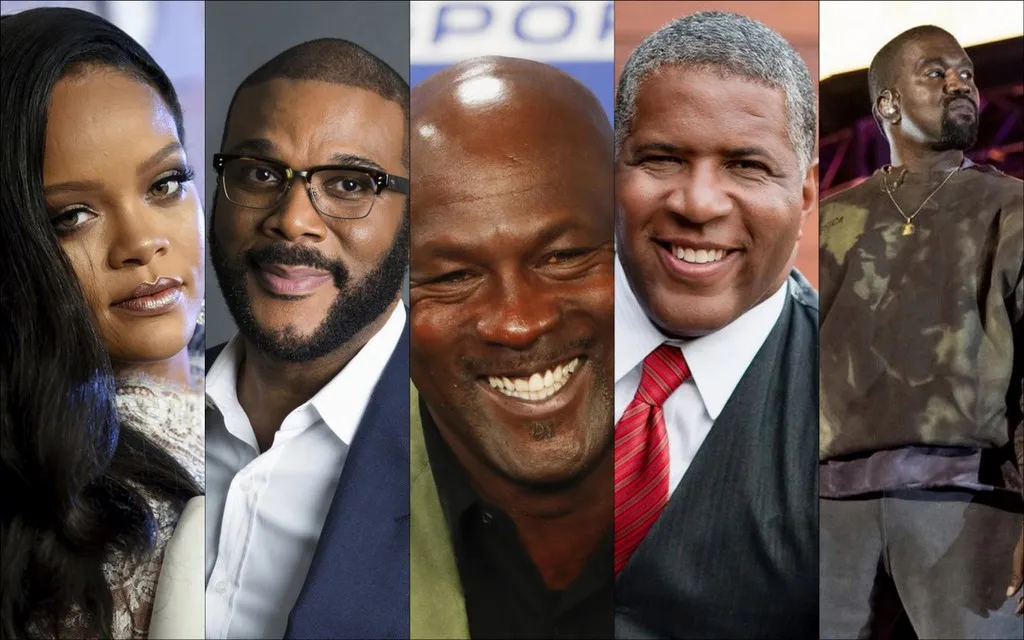
Photo: AP and Courtesy Photos
In the hills above Los Angeles, there is a stretch of neighborhoods known as the "Black Beverly Hills." Baldwin Hills, View Park, and Ladera Heights are stunning, affluent communities where roughly 70% to 85% of the residents are Black. Here, entertainment icons like Issa Rae, Regina King, and Lenny Kravitz live next to Black doctors, tech executives, and judges. It is a visible, thriving monument to Black success.
Yet, just 20 miles away, behind the guarded gates of Malibu's Paradise Cove or the winding driveways of Bel-Air, a different reality exists for the wealthiest Black individuals on earth. Beyoncé and Jay-Z's $190 million concrete fortress in Malibu sits in a neighborhood that is over 80% white and less than 2% Black. Similarly, LeBron James' sprawling estates in Brentwood, Oprah Winfrey's "Promised Land" in Montecito, and Michael Jordan's ultra-exclusive compound at The Bear's Club in Jupiter, Florida, are all nestled in zip codes that remain overwhelmingly, and almost exclusively, white.
This geographic schism reveals an uncomfortable but fascinating dynamic about race and wealth in America. It is not, as some might assume, a rejection of Blackness. Rather, it is a story about the drastic difference between the millionaire class and the billionaire class, the logistics of extreme privacy, and the lasting impact of historical zoning laws that concentrated ultra-luxury real estate in predominantly white hands.
The Millionaire Strategy: Cultural Cohesion
For wealthy Black entertainers, athletes, and executives with net worths between $1 million and $50 million, the decision is often one of intentional cultural immersion. In cities like Atlanta, Washington D.C., and Los Angeles, specific neighborhoods have emerged as power centers for Black affluence.
- Los Angeles: Baldwin Hills, View Park, and Ladera Heights remain 70%-85% Black, serving as a historic and modern hub for Black Hollywood royalty.
- Atlanta (The Black Mecca): Cascade Heights and South Fulton are home to the highest concentration of Black millionaires in the country, including music icons like OutKast's Big Boi.
- The DMV Area: Prince George's County, Maryland, is the wealthiest majority-Black county in the U.S., where families in Woodmore and Mitchellville raise children in affluent, Black-led communities.
In these areas, the choice is driven by a desire for normalcy within one's own culture, safety from racial profiling in gated spaces, and the ability to raise children with a strong sense of identity.
The Billionaire Strategy: Hyper-Isolation
However, the calculus changes entirely when an individual crosses the threshold from multi-millionaire to billionaire. There are fewer than 15 Black billionaires in the entire country, compared to over 700 total billionaires. At this level, the primary drivers are no longer cultural connection, but extreme privacy, massive acreage, structural fortresses, and proximity to global business hubs.
Because of historical redlining and systemic wealth disparities, the specific geographical pockets that offer these features—50-acre compounds, private peninsulas, or gated canyons—were developed almost exclusively for old white money. As a result, Black billionaires are mathematically and geographically absorbed into overwhelmingly white neighborhoods.
| Billionaire | Neighborhood | Demographics | Neighbor Profile |
|---|---|---|---|
| Beyoncé & Jay-Z | Malibu / Bel-Air, CA | 80-85% White, <2% Black | Tech CEOs, fashion moguls |
| Oprah Winfrey | Montecito, CA | ~85% White, <1% Black | Prince Harry, Ellen DeGeneres |
| Michael Jordan | Jupiter, FL (The Bear's Club) | ~80% White, ~1.5% Black | Hedge fund managers, golfers |
| LeBron James | Brentwood, Los Angeles | ~80% White, <2% Black | Network executives, lawyers |
| Tyler Perry (Exception) | Douglasville / South Fulton, GA | ~60-70% Black | Black political power hub |
The Exception: Tyler Perry
The notable outlier to this rule is filmmaker Tyler Perry. Unlike his peers who moved to coastal luxury hubs, Perry chose to anchor his empire in Atlanta. His 1,200-acre estate is situated in the broader Atlanta metro area (the "Black Mecca"), which has the highest density of Black wealth in the country. While his specific home is isolated for privacy, his surrounding community—Douglasville and South Fulton—is a vibrant hub of Black political power, Black-owned businesses, and affluent Black families. Perry demonstrates that a conscious choice to remain geographically rooted in Black culture is possible, even at the billionaire level, but it requires building the infrastructure yourself.
The Bottom Line: A Clear Choice
So, do Black billionaires choose not to live around Black people? The evidence suggests the answer is yes — it is a choice. Tyler Perry proves that living in a Black community at the billionaire level is possible. By anchoring his 1,200-acre empire in South Fulton and Douglasville, Georgia, Perry deliberately placed himself in the heart of the "Black Mecca," surrounded by Black political power, Black-owned businesses, and affluent Black neighborhoods. He chose cultural connection over coastal exclusivity.
The others — Beyoncé, Jay-Z, Oprah, LeBron, and Michael Jordan — made different choices. They opted for the hyper-isolated, predominantly white enclaves of Malibu, Montecito, Brentwood, and Jupiter. These decisions were not forced upon them by a "real estate monopoly." Rather, they prioritized extreme privacy, massive acreage, and proximity to traditional power hubs over living near other Black people. Tyler Perry stands as the undeniable exception, proving that when a Black billionaire values living among Black people, they absolutely can. The others simply choose not to.
No Ads. By Us. For Us.
This article was only made possible by readers like you. We hope it inspired you to support Emerald Book, so we can continue producing content like this.
We will never show you ads, never sell your data, and never require a subscription to consume our content. Your gift helps us keep the truth accessible.
Please click the Support button on the bottom right of your screen to make a gift of any amount today.
Thank you for making this work possible.