

Emerald Pages
◆
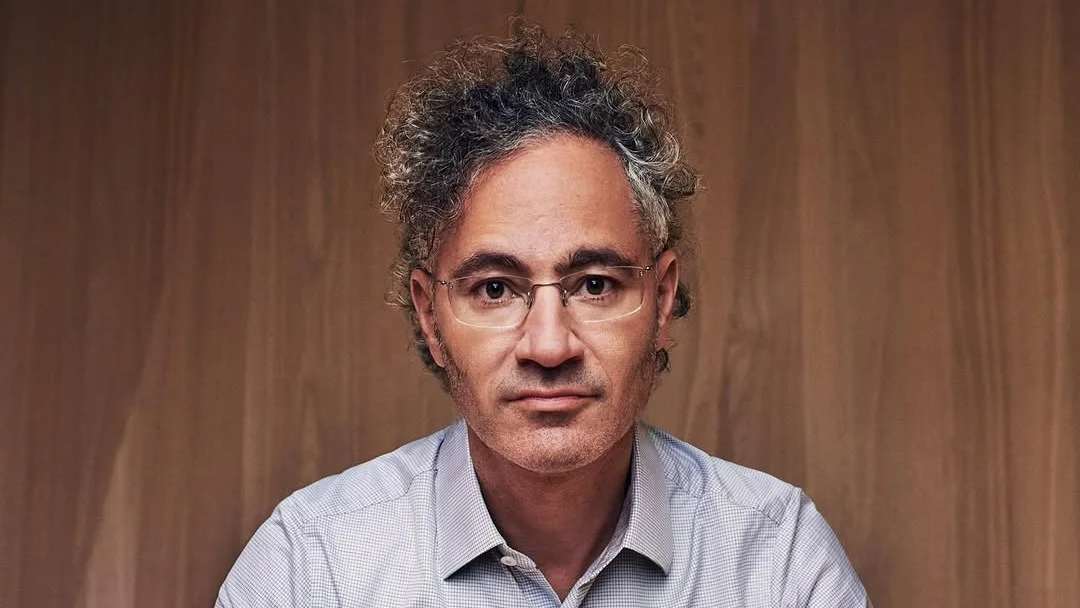
Photo: CEO Today Magazine
According to Forbes, the richest Black man in America is Alexander Karp, the 58-year-old co-founder and CEO of Palantir Technologies, with an estimated net worth of $13.4 billion. There is just one problem: Alexander Karp has never actually said that he considers himself Black.
The designation comes from Forbes' World's Black Billionaires ranking, which identifies Karp as Black because his mother is African American. His father is Jewish. The publication states that Karp "officially identifies as Black" for the purposes of their list. But a thorough review of his public statements, interviews spanning two decades, and his own writings reveals a striking silence. Karp has never once publicly declared "I am Black." He has never embraced Black identity in any affirmative sense. He does not speak about the Black experience, does not reference Black culture, and does not align himself with Black causes.
That single sentence—buried in a profile years ago—is the nearest Karp has ever ventured to acknowledging the racial box that Forbes has placed him in. He did not embrace it. He did not reject it. He simply observed it from a distance, then returned to the subject he actually cares about: class, not race. Karp has stated publicly that he is "mystified by how often we talk about race" in America. He firmly believes that economic class, not race, is the primary source of inequality. The greatest cultural disadvantage, he argues, is being born poor—regardless of skin color.
The Billionaire Who Refuses to Represent
Compare Karp to the other men on Forbes' list of America's wealthiest Black billionaires. David Steward ($12.4 billion) built World Wide Technology into one of the largest Black-owned businesses in America and actively champions Black entrepreneurship. Jay-Z ($2.8 billion) built an empire from hip-hop and funds criminal justice reform.
And then there is Karp. He does not support Black causes, organizations, or philanthropies. He does not fund HBCUs. He does not speak at civil rights events. He does not mentor Black entrepreneurs. When he donates money—often in multiples of 18, a nod to the Jewish tradition of Chai—it goes to political campaigns (including Joe Biden) or quirky individual acts, like giving $180,000 to an elderly hermit in New Hampshire whose cabin burned down. Race, for Karp, is not a platform. It is not an identity. It is not a responsibility. It is, at best, an administrative detail recorded by Forbes.
- Forbes Designation: Lists Karp as Black because his mother is African American, placing him atop the ranking of America's richest Black men above David Steward.
- Karp's Silence: Has never publicly stated "I am Black" or embraced Black identity in any interview, speech, or written work across his entire career.
- His Actual Words: "I am mystified by how often we talk about race" and "I view me as me."
- No Black Philanthropy: Zero record of donations to Black causes, HBCUs, civil rights organizations, or racial justice initiatives.
The Case for Anti-Blackness
The distinction between "not pro-Black" and "anti-Black" is critical. Being not pro-Black suggests neutrality—a passive disengagement from racial justice. But critics argue that Karp crosses into anti-Black territory through both his corporate policies and his company's government contracts. Anti-Blackness, in academic and activist frameworks, refers to actions, systems, or ideologies that actively harm or subordinate Black people, whether intentionally or through structural outcomes.
Karp's Palantir provides surveillance and data-mining software to U.S. Immigration and Customs Enforcement (ICE). Human rights organizations have documented how ICE uses these systems to track, detain, and deport immigrants—including Afro-Latino and Black immigrant families. By building the technological infrastructure for mass deportation, Karp's company actively participates in the destruction of Black immigrant communities. When asked about these contracts, Karp has not expressed concern. Instead, he has defended them as patriotic, stating that "a sovereign nation has a right to enforce its borders." For activists, this is not neutrality. It is complicity.
Then there is predictive policing. Palantir's Gotham software is used by police departments including the LAPD to forecast where crimes will occur. Because the algorithms are trained on historical arrest data—which reflects decades of racist policing—the software sends more police to Black neighborhoods. Those police then make more arrests, which feeds back into the algorithm, creating a self-reinforcing cycle of over-policing and criminalization. Karp has dismissed concerns about racial bias, insisting that the software is neutral. But critics argue that neutrality in a biased system is not neutrality at all—it is reinforcement.
Perhaps the most insidious form of anti-Blackness in Karp's worldview is his active opposition to the very policies designed to address systemic racism. Under his leadership, Palantir has declared itself "completely anti-woke." Karp has publicly criticized affirmative action, diversity mandates, and corporate DEI programs. He argues that a strict meritocracy is fairer than race-conscious policies. But as critical race theorists have long observed, "colorblind" policies in a society structured by white supremacy do not create equality—they preserve existing hierarchies by refusing to name or address them.
When a billionaire who could fund scholarships, launch initiatives, or speak out against racial injustice instead uses his platform to dismantle diversity programs and defend police surveillance, he is not merely passive. He is actively undermining the tools that have helped generations of Black professionals gain access to education and employment. Whether Karp intends harm is almost irrelevant. The outcomes of his actions—more policing in Black neighborhoods, more deportations of Black immigrants, fewer diversity programs in tech—constitute a pattern of harm directed at Black communities.
Identity, Accountability, and the Limits of Forbes
Alexander Karp may be the richest Black man in America according to Forbes. But he has never asked for that title, never claimed it, and never acted like it. He has never looked at the camera and said, "I am a Black man." He has never spoken about navigating the world as a Black person. He has never used his $13 billion platform to advocate for Black advancement.
The question for the Black community is not whether Forbes is technically correct about Karp's racial background. The question is whether a man who refuses to see race, who rejects identity politics, who actively dismantles diversity programs, who builds surveillance tools used against minority communities, and who has never publicly acknowledged that he considers himself Black—should be considered anti-Black. For many activists and scholars, the answer is clear: anti-Blackness does not require malicious intent. It requires outcomes. And the outcomes of Karp's wealth and power are disproportionately harmful to Black people.
One thing is certain: Alexander Karp is not a spokesperson for Black America. He has never wanted to be. But the question of whether he is an adversary is far from settled.
No Ads. By Us. For Us.
This article was only made possible by readers like you. We hope it inspired you to support Emerald Book, so we can continue producing content like this.
We will never show you ads, never sell your data, and never require a subscription to consume our content. Your gift helps us keep the truth accessible.
Please click the Support button on the bottom right of your screen to make a gift of any amount today.
Thank you for making this work possible.