

Emerald Pages
◆
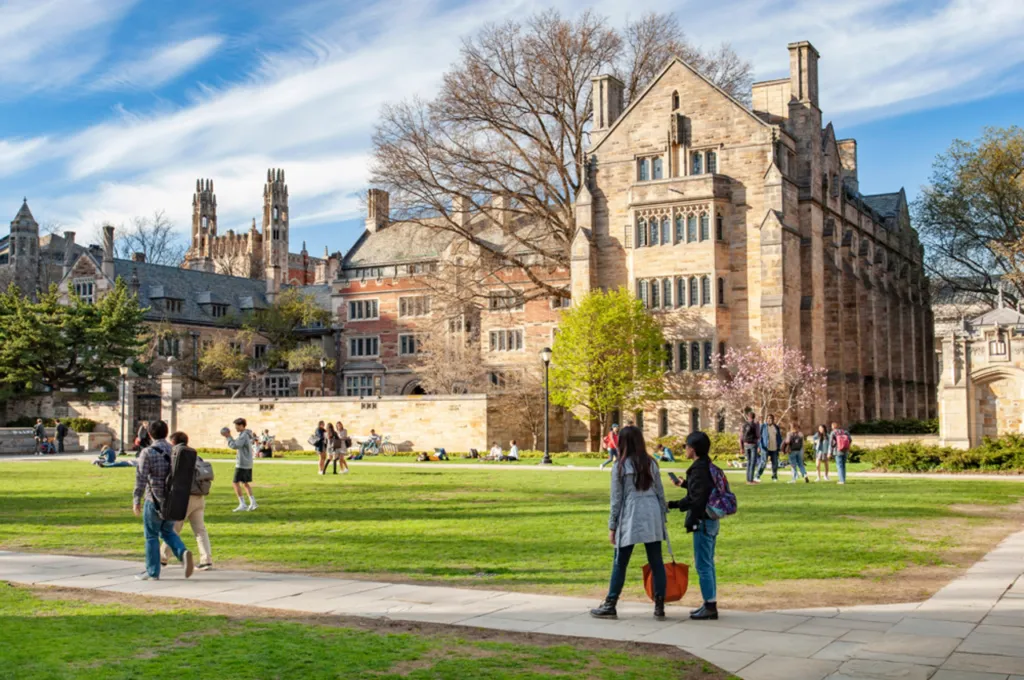
Photo: Michael Marsland | Yale University
It sounds like a dream come true. Harvard, Princeton, MIT, and a growing list of elite universities have announced that families earning less than $200,000—or even $250,000 at some schools—will pay no tuition. The headlines were everywhere, celebrated as a death blow to student debt and a grand opening of the ivory tower to the masses. But scratch beneath the surface of these press releases, and a very different reality emerges. The middle class isn't being welcomed in; it is being quietly, systematically priced out.
The statistics paint a stark picture of exclusion. While these institutions boast about their generosity, the actual student bodies tell a tale of two extremes: the very wealthy and a small, subsidized population of the poor. The vast American middle class—families earning between $65,000 and $200,000—is almost entirely missing from the quad. This is not an accident of admissions; it is the predictable outcome of financial aid policies designed to generate positive press, not economic diversity.
The $20,000 Trap: Why "Free Tuition" Isn't Free
The most deceptive aspect of these announcements is the word "tuition." At an elite private university, tuition typically covers only about 70% of the total cost of attendance. The remaining 30%—room, board, mandatory fees, books, and travel—is conveniently left out of the headline. For a family earning $150,000 a year, the "free tuition" policy means they are still expected to write a check for $18,000 to $23,000 annually just for their child to live on campus.
Consider a family in Pennsylvania making $130,000 after taxes. The parents have a mortgage, car payments, and perhaps another child at home. Finding an extra $20,000 in post-tax cash each year is an impossibility without taking on significant Parent PLUS loans or draining retirement accounts. Yet, because their income falls above the full-ride threshold (typically $100,000 or less), they are deemed "too wealthy" for additional aid. They are trapped in the financial no-man's land—too rich for charity, too poor to pay.
The Asset Penalty: How Home Equity Destroys Aid Eligibility
The problem worsens when universities look beyond a parent's W-2. Unlike the federal FAFSA, most elite schools require the CSS Profile, a much more invasive form that scrutinizes a family's total wealth—not just their income. This is where the middle class is ambushed.
- Home Equity Trap: A family that bought a modest home in a suburb 20 years ago may now have $200,000 in home equity. Elite schools count this as an asset available to pay for college, even though the family cannot access it without selling their home.
- Retirement & Savings Penalty: The CSS Profile requires families to report non-retirement investments and savings. A middle-class family that diligently saved $50,000 for emergencies will be expected to drain that account for tuition, while a wealthy family's assets are often shielded in complex trusts.
- Small Business Squeeze: Families who own a small business—a dental practice, a farm, or a restaurant—are often penalized, as the school's formula counts the business's value as personal wealth, effectively disqualifying them from aid they desperately need.
The Barbell Campus: A Demographic Divide
The result of these policies is what researchers call the "barbell effect." Elite university campuses are shaped like a weight: heavy at the wealthy top, a smaller mass at the subsidized bottom, and almost nothing in the middle. Data compiled by Harvard's Opportunity Insights Lab confirms this distribution across Ivy Plus universities (Ivy League plus MIT, Stanford, Duke, and Chicago):
- Bottom 20% (Poverty): Just 3.8% to 5% of students. These families pay nothing and receive full rides.
- Middle 60% (Working & Middle Class): Only about 26% of students. This is "The Missing Middle"—families who are squeezed by the $20,000 room and board trap or disqualified by asset formulas.
- Top 20% (Affluent): A staggering 70% of the student body. These families pay full price—$85,000 to $95,000 per year—without blinking.
Let those numbers sink in. At Yale, students from the bottom 20% of earners make up just 2.1% of the student body, while the top 20% outnumbers them by a factor of 33 to 1. At Princeton, 4.2% from poverty versus a top 20% that is 17 times larger. These are not accidental statistics; they are the mathematical output of financial aid formulas designed to protect the university's revenue stream while generating glowing headlines.
The Admissions Hurdle: Who Actually Gets In?
Even if a middle-class family could afford the hidden costs, they face an even more formidable barrier: getting accepted. Elite universities admit fewer than 4% to 7% of applicants. And the system is heavily tilted in favor of the rich.
Landmark studies show that a student from a family in the top 1% (earning over $611,000/year) is roughly twice as likely to be admitted to an Ivy Plus school as a student from the poorest income tier with the exact same SAT/ACT scores. Wealthy families spend thousands on private tutors, college consultants, expensive extracurriculars, and legacy preferences. Middle-class families cannot compete in this arms race. The result is that despite "need-blind" admissions rhetoric, the applicant pool itself is economically sorted before a single application is read.
The Numbers Don't Lie: Who Actually Benefits?
So what percentage of enrolled students actually meet these free tuition thresholds? Roughly 35% to 45%—a minority. The majority of families pay full price or close to it because their income vastly exceeds the $200,000 cap. At Harvard, the median family income of an attending student is $168,800. At Dartmouth, it's $200,400. At Brown, $204,200. The average student's family already makes right around or above the cutoff.
Meanwhile, roughly 40% to 50% of undergraduates at Ivy Plus schools receive zero financial aid. These families pay the full $85,000 to $95,000 annual sticker price out of pocket. And on average, 15% to 21% of students come from the top 1% of American earners—families making over $611,000 per year. At multiple elite institutions, the number of students from the top 1% actually outnumbers students from the entire bottom 60% of the country combined.
The Bottom Line: A Press Release, Not a Solution
When a university announces "free tuition for families making under $200,000," it sounds revolutionary. Statistically, it applies to the vast majority of American households. But it does not apply to the majority of students who actually get accepted and walk the campus. Those students remain predominantly from upper-class and ultra-wealthy backgrounds. The policy is a masterclass in public relations—a way to appear generous while changing very little about the actual socioeconomic makeup of the student body.
For the true American middle class, the message is clear: you are not welcome here. You are too rich for a full ride, too poor for the remaining costs, and outmatched in the admissions game. The ivy-covered gates remain open—but only for the very top, and a symbolic few at the very bottom. Everyone else? They are priced out, just as effectively as if tuition were $100,000.
No Ads. By Us. For Us.
This article was only made possible by readers like you. We hope it inspired you to support Emerald Book, so we can continue producing content like this.
We will never show you ads, never sell your data, and never require a subscription to consume our content. Your gift helps us keep the truth accessible.
Please click the Support button on the bottom right of your screen to make a gift of any amount today.
Thank you for making this work possible.