

Emerald Pages
◆
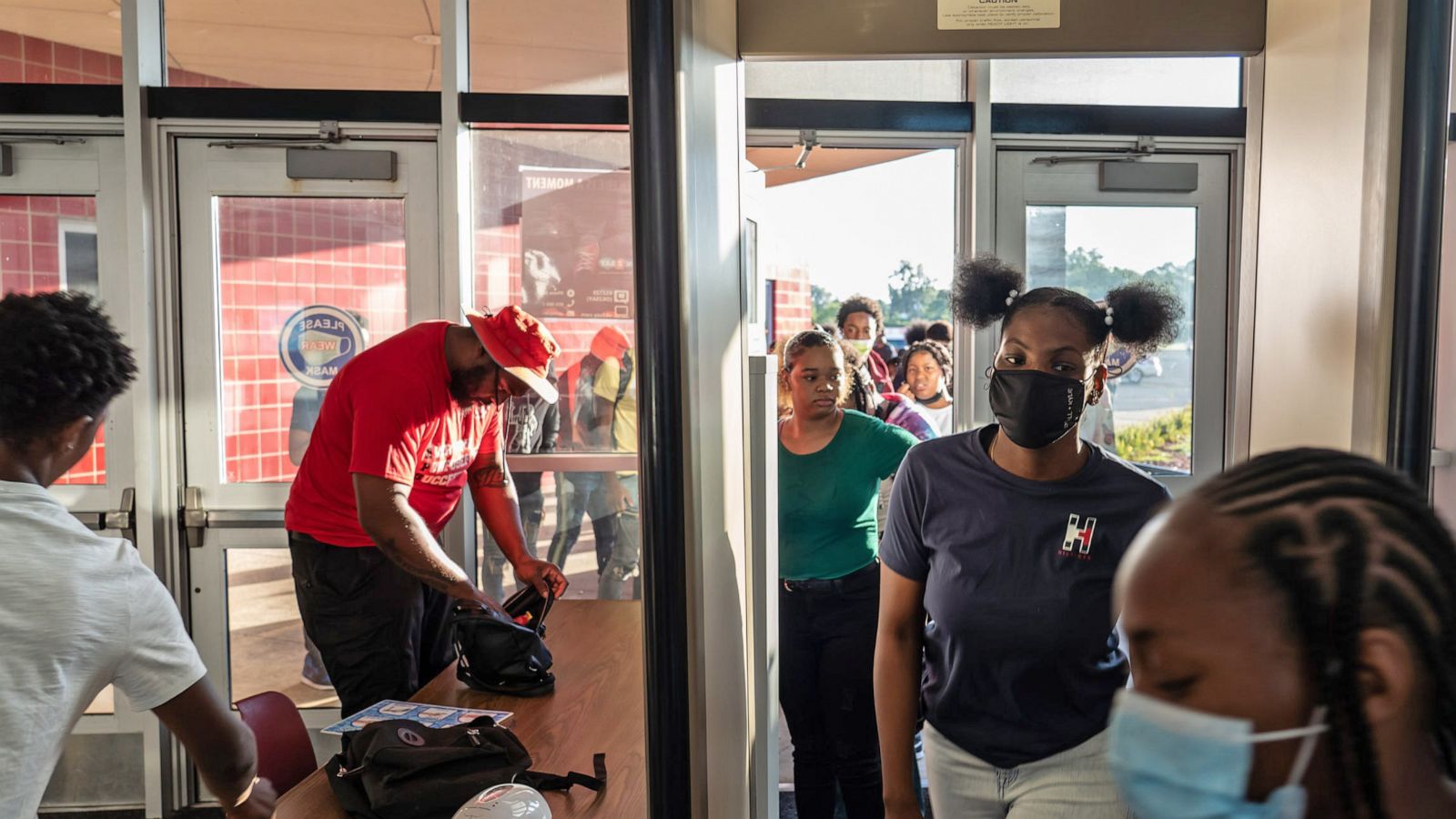
Photo: Ryan Garza | Imagn Content Services via USA Today Network
The image is etched into the American psyche: a heavily policed urban school, students shuffling through metal detectors, backpacks searched, hallways patrolled. The justification, repeated by administrators and policymakers for decades, has been simple: these measures are a response to danger. But when you follow the data, that logic collapses.
For years, the public has operated under an implicit assumption—fueled by media imagery and political rhetoric—that school shootings are a problem concentrated in Black and brown communities. The truth is the opposite. When you look at mass murder on school grounds (defined by the FBI as an incident where four or more victims are killed), the demographic profile shifts entirely away from the narrative that has justified the militarization of majority-Black schools.
According to data compiled by the U.S. Government Accountability Office (GAO), The Violence Prevention Project, and The Washington Post, school mass murders are not an urban problem. They are disproportionately a suburban and rural problem. The GAO's analysis shows that school-targeted rampage shootings—which produce the highest number of fatalities per event—happen predominantly at wealthier, low-minority, majority-White schools. These are not the schools that receive daily metal detector screenings.
The Racial Demographics of Mass Murder on Campus
The Violence Prevention Project database, which tracks mass shootings across the United States, found that 64% of all mass shooters are White. When narrowed specifically to K-12 school mass murders, the concentration becomes even more stark: approximately 85% of K-12 mass shooters are White males. These incidents occur almost exclusively in suburban or rural public high schools with low minority student populations.
So if the most lethal, high-profile school massacres happen in White schools, why are metal detectors a near-daily reality for Black students?
- 48% of all Black students in New York City public schools must pass through a metal detector every single morning.
- Only 14% of White students in the same city are required to do the same. (Source: WNYC data tracking)
- Nationally, Black students are 4.8 times more likely to attend a school with daily metal detector screenings than White students.
- 91% of public schools that conduct daily mandatory metal detector searches are majority-minority schools.
The Definition Trick: How "Shooting Incidents" Hide the Truth
The confusion—and the justification for disparate security measures—comes down to how we define a "school shooting." There is no single federal definition. The most widely cited databases (like the K-12 School Shooting Database) use an extraordinarily broad definition. They count any time a gun is brandished, fired, or a bullet hits school property—regardless of time, intent, or injury. Under this definition, a midnight drug dispute in a school parking lot or a gang-related drive-by that chips a school wall is categorized identically to an active shooter rampage inside a classroom.
Majority-Black schools are statistically more likely to be located in underfunded urban areas with higher surrounding neighborhood crime rates. Therefore, they show inflated numbers for total "shooting incidents" under the broad definition. However, these are not mass murders. They are localized, interpersonal disputes, often spilling over from community violence. They are dangerous, yes—but they are not the indiscriminate, suicidal rampages that define the American school mass shooting crisis.
The "Race vs. Safety" Paradox
Perhaps the most damning evidence comes from a major national study published by researchers at the University of Delaware and UC Irvine. The team evaluated security measures across 2,500 schools and controlled for every rational variable: actual rates of student misbehavior, school crime records, and local neighborhood crime rates.
The result? The percentage of students of color was the number one predictor of intensive security installations—not the actual level of danger or violence within the school. Even when a majority-White school and a majority-Black school have identical safety records, the majority-Black school is statistically much more likely to adopt "coercive" surveillance equipment like metal detectors and locked perimeters.
This is the myth in action. The image of the "Black school shooter" does not exist in the data on mass murder. Yet that phantom has been used to justify a two-tiered education system: one where White students learn in open, trusting environments, and Black students enter prisons dressed as schools.
The numbers are clear. If metal detectors were actually a response to the risk of mass murder, they would be installed outside suburban auditoriums in Connecticut and rural high schools in Kentucky. Instead, they stand guard over children who have been criminalized by a statistical illusion.
No Ads. By Us. For Us.
This article was only made possible by readers like you. We hope it inspired you to support Emerald Book, so we can continue producing content like this.
We will never show you ads, never sell your data, and never require a subscription to consume our content. Your gift helps us keep the truth accessible.
Please click the Support button on the bottom right of your screen to make a gift of any amount today.
Thank you for making this work possible.